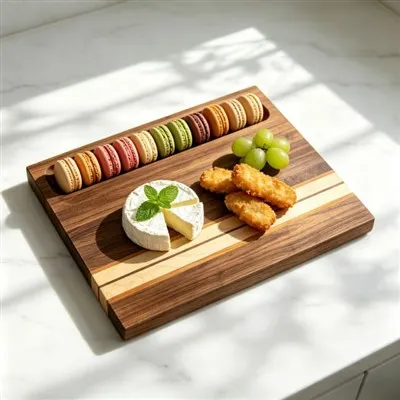


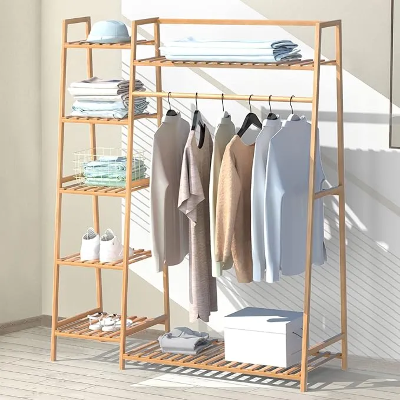




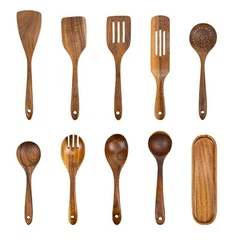

Bamboo racks are not naturally waterproof, but that doesn't mean they can't perform well in humid environments. With proper manufacturing treatments and simple routine maintenance, bamboo racks become highly water-resistant, making them a practical and reliable choice for kitchens, bathrooms, and other everyday household spaces.
When choosing a bamboo rack for areas exposed to moisture, it's important to understand the difference between waterproof and water-resistant. This distinction not only helps set realistic expectations but also allows you to appreciate why bamboo remains one of the most popular materials for home organization and storage solutions.
What Does "Water-Resistant" Actually Mean for Bamboo?
To understand whether bamboo racks are suitable for wet environments, it helps to first distinguish between waterproof and water-resistant materials.
A waterproof material prevents water from penetrating under virtually any condition, while a water-resistant material can withstand everyday moisture exposure but may not remain unaffected under prolonged soaking or extreme water pressure. Bamboo belongs firmly in the latter category. Fortunately, for most household applications, that distinction makes little practical difference.
Bamboo is a hygroscopic material[¹], which means it naturally absorbs and releases moisture in response to changes in the surrounding environment. Rather than being a weakness, this characteristic is part of what makes bamboo such a durable and adaptable natural material.

Research published in Scientific Reports (2021) by Chen et al. at the International Centre for Bamboo and Rattan[²] found that bamboo's equilibrium moisture content (EMC)[³] varies throughout its structure. The inner culm wall tends to absorb more moisture, while the outer layer-rich in silica and naturally denser-provides greater resistance to surface water. This unique structural gradient acts as a built-in protective system, helping bamboo balance moisture while reducing the impact of everyday water exposure.
Modern manufacturing further enhances these natural properties. Through processes such as kiln drying, carbonization, precision lamination, and protective finishing, bamboo racks gain significantly improved resistance to moisture without losing the natural advantages of the material itself. The result is a sturdy, reliable storage solution that performs exceptionally well in kitchens, bathrooms, laundry rooms, and other areas where occasional water exposure is unavoidable.
How Does Manufacturing Processing Improve Bamboo's Water Resistance?
While raw bamboo offers impressive strength and sustainability, it is naturally susceptible to moisture-related issues such as swelling, cracking, and, in persistently humid conditions, mold growth. This is why commercial bamboo racks undergo a series of specialized manufacturing processes designed to transform freshly harvested bamboo into a stable, moisture-resistant product suitable for everyday use.
Kiln Drying: Building Stability from the Inside Out
The first and most critical step is kiln drying[⁵]. Freshly harvested bamboo culms[⁴] can contain moisture levels ranging from 70% to well over 120%, making them highly unstable for furniture or storage applications. If used in this state, bamboo would be prone to warping, shrinking, and structural distortion as it naturally loses moisture over time.
Kiln drying carefully reduces the moisture content to a controlled range-typically around 6–8% for products intended for temperate markets. Industry research and commercial manufacturing data show that maintaining this moisture range significantly improves dimensional stability. Wagner Meters, a recognized authority in moisture measurement, also notes that drying plant-based materials to approximately 8% moisture content helps prevent common defects such as warping, buckling, and cracking caused by moisture fluctuations.

Surface Finishing: Creating a Protective Moisture Barrier
Once properly dried, bamboo components undergo surface treatment to enhance their resistance to water and humidity.
High-quality bamboo racks typically receive either carbonization treatment[⁶] or a protective coating such as food-safe oil, lacquer, or clear sealant. Carbonization uses controlled heat to darken the bamboo, caramelize natural sugars, and partially reduce the material's pore openness. Protective coatings add an additional layer of defense by creating a hydrophobic[⁷] surface that repels water before it can penetrate deeply into the bamboo.
Scientific research published in Polymers (2025) found that treatments which reduce hydrophilic hydroxyl (-OH) groups within bamboo fibers can significantly decrease moisture absorption and help preserve the material's mechanical strength when exposed to humid environments. In practical terms, these treatments allow bamboo racks to withstand routine contact with water far more effectively than untreated bamboo.
Cross-Lamination: Engineering Long-Term Durability
For premium bamboo racks, manufacturers often incorporate cross-lamination bonding during panel construction.
This technique involves layering bamboo strips with alternating grain directions, a method similar to the construction principles used in high-quality plywood. By distributing expansion and contraction forces across multiple directions, cross-lamination minimizes the dimensional movement that naturally occurs when moisture levels change.
The result is a stronger, more stable panel that is far less likely to twist, warp, or deform over years of use. Compared with products made from a single solid culm, laminated bamboo structures provide superior durability and consistency, particularly in environments where temperature and humidity fluctuate throughout the year.
Together, kiln drying, protective surface treatments, and engineered lamination transform bamboo from a naturally moisture-sensitive plant material into a highly water-resistant storage solution capable of performing reliably in kitchens, bathrooms, laundry rooms, and other everyday household settings.

Which Bamboo Rack Types Perform Best in Wet Conditions?
Not all bamboo racks are equal in moisture environments. Product design, finish type, and intended use all determine real-world water resistance performance.
| Product Type | Typical Finish | Moisture Exposure Level | Recommended Environment |
|---|---|---|---|
| Bamboo dish rack | Food-safe lacquer or natural oil | High - direct water contact daily | Kitchen countertop |
| Bamboo dish drying rack with drain tray | Lacquer + drain tray drainage system | High - standing water risk | Kitchen sink area |
| Bamboo bathroom shelf | Oil finish or sealed lacquer | Moderate - steam and splash | Bathroom shelving |
| Bamboo spice rack | Natural oil or wax finish | Low - indirect humidity | Kitchen countertop or cabinet |
| Bamboo bakers rack | Multi-layer lacquer | Low to moderate - ambient humidity | Kitchen or pantry |
| Bamboo countertop shelf | Natural finish | Low - ambient environment | Dry kitchen areas |
The bamboo dish rack and bamboo dish drying rack represent the most demanding use case - daily exposure to running water, residual standing water in drain trays, and steam from adjacent cooking. Racks engineered for these conditions use tighter grain bamboo panels, water-resistant adhesives meeting E0 or E1 formaldehyde emission standards[⁸], and deep-penetrating oil or lacquer finishes that seal the slat surfaces without cracking under thermal cycling.
Can a Bamboo Dish Rack Get Wet Every Day Without Damage?
This is one of the most common practical questions buyers ask-and for a well-manufactured bamboo dish rack, the answer is yes, it is absolutely suitable for daily wet use.
The real performance factor is not the presence of water itself, but how efficiently that water is managed and removed from the surface. A properly engineered bamboo dish drying rack is designed specifically with this in mind. Angled slats, typically set at 3–7 degrees, guide water downward through gravity-assisted drainage. At the same time, a waterproof drip tray collects and channels excess water away from the structural base, preventing prolonged contact between moisture and load-bearing components.
When water is allowed to drain freely and does not accumulate in joints or flat contact areas, even frequent exposure to wet dishes does not lead to swelling, deformation, or joint failure. In other words, controlled water exposure is entirely within the design parameters of quality bamboo racks.

It is also important to distinguish between real-world usage conditions and laboratory stress tests. Research on bamboo fiber durability under full immersion shows that untreated bamboo fibers can experience significant mechanical degradation, with tensile strength reductions of approximately 36–50% after five days of continuous water submersion, according to NCBI/PMC data (2025). However, these results reflect extreme conditions-complete and prolonged immersion-which do not represent normal dish rack environments.
In practical applications, bamboo dish racks are typically surface-coated, laminated, and designed for intermittent splash exposure combined with rapid drainage. Under these conditions, they operate in a fundamentally different performance regime than raw bamboo fibers tested in full immersion scenarios.
The practical rule is simple and reliable: brief water contact is expected and safe; prolonged water pooling is what should be avoided. With proper design and routine use habits, bamboo dish racks deliver stable, long-term performance in everyday kitchen environments.

What Are the Signs That a Bamboo Rack Is Losing Its Water Resistance?
Even the highest-quality bamboo rack will eventually show signs that its protective finish is beginning to wear. Fortunately, these indicators are easy to spot, and addressing them early can significantly extend the product's lifespan.
The Surface Feels Rougher Than Before
One of the earliest signs is a change in surface texture. As the protective oil or lacquer coating gradually wears away, the natural bamboo grain becomes more noticeable to the touch. You may feel slight roughness or tiny raised fibers on the surface.
This is not a sign of structural damage. Instead, it serves as an early maintenance reminder that the protective finish is becoming thinner. In most cases, a light sanding with 220-grit sandpaper followed by the application of a food-safe bamboo oil is enough to restore the surface and renew its moisture resistance.
Slight Darkening Around Joints and Edges
Another common indicator is mild discoloration near joints, corners, or exposed edges.
These areas tend to be slightly more porous than flat panel surfaces, making them the first places where moisture can penetrate once the protective coating begins to wear down. As a result, the bamboo may develop a subtle darkening or uneven coloration.
At this stage, the issue is typically cosmetic rather than structural. Reapplying a protective finish when discoloration first appears can prevent moisture from penetrating deeper into the material and eliminate the need for more extensive repairs later.
Fine Surface Cracks Begin to Appear
A third sign to watch for is minor surface checking[⁹]-small, hairline cracks that form on the outer surface of the bamboo.
These cracks usually occur when the material experiences repeated cycles of very dry and very humid conditions without sufficient surface protection. While uncommon in most kitchen environments, surface checking can occasionally appear in homes with strong air conditioning, low indoor humidity, or seasonal climate fluctuations.

In most cases, these fine cracks remain superficial and do not affect the structural integrity of the rack. However, they indicate that the protective finish should be refreshed to help stabilize moisture exchange and prevent further drying of the bamboo.
The good news is that bamboo rarely fails without warning. By paying attention to subtle changes in texture, color, and surface condition, homeowners can perform simple maintenance long before any serious deterioration occurs. A few minutes of care each year can keep a quality bamboo rack looking attractive and performing reliably for many years.
How Should You Maintain a Bamboo Rack to Maximize Water Resistance?
Maintenance is simple, periodic, and only takes a few minutes.
The USDA Food Safety and Inspection Service[¹⁰] recommends periodically conditioning bamboo surfaces with mineral oil to help maintain moisture balance. While this guideline is primarily developed for bamboo cutting boards, it is equally applicable to other bamboo kitchen products, including bamboo rack surfaces that are exposed to regular washing and humidity.
Food-safe mineral oil[¹¹], recognized by the FDA as safe for use on food-contact surfaces under 21 CFR 172.878, is widely regarded as the standard conditioning agent for bamboo kitchenware. When applied correctly, it penetrates into the bamboo's cell structure, helping to replenish natural oils that may be gradually depleted through washing, air exposure, and routine use.
At the same time, it reinforces the surface's hydrophobic layer, improving resistance to water absorption and helping the material maintain its stability and appearance over time. In practice, this simple maintenance step plays a key role in extending the lifespan of bamboo racks and preserving their performance in everyday kitchen environments.
| Maintenance Action | Frequency | Product | Expected Outcome |
|---|---|---|---|
| Apply food-safe mineral oil | Every 3–6 months | Food-grade mineral oil (USP grade) | Restored water resistance, prevention of surface drying |
| Light surface sanding | Annually or when rough | 220-grit sandpaper | Smooth surface ready for re-oiling |
| Joint inspection | Every 6 months | Visual check | Early detection of moisture infiltration at bonding points |
| Drain tray cleaning | Weekly | Warm water and mild soap | Prevention of mold in pooled drainage area |
| Wipe dry after heavy use | After each use | Clean cloth | Prevention of standing water on flat surfaces |
Following this simple schedule, a quality bamboo dish rack or bamboo drying rack will maintain full water resistance and structural integrity for 5–10 years of daily use.
Does Bamboo's Water Resistance Compare Favorably to Metal and Plastic Racks?
The question of water resistance often leads to a broader comparison of materials-and in typical kitchen use cases, bamboo performs competitively against the most common alternatives.
Stainless steel racks made from higher-grade alloys such as 304 stainless steel are fully non-absorbent and therefore outperform bamboo in terms of absolute waterproof performance. However, in everyday consumer products, steel wire racks often rely on welded joints and thin structural sections that can be vulnerable to crevice corrosion[¹²]. This is particularly relevant in kitchen environments where exposure to salt, acidic detergents, and mineral deposits from hard water is frequent. Once corrosion begins at weld points, it is typically progressive and difficult to reverse. By contrast, a bamboo rack with surface wear can often be restored through simple reconditioning, whereas a rusting steel structure generally cannot be meaningfully repaired.

Plastic racks, while also water-resistant, present a different set of trade-offs. Prolonged exposure to sunlight or UV light can lead to discoloration and material fatigue, while repeated thermal cycling may gradually reduce structural integrity over time. In addition, growing awareness around microplastic[¹³] generation and environmental persistence has increasingly influenced consumer preferences toward more natural materials.
For the specific application of dish drying-where exposure typically involves splashes, steam, and short-term water contact rather than continuous immersion-properly treated bamboo offers sufficient water resistance for reliable everyday performance. When combined with appropriate design and maintenance, bamboo racks provide a balanced solution that integrates functionality, durability, and a more natural material profile suited to modern residential kitchens.
The Verdict: Water-Resistant, Practical, and Maintainable
A well-manufactured bamboo rack is not waterproof in the strict engineering sense-but for all realistic kitchen and bathroom applications, its level of water resistance is more than sufficient. When kiln-dried, properly surface-treated, and combined with thoughtful structural design such as drainage gaps and angled slats, bamboo performs reliably under daily exposure to moisture.
In addition, routine maintenance with food-safe mineral oil helps preserve surface stability over time, ensuring the material continues to resist water absorption and maintain its appearance and performance for years. In practice, it is this combination of manufacturing precision, design logic, and simple upkeep that makes bamboo a dependable material for real-world household environments-not just a visually appealing option for showroom display.

For buyers looking for bamboo dish racks, drying racks, or bathroom storage solutions designed for everyday moisture exposure, we offer a full range of engineered bamboo products tailored for practical use in modern homes.
Explore our bamboo kitchen and storage collections or contact us directly for OEM and wholesale cooperation.
We work with global retailers, distributors, and brand owners to manufacture bamboo racks and kitchen storage systems built to commercial standards. All products are processed under controlled moisture and finishing specifications and can be customized to meet different market requirements.
FAQ
Q: I left my bamboo dish rack wet for a few days and now it feels rough - is it ruined?
A: Not at all. Surface roughness after prolonged moisture is just the finish wearing thin - not structural damage. Sand lightly with 220-grit paper, apply food-grade mineral oil, let it soak in overnight, and your rack will be good as new.
Q: Can I put my bamboo rack right next to the sink where it gets splashed constantly?
A: Yes, that's exactly what it's designed for. Just make sure your drain tray is emptied regularly so water isn't pooling under the rack for hours at a time. The splashing itself is fine; standing water underneath is what causes problems over time.
Q: My old plastic dish rack stained and went brittle. Will bamboo do the same?
A: Bamboo ages very differently from plastic. With occasional oiling it stays smooth and stable for years. It won't go brittle, won't yellow in sunlight, and won't stain in the way plastic does. If anything, a well-maintained bamboo rack actually looks better after a few years of use than it did when new.
Annotations
[¹] Hygroscopic material - a material that readily absorbs and releases moisture from the surrounding atmosphere; bamboo's cell walls contain hydroxyl (-OH) groups that form hydrogen bonds with water molecules, making moisture absorption a fundamental property of the material.
[²] International Centre for Bamboo and Rattan (ICBR) - a Beijing-based intergovernmental research institution established under the Chinese State Forestry Administration; one of the world's leading scientific authorities on bamboo material science.
[³] Equilibrium moisture content (EMC) - the moisture level at which a wood or bamboo product no longer gains or loses moisture to the surrounding environment; determined by ambient temperature and relative humidity.
[⁴] Culm - the hollow, segmented structural stem of the bamboo plant; harvested at 3–5 years of maturity and the primary raw material in bamboo rack manufacturing.
[⁵] Kiln drying - an accelerated drying process using controlled temperature and humidity chambers to reduce bamboo moisture content to a target range (typically 6–10%) before manufacturing; prevents warping, cracking, and biological degradation.
[⁶] Carbonization treatment - a heat-based process applied to bamboo surfaces that caramelizes natural sugars, darkens the color to a warm amber tone, and reduces surface porosity; commonly used on natural-finish bamboo products.
[⁷] Hydrophobic - describes a surface or material that repels water; achieved in bamboo racks through oil, wax, or lacquer coatings that reduce the activity of hydrophilic hydroxyl groups on the bamboo surface.
[⁸] E0/E1 formaldehyde emission standard - classification levels for formaldehyde emissions from composite wood products; E1 (≤0.1 ppm) and E0 (≤0.05 ppm) are the two primary standards used in European and Asian consumer product regulations; E0 is the most stringent.
[⁹] Surface checking - fine, shallow surface cracks in bamboo or wood caused by rapid moisture loss from the outer surface while the interior retains higher moisture content; a cosmetic rather than structural defect in most cases.
[¹⁰] USDA Food Safety and Inspection Service (FSIS) - a U.S. federal agency under the Department of Agriculture responsible for ensuring the safety of meat, poultry, and egg products; publishes food contact surface guidance including recommendations for bamboo and wood kitchen items.
[¹¹] Food-safe mineral oil - a refined, colorless, odorless petroleum-derived oil designated by the U.S. FDA under 21 CFR 172.878 as safe for use on food-contact surfaces; the standard maintenance product for bamboo and wood kitchen items.
[¹²] Crevice corrosion - localized corrosion occurring in confined spaces (such as weld joints) where oxygen depletion and chloride concentration accelerate metal degradation; a common failure mode in consumer-grade stainless steel wire racks.
[¹³] Microplastics - plastic particles smaller than 5mm released through the degradation, abrasion, or thermal cycling of plastic products; increasing regulatory and consumer concern has driven demand for non-plastic alternatives in kitchen environments.
Authoritative References
Chen Q. et al. (2021). Water vapor sorption behavior of bamboo pertaining to its hierarchical structure. Scientific Reports, 11, 12714. International Centre for Bamboo and Rattan / NCBI PMC. https://www.ncbi.nlm.nih.gov/pmc/articles/PMC8209057/
Sun C. et al. (2025). Study on the Tensile Properties and Waterproofing Mechanism of Bamboo Fibers Treated by Different Methods. Polymers, 17(23), 3146. NCBI PMC Open Access. https://pmc.ncbi.nlm.nih.gov/articles/PMC12693770/
USDA Food Safety and Inspection Service. Cutting Boards - Safe Food Handling and Preparation. https://www.fsis.usda.gov/food-safety/safe-food-handling-and-preparation/food-safety-basics/cutting-boards
Wagner Meters. Acceptable Moisture Levels in Wood - Moisture Content Guide. https://www.wagnermeters.com/moisture-meters/wood-info/acceptable-moisture-levels-wood/
Grand View Research (2025). Bamboos Market Size, Share & Trends Analysis Report, 2025–2030. https://www.grandviewresearch.com/industry-analysis/bamboos-market
Food and Agriculture Organization of the United Nations (FAO). World Bamboo Resources - Global Forest Resources Assessment. https://www.fao.org/4/a1243e/a1243e00.htm