







For anyone shopping for a charcuterie board or cheese board set, choosing between bamboo and wood can be a difficult decision. At first glance, both materials feature natural grain patterns, warm tones, and a luxurious texture that instantly elevates the dining experience. However, when selecting a charcuterie board, we must look beyond its appearance and consider the differences in practical performance and long-term durability-factors that are crucial to your daily life.
Durability, knife-friendliness, daily maintenance, hygiene, and sustainability-each of these aspects has its own pros and cons depending on the material. What may seem like a choice based on personal style often comes down to practicality: how your cheese board will feel and look over time, and whether it can stand the test of time-the material plays a significant role in all of this.
This article will break down the key differences between bamboo and wood that truly matter, helping you find the board that's right for you-one that's both a pleasure to use and a joy to look at.
What Are Bamboo and Wooden Cheese Boards Actually Made From?
At first glance, the two may seem quite similar, but bamboo and wood are fundamentally different materials; when used to make cheese boards, each has its own unique advantages, and different factors must be taken into account.
Wooden cheese boards are typically crafted from hardwoods such as acacia, walnut, maple, or olive wood. These natural woods feature distinctive open-grain structures and natural oils, giving each board a unique character-ranging from deep, rich tones to light, textured grain patterns, each with its own charm. Over time, a warm, lustrous patina gradually forms on the surface of wooden boards, further enhancing their alluring charm and distinctive character. The wood's natural grain structure provides a certain degree of flexibility and a natural self-healing ability, which is precisely why it has become a favored choice among cheese enthusiasts and culinary aficionados.
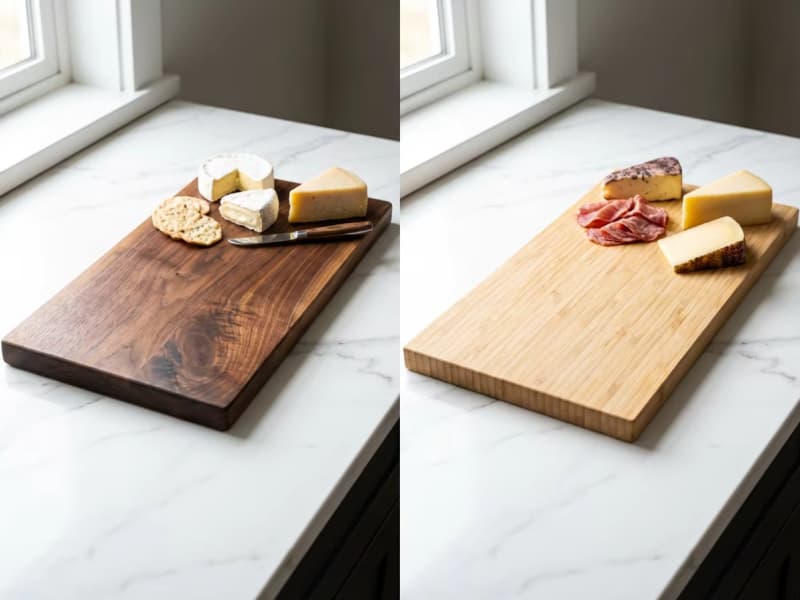
In contrast, bamboo originates from the Bambusoideae subfamily of the grass family and is not "wood" in the traditional sense¹. After harvesting, bamboo stalks are cut into strips, kiln-dried, and then bonded under high pressure using resin to create sturdy, durable laminated panels. Although bamboo closely resembles wood in appearance and texture, its cellular structure and hardness properties are entirely different. Bamboo offers superior moisture resistance and is less prone to warping, making it an exceptionally sustainable alternative-particularly appealing to those who prioritize environmental consciousness and prefer eco-friendly products.
Click this vedio to learn more about the production process of bamboo cheese boards.
These material differences extend beyond mere appearance; they directly impact the product's durability, protection of cutting tools, hygiene, and sustainability. Compared to traditional wood, bamboo has a lower porosity, making it less prone to bacterial growth; however, its higher density may cause relatively greater wear on knife blades. In contrast, wooden boards are more "knife-friendly," helping to maintain blade sharpness and ensuring long-lasting durability. Ultimately, whether you choose a bamboo or wooden cheese board comes down to your personal priorities.
How Do Bamboo and Wooden Cheese Boards Compare on Durability?
Bamboo stands out on the Janka hardness scale²-an industry benchmark for measuring wood's resistance to denting and wear.
Bamboo typically scores between 1,300 and 1,600 lbf (pounds-force), placing it on par with hickory and well above many popular hardwoods like walnut (1,010 lbf) or cherry (950 lbf)³. This makes bamboo incredibly durable, able to withstand scratches and surface dents much better than most wooden cheese boards.
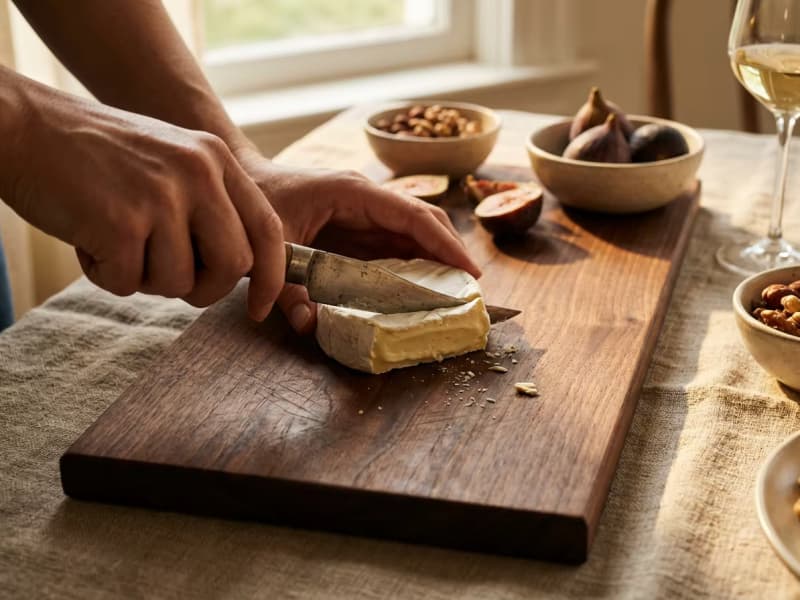
However, this impressive hardness comes with a trade-off. While bamboo's resilience makes it less likely to show wear over time, its rigidity can be tough on your knife blades. The harder the material, the quicker it can dull the edges of high-quality knives, especially cheese knives that need precision to cut through delicate textures.
Because of this, professional chefs and cheesemongers often prefer softer hardwoods like walnut or acacia. These woods strike a perfect balance between durability and blade preservation, offering a smoother cutting surface that won't quickly dull knives, making them a favorite for those who value both performance and aesthetics.
Which Material Lasts Longer With Daily Use?
| Property | Bamboo Cheese Board | Wooden Cheese Board (Acacia/Walnut) |
|---|---|---|
| Janka Hardness | 1,300–1,600 lbf | 900–1,700 lbf (varies by species) |
| Knife-Edge Friendliness | Low (dulls blades faster) | High (softer grain absorbs cuts) |
| Resistance to Warping | Moderate (lamination can delaminate) | High (solid wood flexes naturally) |
| Lifespan With Proper Care | 3–7 years | 10–25+ years |
| Repairability | Low (laminated layers can't be re-sanded easily) | High (solid wood boards can be sanded and re-oiled) |
The data is clear: a well-maintained wooden cheese board - particularly one made from olive wood or acacia - will outlast a bamboo board significantly under regular use.
Is a Bamboo Cheese Board More Hygienic Than a Wooden One?
One of the most misunderstood aspects of choosing a cheese board is the role each material plays in hygiene. Bamboo has long been praised for its natural antimicrobial properties, thanks to a bio-agent called bamboo kun⁴, which actively inhibits bacterial growth on the surface. This makes bamboo an excellent choice if you're looking for a board that resists microbial buildup. However, because bamboo cheese boards are typically laminated rather than solid, the adhesive seams between strips can trap moisture and bacteria, especially if the board isn't dried properly after washing.
Click this video to learn more about bamboo cheese board gluing & pressing process.
On the other hand, solid hardwood boards-particularly those made from maple-have a surprising advantage when it comes to hygiene. Research published in the Journal of Food Protection found that hardwood surfaces naturally exhibit a self-sanitizing effect. Bacteria that are drawn into the wood grain die off quickly and do not multiply⁵. This antimicrobial effect is something that doesn't occur on plastic or laminated surfaces, which can sometimes trap bacteria in ways that are harder to clean.
So, does a wooden cheese board harbor more bacteria than a bamboo board? The short answer is no, provided the board is cared for properly. Both bamboo and wooden cheese boards need to be hand-washed only (never submerged in water or put through the dishwasher), dried upright immediately after cleaning, and conditioned regularly with food-safe mineral oil to maintain their surface integrity. The true hygiene differentiator is the condition of the board's surface-any cracks or deep scores in either material can become breeding grounds for bacteria, and such boards should be retired or refinished to avoid contamination.
How Do They Compare on Sustainability and Environmental Impact?
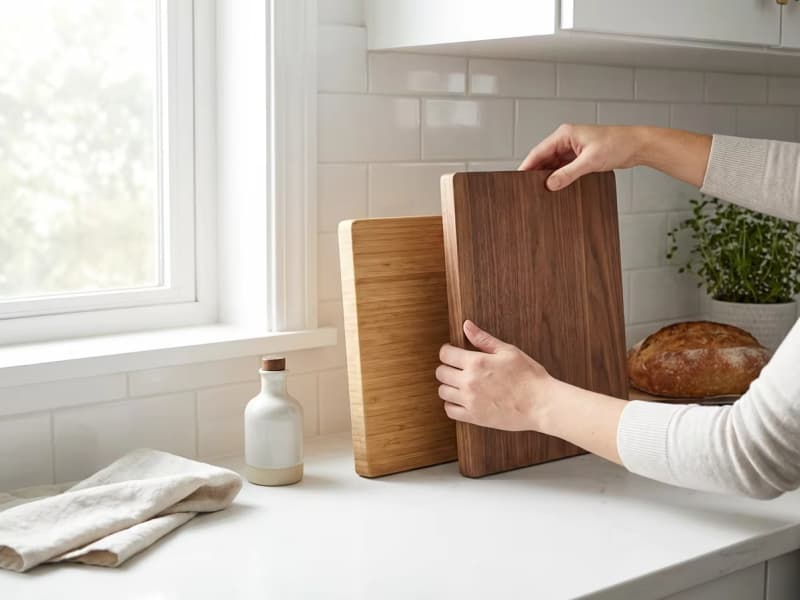
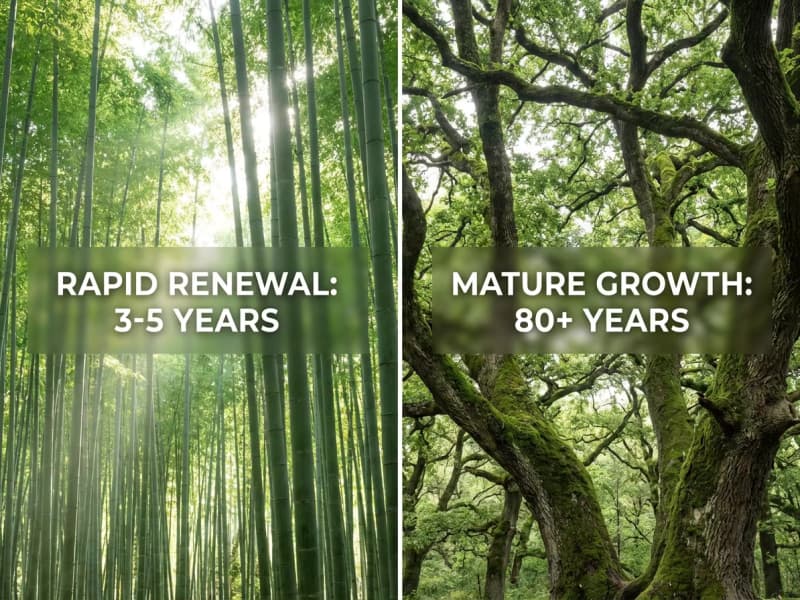
Bamboo's environmental advantages are undeniable. It grows rapidly-reaching maturity in just 3–5 years compared to 25–80 years for hardwoods-and requires no pesticides or irrigation, making it a highly renewable, low-impact resource.⁶ It also absorbs carbon efficiently, further strengthening its sustainability profile.
However, most bamboo used in consumer products is processed with formaldehyde-based adhesives, which can raise food-safety concerns under certain conditions.⁷ In addition, long-distance shipping reduces some of its environmental benefits.
Those certified by the Forest Stewardship Council (FSC)⁸-offer a strong alternative. When made from locally harvested acacia or reclaimed hardwood, they can balance sustainability, safety, and lower transport impact.
In short, bamboo is highly renewable, but FSC-certified or locally sourced wood can provide a more well-rounded sustainable choice depending on your priorities.
Which Material Has a Smaller Carbon Footprint Overall?
| Environmental Factor | Bamboo Cheese Board | FSC-Certified Wooden Cheese Board |
|---|---|---|
| Harvest Maturity | 3–5 years | 25–80 years |
| Carbon Sequestration | Very High | High |
| Adhesive / Chemical Use | Moderate–High (resins) | Low (natural oils, no lamination) |
| Shipping Distance (typical) | Long (mostly China-origin) | Variable (regional sourcing possible) |
| End-of-Life Biodegradability | Moderate (adhesives slow breakdown) | High (solid wood fully biodegrades) |
| FSC Certification Available | Rarely | Commonly |
For buyers prioritizing end-to-end sustainability, an FSC-certified wooden cheese board edges ahead - particularly one made locally or from reclaimed timber.
Which Board Is Better for a Charcuterie Board Presentation?
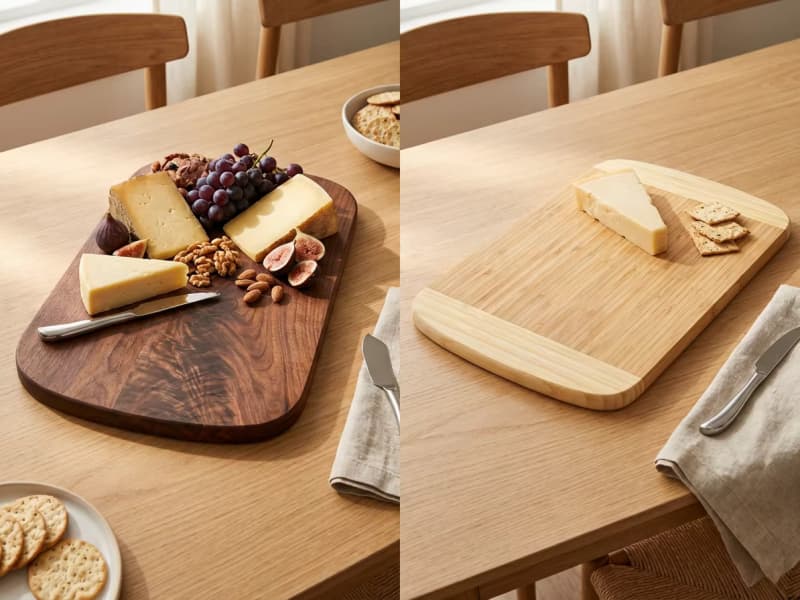
When it comes to aesthetics, wooden cheese boards clearly have the edge for charcuterie board presentations. The natural grain patterns in woods like walnut, olive wood, and acacia create a warm, inviting atmosphere, adding an artisanal touch to any display. Each wooden board is unique, with no two boards looking exactly alike. This individuality enhances their charm, making them not just functional pieces but also statement items on your table. Whether you're showcasing an array of cheeses, meats, or fruits, a wooden board brings a level of elegance and sophistication that elevates the entire presentation.
In contrast, bamboo boards tend to have a more uniform, lighter appearance. While this gives them a clean, modern look, particularly suited for minimalist or contemporary settings, they don't have the same depth or organic feel as solid hardwood. Bamboo's laminated strip pattern, though functional, can sometimes feel more industrial or manufactured compared to the natural richness and variation found in solid wood grains.
Are Personalized Cheese Boards Better in Wood or Bamboo?
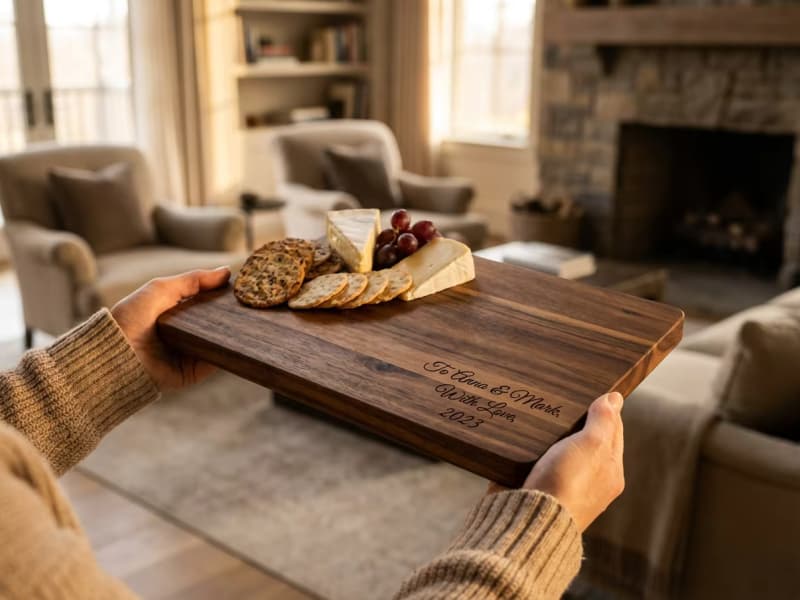
When it comes to personalized cheese boards-whether you're engraving names, logos, or special messages-wood is the clear winner. Laser engraving on solid hardwood, especially woods like walnut and acacia, creates deep, high-contrast results that stand out beautifully. The natural richness of the grain adds an extra layer of depth to the engraving, giving it a refined, gift-quality finish.
Bamboo does engrave well too, but its lighter color and uniform grain mean the engraving doesn't pop as dramatically. While bamboo can still make for a great personalized piece, the contrast isn't as striking, especially when viewed from a distance.
If you're sourcing cheese board gifts, personalized charcuterie boards, or branded boards for corporate events, solid hardwood options-particularly walnut and acacia-offer a higher perceived value and often result in greater customer satisfaction. These boards are not only functional but also make memorable, thoughtful gifts that leave a lasting impression.
How Should You Choose Between Bamboo and Wood?
The right choice ultimately comes down to how you plan to use your cheese board. Here's a clear, practical way to decide:
Choose a bamboo cheese board if you're looking for something affordable, lightweight, and easy to maintain for occasional use. It's a great option if you like a clean, minimalist aesthetic or want an eco-friendly material without diving too deeply into sourcing details.
Choose a wooden cheese board if you want a more premium, long-term investment. Solid hardwood boards are gentler on knives, develop a richer character over time, and offer a warmer, more elevated presentation. They're also the best choice for personalized or engraved gifts, thanks to their superior finish and contrast. If you entertain often or want a board that can be refinished and maintained for years, wood is the way to go.
For professional chefs, serious cheese lovers, or anyone building a high-quality charcuterie setup, solid hardwood stands out as the better option. It delivers greater durability, can be restored over time, and offers stronger long-term value-making it not just a purchase, but a piece that improves with use.
Find Your Perfect Cheese Board - We'll Help You Choose
By now, we're confident you have a clear understanding of the differences between bamboo and wooden cheese boards. Whether you're a first-time buyer, a retailer debating between bamboo and wooden charcuterie boards, or a corporate buyer making bulk purchases for gifts or events, our team is here to help you navigate the entire purchasing process with ease and precision.
Please feel free to contact us right away. Simply let us know your specific application, order quantity, and any customization requests-such as engraving, logo printing, or packaging design-and we'll provide you with a tailored recommendation and a highly competitive quote within 24 hours!
Our address
No. 3, Wuyi 3rd Road, Jian'ou City, Nanping City, Fujian Province, 353100
Phone Number
8615889249154
sales02@szmsl68.com

FAQ
Q: Can I use a bamboo or wooden cheese board as a cutting board?
A: Technically yes, but it's not recommended. Repeated heavy cutting damages the surface of both materials and introduces deep scores that harbor bacteria. Use a dedicated cutting board for food prep and reserve your cheese board for serving.
Q: How often should I oil a wooden cheese board?
A: Oil a new wooden cheese board 3–5 times in the first month to season it, then once a month during regular use. Use food-safe mineral oil or a beeswax blend - never cooking oils like olive or vegetable oil, which go rancid inside the wood grain.
Q: Are bamboo cheese boards dishwasher safe?
A: No. Dishwasher heat and prolonged water exposure cause bamboo boards to crack, warp, and delaminate at the adhesive seams. Always hand wash and dry immediately - the same rule applies to all wooden cheese boards.
Footnotes
¹ Bamboo is classified under the subfamily Bambusoideae of the family Poaceae (grasses). Source: Royal Botanic Gardens, Kew - World Checklist of Selected Plant Families, 2023.
² The Janka Hardness Test measures the force required to embed a 0.444-inch steel ball halfway into wood. Standard industry reference: U.S. Forest Service, Wood Handbook: Wood as an Engineering Material (2021).
³ Janka ratings: Bamboo 1,300–1,600 lbf; Walnut 1,010 lbf; Cherry 950 lbf; Acacia 1,700 lbf. Source: Wood Database - Janka Hardness Reference Chart (wooddatabase.com).
⁴ "Bamboo kun" is a naturally occurring antimicrobial bio-agent in bamboo fiber. Source: International Network for Bamboo and Rattan (INBAR) Technical Report No. 35, 2019.
⁵ Dean O. Cliver, UC Davis - Cutting Boards in Salmonella Cross-Contamination, Journal of Food Protection, 1994 (replicated and cited in multiple FDA food safety reviews).
⁶ FAO - World Bamboo Resources: A Thematic Study Prepared in the Framework of the Global Forest Resources Assessment 2005. Rome: Food and Agriculture Organization of the United Nations.
⁷ Formaldehyde-based adhesive concerns in bamboo products documented by the U.S. Consumer Product Safety Commission (CPSC) - Composite Wood Products Standard, 2019.
⁸ Forest Stewardship Council (FSC) - international nonprofit certifying responsible forest management. Certification database: info.fsc.org.
Authoritative References
U.S. Forest Service - Wood Handbook (2021)
International Network for Bamboo and Rattan (INBAR)
Forest Stewardship Council (FSC)
FDA - Food Contact Materials & Safety
The Wood Database - Hardness Reference
FAO - Global Forest Resources Assessment
U.S. Consumer Product Safety Commission - Composite Wood Standards