






Most Bamboo Cutting Boards Should Never Go in the Dishwasher
In fact, putting a standard bamboo cutting board in the dishwasher will shorten its lifespan.
During the dishwasher cycle, the cutting board is exposed for extended periods to high temperatures, high-pressure water jets, strongly alkaline detergents, and prolonged soaking in a damp environment. Over time, these combined factors can cause the bamboo fibers to swell, dry unevenly, crack, and warp, and may even weaken the strength of the joints.
Understanding the science behind this phenomenon will help you properly maintain your cutting board on a daily basis and make more informed purchasing decisions. If dishwasher compatibility is a top priority for you in the kitchen, consider choosing a bamboo cutting board that has undergone special treatment and is clearly labeled as "dishwasher-safe."
What Exactly Happens When a Bamboo Board Goes in the Dishwasher?
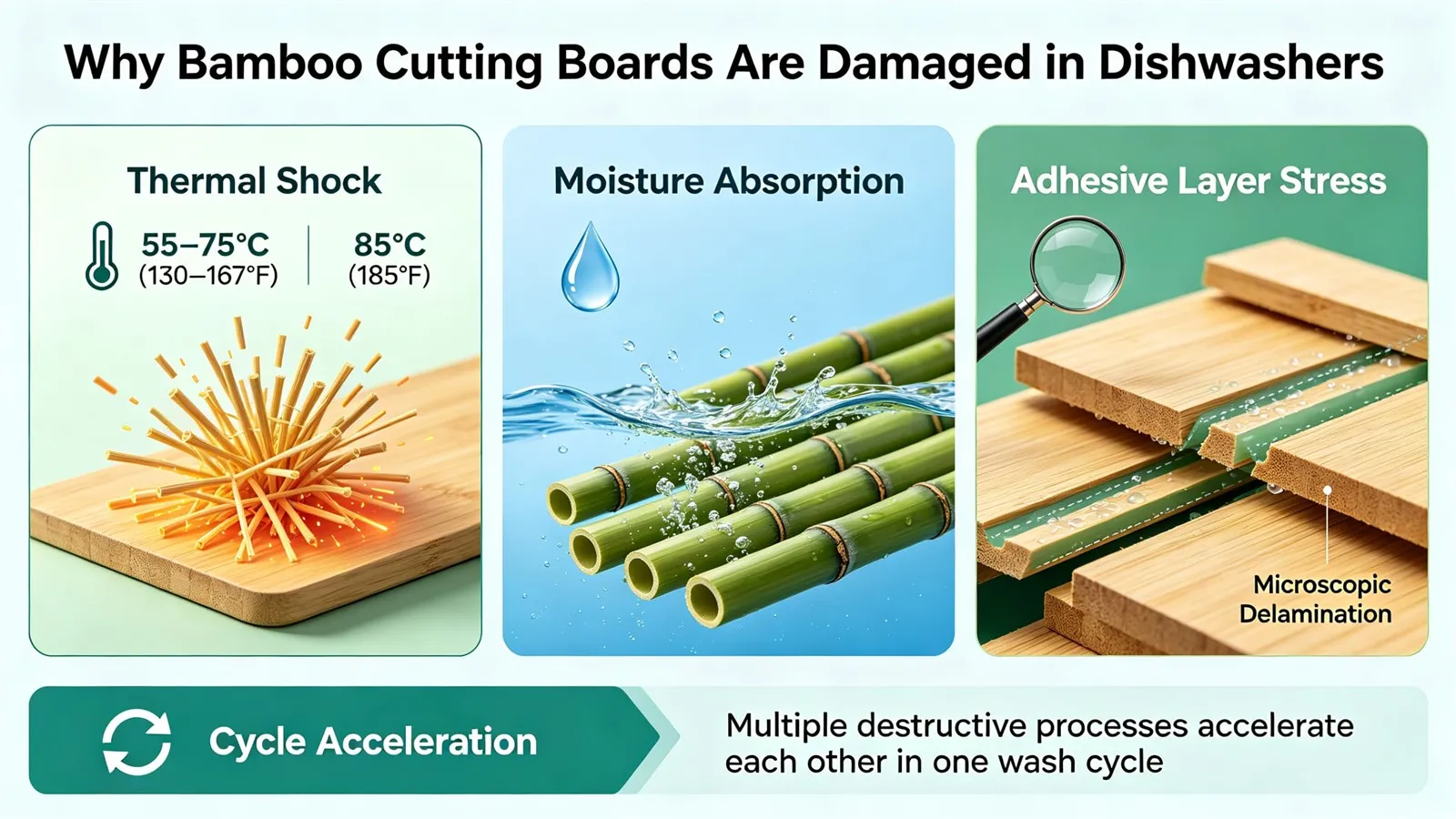
The damage a bamboo cutting board suffers in a dishwasher is not caused by a single factor-it is the result of several destructive processes happening at the same time, each accelerating the others within a single wash cycle.
The first is thermal shock¹. Dishwasher cycles typically run between 55–75°C (130–167°F), while heated drying modes can reach up to 85°C (185°F). Under these conditions, bamboo fibers rapidly expand as they absorb heat and moisture. Because the bamboo strips and adhesive³ layers expand at different rates, internal stress develops along the bonding lines, leading to microscopic delamination⁴ that can begin after only a few high-temperature cycles.
The second is prolonged moisture saturation. Unlike hand-washing, which exposes the board to water for only a short time, a dishwasher keeps the board wet for 30–90 minutes. This allows water to penetrate deep into the bamboo fiber structure, beyond the protective layer maintained by mineral oil conditioning. As the board dries unevenly afterward, the outer layers contract faster than the interior, causing warping, cupping, or bowing that can make the surface unstable during use.
The third mechanism is alkaline detergent degradation⁵. Most dishwasher detergents operate at a highly alkaline pH of 10–12, designed to break down grease and protein on hard surfaces like ceramic or stainless steel. For bamboo, however, this chemistry gradually breaks down lignin⁶-the natural structural component that gives bamboo its rigidity and durability. The same alkaline environment also weakens adhesive bonds between bamboo strips, accelerating separation and cracking over time.
The fourth factor is oxidative bleaching caused by chlorine-based detergent additives. Chlorine oxidizes the natural pigments within bamboo fibers, leading to the faded gray appearance commonly seen on dishwasher-damaged boards. More importantly, it can also alter the surface chemistry of bamboo's phenolic compounds⁷, reducing some of the natural antibacterial characteristics associated with the material.
Taken together, heat, moisture, detergent chemistry, and oxidation create a compounding cycle of damage that standard bamboo cutting boards are simply not designed to withstand repeatedly.
How Much Damage Does One Dishwasher Cycle Actually Cause?
For a typical mid-range bamboo cutting board measuring around 18–22 mm thick, one standard dishwasher cycle (55–65°C wash with heated drying) commonly results in:
visible grain lifting on parts of the surface;
slight but measurable warping, often around 2–5 mm across the board width;
early-stage delamination along strip joints or board edges;
surface dulling and mild discoloration caused by detergent chemistry.
These effects are usually irreversible. While re-oiling may restore some surface appearance, it cannot repair fiber damage, internal stress distortion, or weakened adhesive bonds.
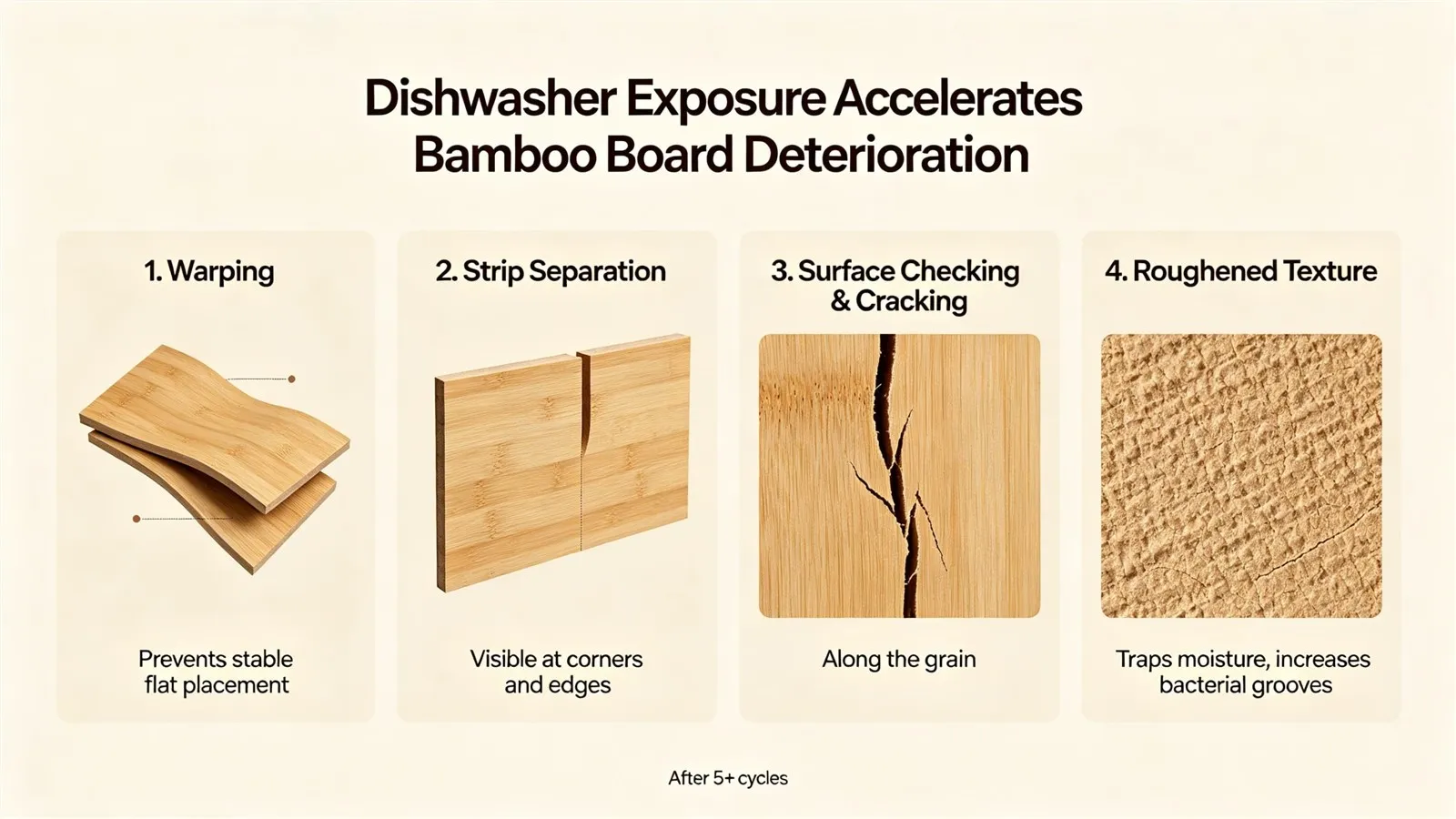
Repeated dishwasher exposure accelerates deterioration dramatically. After five or more cycles, many bamboo boards begin to show:
significant warping that prevents stable flat placement;
visible strip separation at corners and edges;
surface checking⁸ and cracking along the grain;
a roughened texture that traps moisture and increases bacterial groove accumulation.
At that stage, the board is no longer just cosmetically damaged-it may also become less hygienic and less safe to use. Once structural separation and deep cracking appear, replacement is generally the only reliable solution.
| Number of Cycles | Surface Condition | Structural Integrity | Food Safety Status | Recommended Action |
|---|---|---|---|---|
| 0 (hand-washed only) | Smooth, intact | Full | Fully safe (with maintenance) | Continue hand-washing |
| 1 cycle | Grain lifting, minor dulling | Minor delamination at edges | Safe - monitor closely | Re-oil immediately; return to hand-washing |
| 2–3 cycles | Visible surface roughening | Moderate delamination, initial warp | Use with caution | Sand lightly, re-oil; assess warp |
| 4–5 cycles | Deep grain disruption, bleaching | Significant warp, strip separation | Marginal - increased bacterial risk | Replace recommended |
| 6+ cycles | Severe cracking, surface collapse | Structural failure | Unsafe - replace immediately | Discard and replace |
Does Board Thickness Affect Dishwasher Resistance?
Thickness does provide some protection. A thick bamboo cutting board measuring 38 to 45 millimeters in thickness is still susceptible to the same four types of damage as a thin 15-millimeter board; thickness merely slows down the rate at which moisture penetrates the core of the structure and the rate at which warping occurs due to thermal expansion.
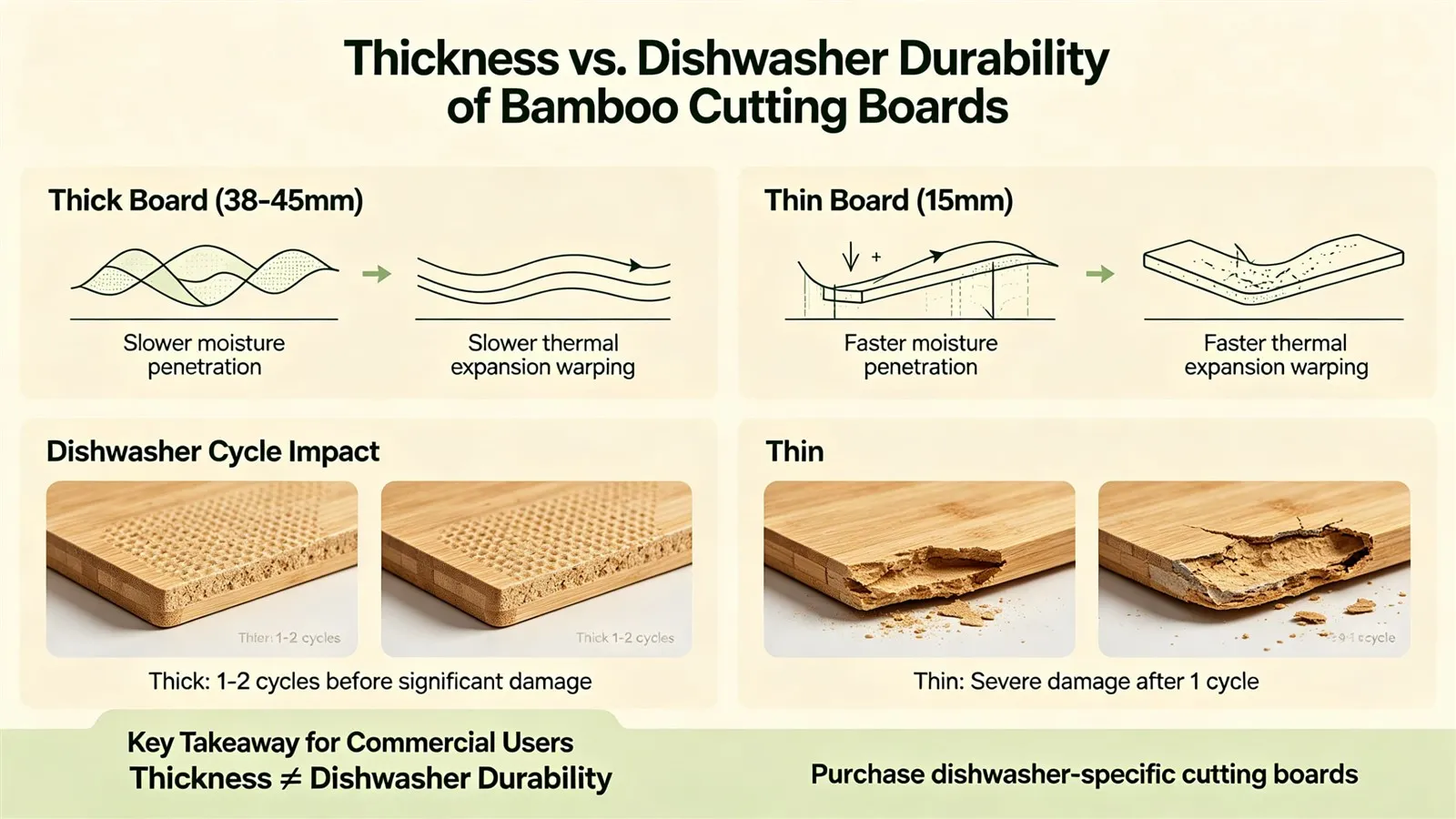
After a single dishwasher cycle, the surface texture of a thick cutting board will still become raised, and delamination will occur along the edges. The difference lies in the fact that a thick cutting board can withstand one or two cycles before showing significant structural damage, whereas a thin cutting board often exhibits severe damage after just one cycle.
For commercial users and purchasers in the foodservice industry, this distinction is critical; they often mistakenly assume that "thickness" serves as a substitute indicator for a cutting board's "dishwasher durability."
For kitchen environments requiring dishwasher-compatible cutting boards, the correct solution is to purchase cutting boards that are specifically designed for machine washing.
Are Any Bamboo Cutting Boards Actually Dishwasher Safe?
Yes-but truly dishwasher-safe bamboo cutting boards are a specialized product category, not the industry standard. These boards differ from conventional laminated bamboo boards in two key areas: adhesive technology and surface protection.
Dishwasher-safe models use high-temperature, waterproof adhesive systems-commonly two-component epoxy resin⁹ or cross-linked polyurethane¹⁰-that can maintain structural stability under dishwasher temperatures up to 75°C. These industrial-grade adhesives are significantly more durable, and more costly, than the standard PVAc¹¹ or melamine-formaldehyde adhesives typically used in regular bamboo board production.
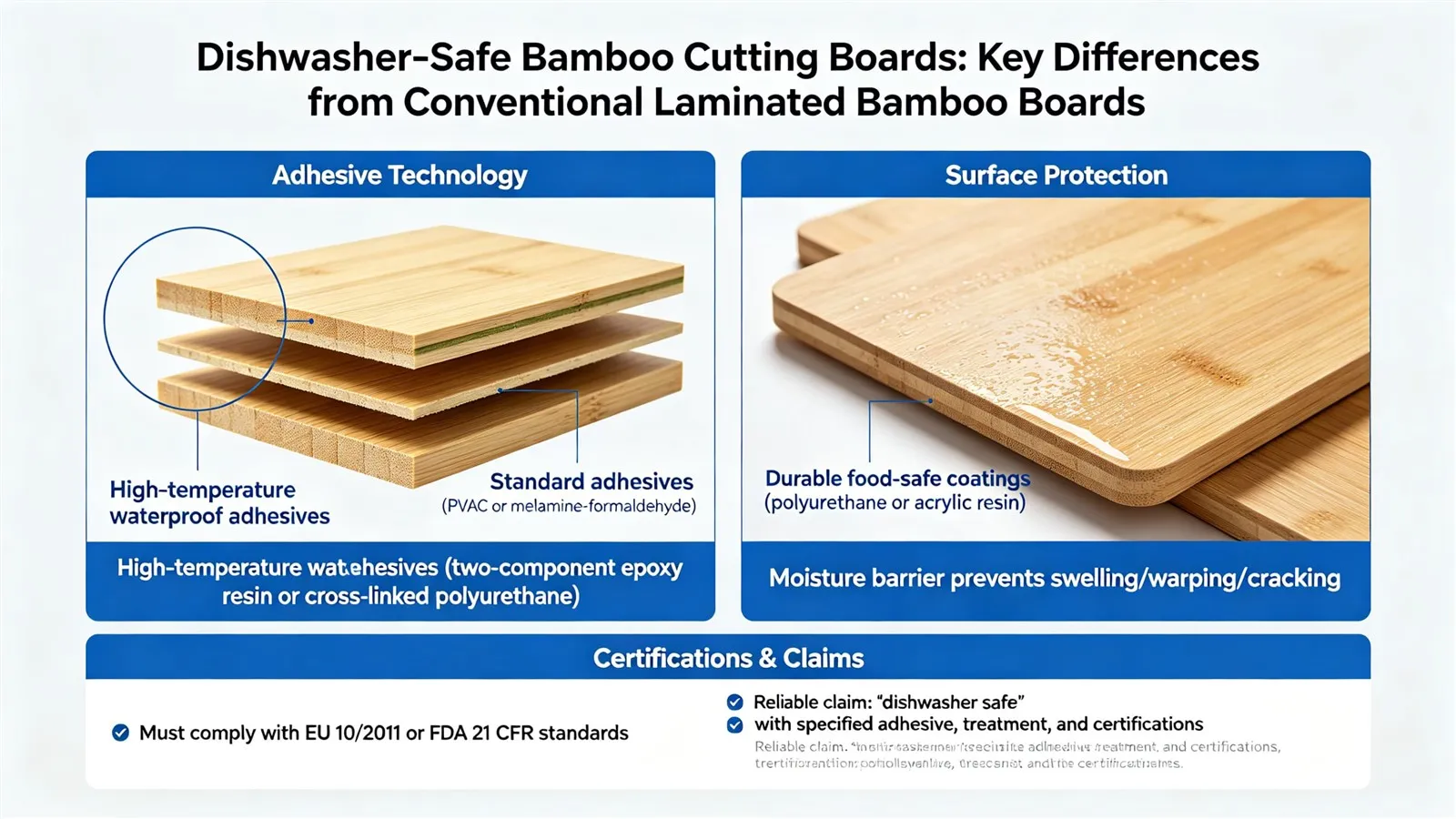
The second major difference is surface treatment. Dishwasher-safe bamboo cutting boards are usually sealed with durable food-safe coatings such as polyurethane or acrylic resin¹². This protective layer acts as a moisture barrier, reducing deep water penetration that would otherwise lead to swelling, warping, or cracking during machine washing. To be commercially acceptable in major markets, these coatings must comply with food-contact regulations such as EU Regulation 10/2011¹³ or FDA 21 CFR standards.
For buyers, the most reliable test is straightforward: a manufacturer should clearly state that the board is "dishwasher safe" and be able to specify the adhesive system, surface treatment, and relevant food-contact certifications used in production. General claims like "easy to clean" or "water resistant" are not the same as verified dishwasher compatibility.
| Feature | Standard Bamboo Board | Dishwasher-Safe Bamboo Board |
|---|---|---|
| Adhesive type | PVAc or MF resin | High-temp epoxy or cross-linked PU |
| Max safe water temp | ~40°C (hand-wash) | 70–75°C (dishwasher cycle) |
| Surface treatment | Mineral oil (user-applied) | Food-safe polymer sealant |
| Warp resistance (dishwasher) | Very Low | High |
| Delamination risk (dishwasher) | Very High | Low |
| Food-contact certification | EU 10/2011 / FDA 21 CFR | EU 10/2011 / FDA 21 CFR (required) |
| Price premium vs. standard | Base | 30–60% higher |
| Natural antibacterial surface | Yes - preserved | Reduced (sealed surface) |
| Suitable for mineral oil conditioning | Yes | Not required / limited |
| Recommended washing method | Hand-wash only | Hand-wash preferred; dishwasher lower rack, gentle cycle |
What Is the Correct Way to Clean a Standard Bamboo Cutting Board?
Since most bamboo cutting boards are not dishwasher safe, proper hand-washing becomes the best-and simplest-alternative. Done correctly, the entire process takes less than two minutes and can dramatically extend the board's usable lifespan while maintaining food safety.
A recommended cleaning routine, aligned with World Health Organization food safety guidance¹⁴ and U.S. Food and Drug Administration recommendations for food-contact surfaces, is straightforward: after use, rinse the board under warm running water to remove food residue; apply a small amount of mild dish soap and scrub with a dedicated cleaning brush rather than a sponge, which can retain bacteria; rinse thoroughly; then dry both sides immediately with a clean cloth. Finally, store the board upright or at an angle so air can circulate freely and the surface dries completely.
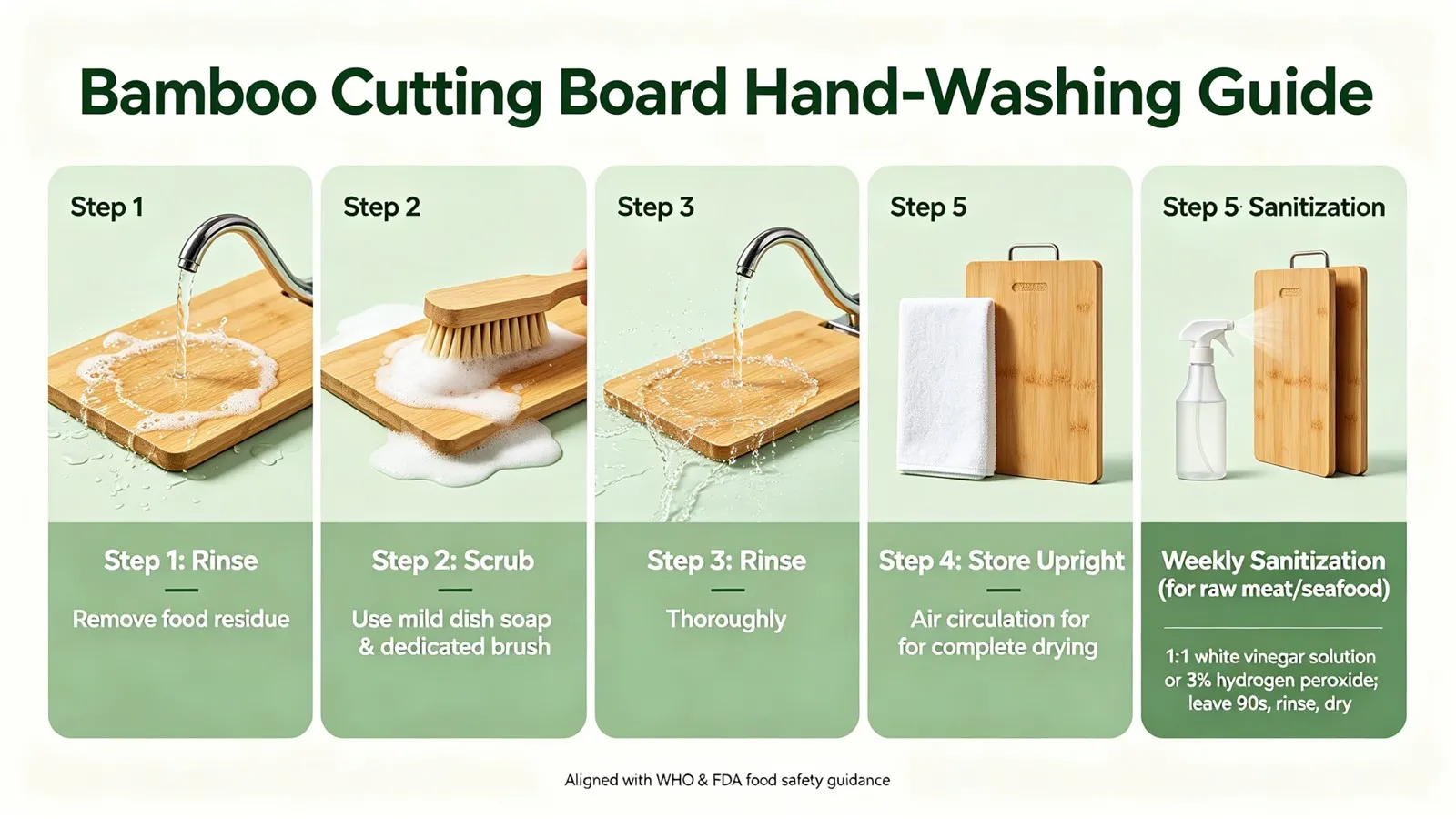
For boards used with raw meat, poultry, or seafood, adding a weekly sanitization step is highly recommended. A diluted white vinegar solution (1:1 with water) or a 3% hydrogen peroxide¹⁵ spray can be applied to the surface, left for about 90 seconds, then rinsed and dried thoroughly.
When combined with regular maintenance, this cleaning method can achieve bacterial reduction levels comparable to-or in some cases better than-dishwasher sanitization, without exposing the board to the structural damage caused by machine washing.
Can a Dishwasher-Damaged Bamboo Board Be Restored?
Minor dishwasher damage on a bamboo cutting board can sometimes be repaired, but only if the structure of the board remains intact. Surface roughness, slight grain lifting, or mild discoloration caused by one or two wash cycles can often be improved through careful sanding and re-oiling. Sanding the surface in the direction of the grain, followed by multiple applications of food-grade mineral oil, helps restore smoothness, moisture resistance, and overall appearance.
This type of maintenance can significantly extend the usable life of a lightly damaged board. However, once the board develops visible strip separation, severe warping, or deep cracks, the damage is no longer cosmetic-it becomes structural. In these cases, restoration is not considered safe or reliable, and replacement is the better option.
A simple guideline applies: if the board still sits flat on the countertop and all bamboo strips remain firmly bonded, it can usually be restored. If it rocks during use or shows open gaps between strips, it should be replaced for both food safety and knife safety reasons.
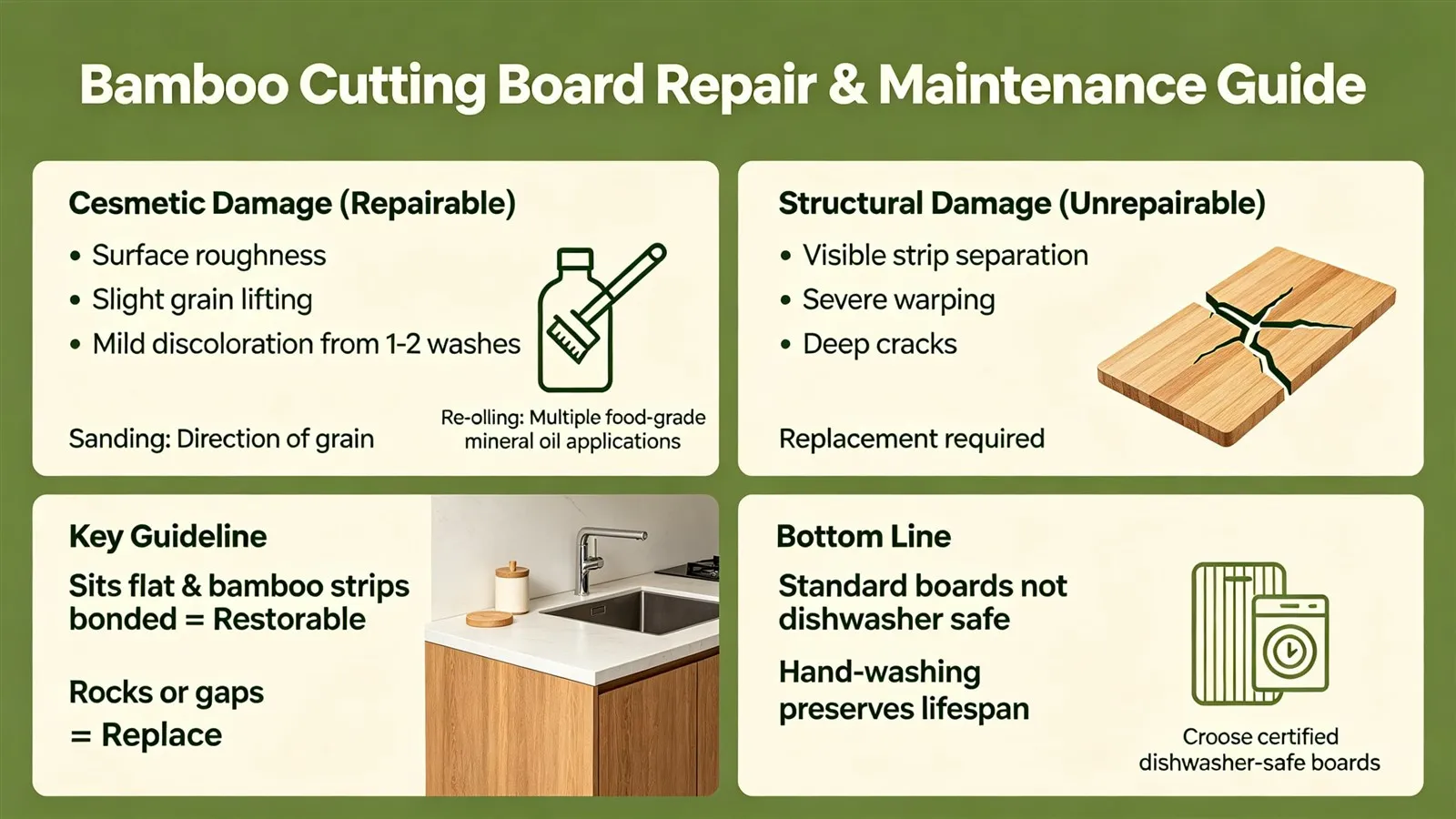
Standard bamboo cutting boards are not designed for dishwasher use. High temperatures, prolonged water exposure, strong detergents, and chlorine-based chemicals work together to weaken the bamboo fibers and adhesive structure over time.
Hand-washing, by contrast, takes only a short time and can help preserve the board's performance and lifespan for many years. For users who require machine washing, the best solution is to choose a cutting board specifically engineered and certified as dishwasher safe, with high-temperature-resistant adhesives and food-safe protective coatings clearly documented by the manufacturer.
Find the perfect bamboo cutting board for your kitchen
Whether you need a high-quality cutting board that will last for decades and is suitable for hand washing, or a bamboo cutting board designed for modern kitchens and safe for the dishwasher-we have you covered. Our product range spans both categories, manufactured in strict compliance with all relevant certification standards, and we offer retail, wholesale, and OEM services.
👉 Explore our bamboo cutting board collection-featuring standard models, dishwasher-safe options, large-size boards, sets, and custom OEM options, all accompanied by complete food contact safety compliance documentation.
👉 Wholesalers and trade buyers: Request quotes, samples, and certification documents for our full product line-we promise to respond within 24 hours.
FAQ
Q1: I accidentally put my bamboo cutting board in the dishwasher-is it completely ruined?
A: Not necessarily. First, check if it sits flat-if there's only minor warping of less than 2 millimeters, it will usually straighten out on its own as the board dries. If it does return to its original shape, gently sand the surface with 220-grit sandpaper, then apply food-grade mineral oil in three separate applications over the next 48 hours to condition it. If the edges show visible cracks or separation of the bamboo strips, or if the board wobbles noticeably when placed on a surface, this structural damage is likely beyond repair; rather than continuing to use it, it's safer to replace it with a new one.
Q2: Before purchasing, how can I confirm whether a bamboo cutting board is truly dishwasher-safe?
A: Look for a label clearly marked "Dishwasher Safe," and check if it specifies the type of adhesive used and whether it bears a food contact safety certification mark. If the product page only states "easy to clean" or "wipe clean" without explicitly stating that it is dishwasher-safe, assume that the product is for hand-washing only. Genuinely dishwasher-safe bamboo cutting boards are typically priced significantly higher than standard models; if the price is the same as a standard model, the manufacturing process and materials are likely no different.
Q3: Is hand-washing a bamboo cutting board really as hygienic as dishwasher cleaning?
A: Yes, and in some ways, it's even better. Washing with hot water, mild dish soap, and a brush, followed by immediate drying, and disinfecting once a week with vinegar or hydrogen peroxide, provides sterilization results that are fully comparable to dishwasher cleaning-without damaging the board's structure.
Annotations & Footnotes
¹ Thermal shock - The mechanical stress induced in a material by rapid or extreme temperature change, causing differential expansion and contraction within the material structure. In bamboo cutting boards, thermal shock from dishwasher temperatures initiates micro-fractures at adhesive bond lines between bamboo strips.
² Cellulosic materials - Materials primarily composed of cellulose, the structural polysaccharide that forms plant cell walls. Bamboo is approximately 40–60% cellulose by dry weight; its cellulosic structure makes it highly responsive to temperature and moisture changes in ways that synthetic materials are not.
³ Adhesive - The bonding compound used to laminate individual bamboo strips into a cutting board panel. Common types include polyvinyl acetate (PVAc), melamine-formaldehyde resin, and urea-formaldehyde resin - all of which have temperature limits below standard dishwasher operating temperatures.
⁴ Delamination - The separation of bonded layers in a laminated composite material due to adhesive failure. In bamboo cutting boards, delamination typically initiates at board edges under moisture and thermal stress, progressing inward with continued exposure.
⁵ Alkaline detergent degradation - The chemical breakdown of organic materials (including lignin, cellulose, and adhesives) by strongly alkaline cleaning agents. Standard dishwasher detergents operate at pH 10–12; at these pH levels, the lignin matrix of bamboo undergoes hydrolytic degradation that weakens both fiber structure and inter-strip bonding.
⁶ Lignin - A complex aromatic polymer that provides structural rigidity to bamboo and wood cell walls. It constitutes approximately 20–30% of bamboo by dry weight and is the primary source of bamboo's natural antimicrobial phenolic compounds. Alkaline hydrolysis in dishwashers degrades lignin, simultaneously weakening structural integrity and reducing surface antibacterial activity.
⁷ Phenolic compounds - Bioactive aromatic compounds naturally present in bamboo lignin; demonstrated antimicrobial activity against common foodborne pathogens. Chlorine oxidation from dishwasher detergent additives disrupts phenolic compound structure, reducing their biological activity on the board surface.
⁸ Surface checking - Fine surface cracks or splits that develop along the grain direction in bamboo and wood due to differential drying rates between the outer and inner fiber layers. In dishwasher-damaged boards, checking appears rapidly and progressively deepens with subsequent moisture exposure.
⁹ Two-component epoxy resin - A structural adhesive formed by mixing a resin component and a hardener, producing a cross-linked polymer network with high temperature resistance (typically rated to 80–120°C), water resistance, and mechanical strength. Used in dishwasher-rated bamboo board construction as a replacement for standard PVAc or MF adhesives.
¹⁰ Cross-linked polyurethane (PU) - A thermosetting polymer adhesive formed through isocyanate-polyol reactions that produce a durable, waterproof, and temperature-resistant bond. Food-safe cross-linked PU formulations are used in premium dishwasher-rated bamboo board construction and as food-safe surface coatings.
¹¹ Polyvinyl acetate (PVAc) - The most common adhesive in standard bamboo cutting board manufacture; forms a strong bond at room temperature but softens significantly at dishwasher temperatures (above 60°C), making it unsuitable for machine-wash applications.
¹² Food-grade acrylic resin - A transparent, food-contact-safe polymer coating applied to bamboo surfaces to create a continuous moisture barrier. Must comply with EU Regulation 10/2011 or FDA 21 CFR for legal food-contact use; provides the surface sealing necessary for dishwasher-rated bamboo board performance.
¹³ EU Regulation 10/2011 - European Commission regulation on plastic materials and articles intended to come into contact with food; specifies migration limits for substances from food-contact plastics and polymer coatings. Compliance is required for any coated bamboo product sold in EU markets.
¹⁴ WHO food safety guidance - The World Health Organization's Five Keys to Safer Food programme; Key 1 (keep clean) and Key 2 (separate raw and cooked) provide the foundational framework for cutting board washing and cross-contamination prevention in domestic and commercial kitchens.
¹⁵ 3% hydrogen peroxide - A food-contact-safe oxidizing sanitizing agent effective against E. coli, Salmonella, Listeria monocytogenes, and Campylobacter at 3% concentration. Safe for bamboo surfaces when applied, left for 60–90 seconds, and rinsed promptly; achieves pathogen reduction without the surface-drying effects of bleach.
Authoritative Reference Links
WHO - Five Keys to Safer Food https://www.who.int/activities/promoting-safe-food-handling/five-key-to-safer-food
FDA - 21 CFR 172.878: Food-Grade Mineral Oil https://www.ecfr.gov/current/title-21/chapter-I/subchapter-B/part-172/subpart-H/section-172.878
PubMed - Cutting Boards of Plastic and Wood Contaminated with Bacteria https://pubmed.ncbi.nlm.nih.gov/31113021/
PMC (NIH) - Antimicrobial Characteristics of Wood and Bamboo Materials https://pmc.ncbi.nlm.nih.gov/articles/PMC7277147/
FSC International - Certification Standards https://fsc.org/en/standards
PMC (NIH) - Microplastic Release from Cutting Boards and Gut Health Study (2025) https://pmc.ncbi.nlm.nih.gov/articles/PMC11980920/