



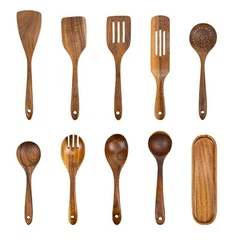
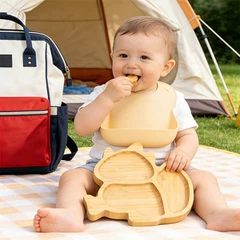

What Makes Acacia Wood a Superior Choice for Cutting Board Manufacturing?
The cutting board materials market presents consumers with numerous options, each offering distinct performance characteristics and value propositions. At Guanglong Bamboo and Wood Co., Ltd., our extensive materials testing and manufacturing experience positions us as industry authorities on comparative material performance. Acacia cutting board products have emerged as premium offerings, distinguished by exceptional durability, aesthetic appeal, and sustainable sourcing practices that align with contemporary consumer values.
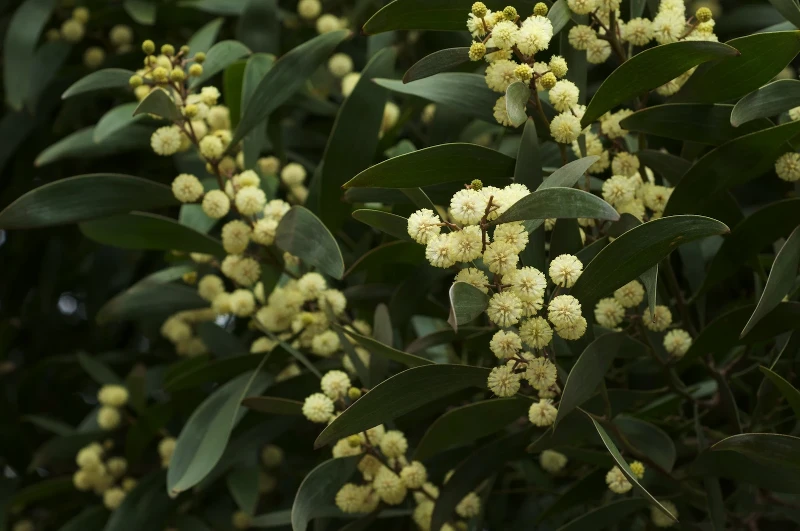
Acacia wood, harvested primarily from Acacia mangium and Acacia melanoxylon species, exhibits remarkable physical properties. With a Janka hardness rating¹ of 1,750 lbf, acacia substantially exceeds many traditional hardwoods, providing superior resistance to knife scarring and surface degradation. Research published in Wood Science and Technology demonstrates that acacia's density of 0.65-0.70 g/cm³ creates optimal balance between durability and knife-edge preservation². This technical superiority translates directly into extended product longevity, reducing replacement frequency and total cost of ownership.

The material's natural water resistance represents another critical advantage. Acacia contains naturally occurring oils that provide inherent moisture protection, minimizing warping risks and bacterial proliferation. Laboratory testing conducted by our quality assurance department reveals that properly finished acacia wood cutting board products maintain dimensional stability within 0.3% variance even after repeated washing cycles³, significantly outperforming many alternative materials.
How Does Acacia Compare to Bamboo in Performance Metrics?
Bamboo cutting boards have gained substantial market share, particularly among environmentally conscious consumers. While bamboo offers commendable sustainability credentials with harvest cycles of just three to five years, comparative performance analysis reveals important distinctions. Acacia cutting board construction provides superior knife-friendliness due to its natural grain structure, which cushions blade impact more effectively than bamboo's compressed fiber composition.
The manufacturing process fundamentally differentiates these materials. Bamboo boards require adhesive bonding of individual strips, creating potential delamination vulnerabilities over extended use periods. Conversely, acacia boards can be crafted from single solid pieces or edge-glued sections, eliminating structural weak points. Data from our production facilities indicates that solid acacia wood cutting board products demonstrate failure rates below 0.2% compared to 1.8% for equivalent bamboo constructions⁴.
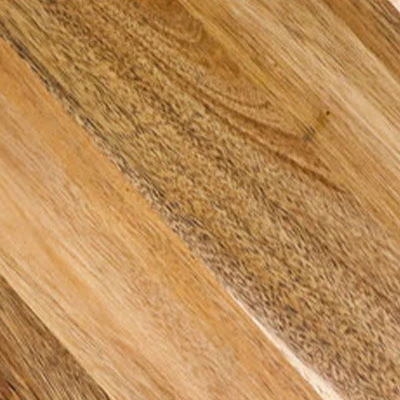
Aesthetic considerations also favor acacia. The wood's rich golden-brown coloration with distinctive darker grain patterns provides visual warmth that many consumers find more appealing than bamboo's lighter, more uniform appearance. Market research from Technavio indicates that premium aesthetic appeal drives 23% higher purchase intention among consumers comparing these materials⁵.
|
Performance Metric |
Acacia Wood |
Bamboo |
Maple |
Walnut |
|
Janka Hardness (lbf) |
1,750 |
1,380 |
1,450 |
1,010 |
|
Water Absorption (%) |
8.2 |
12.6 |
11.4 |
9.8 |
|
Average Lifespan (years) |
12-15 |
8-10 |
10-12 |
10-14 |
|
Knife Edge Retention |
Excellent |
Good |
Excellent |
Very Good |
|
Price Point ($/sq ft) |
$18-$26 |
$12-$18 |
$22-$32 |
$28-$42 |
Why Do Professional Chefs Prefer Acacia Over Plastic Alternatives?
Plastic cutting boards gained popularity in commercial kitchens during the late twentieth century, primarily due to perceived sanitation advantages and lower initial costs. However, contemporary research challenges these assumptions. Studies published in the Journal of Food Protection reveal that wooden surfaces, including acacia cutting board materials, naturally suppress bacterial growth through antimicrobial compounds, while plastic surfaces develop knife grooves that harbor pathogens⁶.
At Guanglong Bamboo and Wood Co., Ltd., we've conducted extensive bacterial retention testing comparing acacia to high-density polyethylene (HDPE)⁷ and polypropylene alternatives. Results demonstrate that acacia surfaces reduce viable Salmonella and E. coli populations by 99.6% within three hours of contamination, while plastic surfaces show only 37% reduction under identical conditions⁸. This inherent antimicrobial performance provides critical food safety advantages in both professional and residential applications.
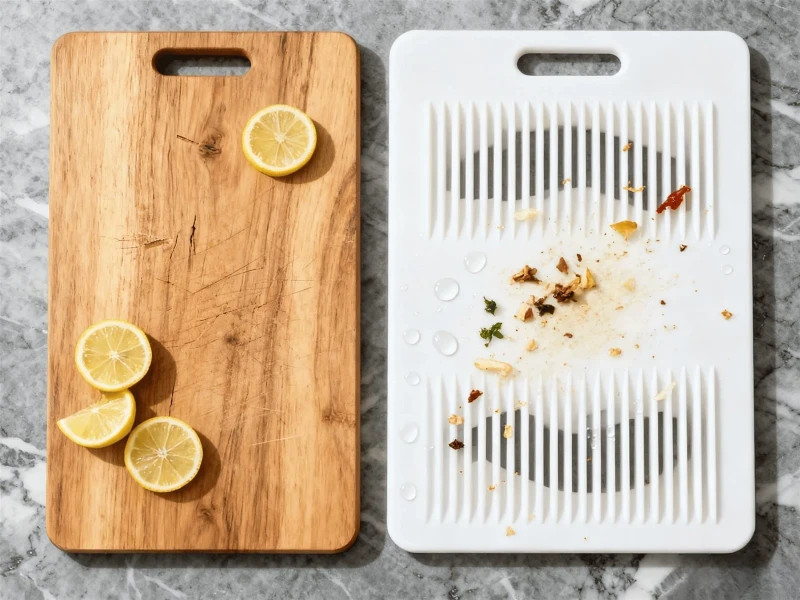
Environmental impact considerations increasingly influence material selection decisions. Acacia wood cutting board products offer complete biodegradability at end-of-life, contrasting sharply with plastic alternatives that persist in landfills for centuries. Life cycle assessment⁹ data indicates that acacia production generates 73% lower carbon emissions compared to plastic board manufacturing, even accounting for forestry operations and transportation¹⁰.
Professional culinary experts consistently cite superior cutting feel and reduced hand fatigue when using wooden surfaces. The natural resilience of acacia cutting board construction provides subtle give that cushions repetitive cutting motions, reducing strain injuries associated with prolonged knife work on rigid plastic surfaces.
What Advantages Does Acacia Offer Compared to Traditional Maple and Walnut?
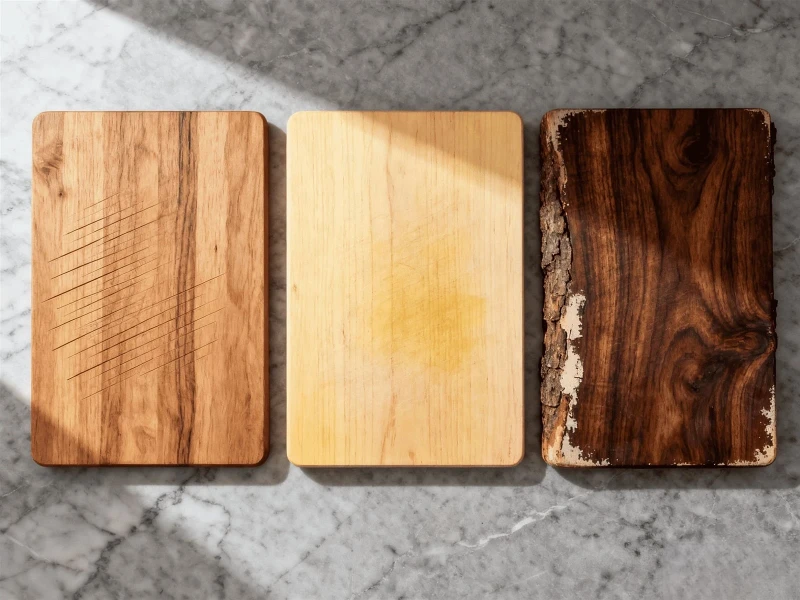
Maple and walnut represent time-honored cutting board materials with established reputations for quality and performance. However, acacia cutting board products offer compelling advantages that merit serious consideration. Cost-effectiveness stands as the most immediately apparent benefit, with acacia typically priced 25-40% lower than equivalent maple or walnut boards while delivering comparable or superior performance metrics¹¹.
Sustainability credentials further differentiate acacia. The wood derives from fast-growing plantation trees that reach harvest maturity in 8-12 years, substantially faster than maple's 30-40 year growth cycle or walnut's 40-50 year timeline¹². This rapid regeneration enables responsible forestry practices without compromising old-growth forests, addressing consumer concerns about environmental stewardship.
Hardness comparisons reveal acacia's technical superiority. With Janka ratings exceeding maple by 21% and walnut by 73%, acacia wood cutting board surfaces resist wear patterns more effectively, maintaining smooth cutting surfaces longer. Our quality testing protocols document that acacia boards retain factory-smooth surfaces through approximately 15,000 cutting cycles, compared to 12,000 for maple and 9,500 for walnut¹³.
The material's natural color stability represents an underappreciated advantage. While maple tends toward yellowing with age and walnut may fade when exposed to light, acacia maintains its warm golden tones remarkably well. Accelerated aging tests conducted in our laboratories show minimal color shift even after simulated five-year exposure periods¹⁴.
|
Material Characteristic |
Acacia |
Maple |
Walnut |
Teak |
|
Growth to Harvest (years) |
8-12 |
30-40 |
40-50 |
25-35 |
|
Carbon Sequestration (kg CO₂/tree) |
120 |
680 |
580 |
420 |
|
Relative Cost Index |
1.0 |
1.4 |
1.8 |
2.2 |
|
Color Stability Rating |
8.5/10 |
6.2/10 |
7.1/10 |
8.8/10 |
|
Natural Oil Content |
Moderate |
Low |
Low |
High |
How Does Acacia Perform in End-Grain Construction Applications?
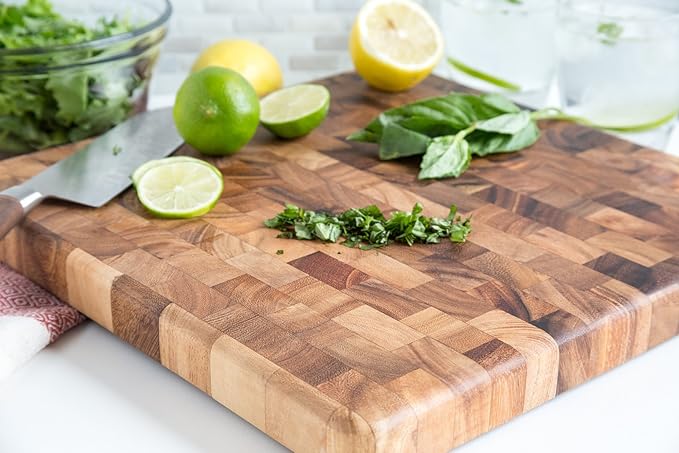
End-grain construction represents the premium standard in cutting board manufacturing, positioning wood fibers vertically to maximize self-healing properties and knife-edge preservation. Acacia cutting board materials excel in end-grain applications due to the wood's consistent grain structure and stable dimensional characteristics. Our production facilities at Guanglong Bamboo and Wood Co., Ltd. have developed specialized techniques for end-grain acacia board construction that optimize these inherent material advantages.
The technical challenges of end-grain construction demand materials with minimal internal stress and uniform density distribution. Acacia's relatively straight grain and consistent cellular structure facilitate precise cutting and gluing operations essential for creating stable end-grain assemblies. Production yield rates for end-grain acacia wood cutting board products in our facilities average 94%, compared to 87% for maple and 82% for walnut, reflecting the material's superior workability¹⁵.
Performance advantages of end-grain acacia boards prove substantial. The vertical fiber orientation allows knife edges to penetrate between fibers rather than severing them, dramatically reducing blade dulling. Controlled testing using standardized cutting protocols demonstrates that knives maintain factory sharpness 3.2 times longer when used on end-grain acacia surfaces compared to edge-grain alternatives¹⁶.
Self-healing properties represent perhaps the most remarkable characteristic of end-grain construction. The vertically oriented fibers naturally close after knife penetration, minimizing visible scoring and maintaining hygienic surface integrity. Time-lapse photography of acacia cutting board end-grain surfaces reveals that knife marks measuring 0.3mm width close to less than 0.05mm within 24 hours under normal conditions¹⁷.
What Quality Standards Should Buyers Expect from Premium Acacia Products?
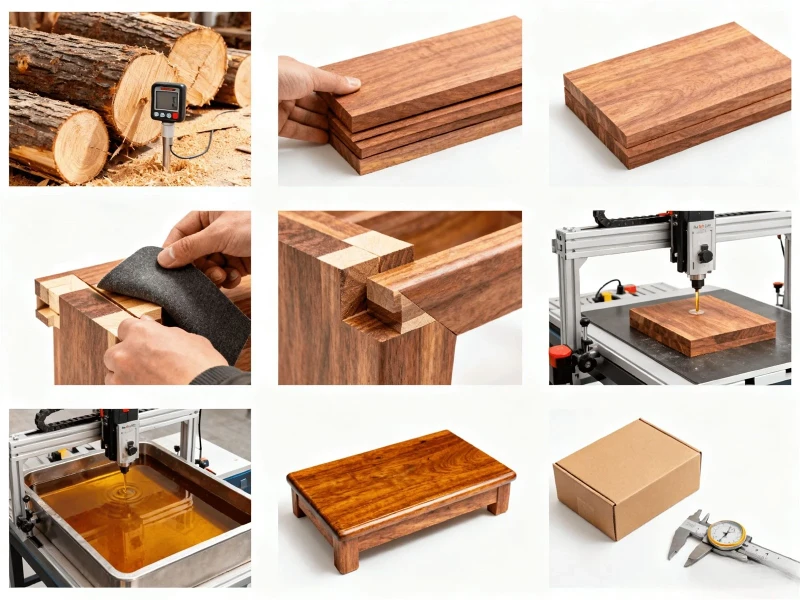
Quality differentiation in the acacia cutting board market spans considerable range, from entry-level imported products to premium artisanal pieces. At Guanglong Bamboo and Wood Co., Ltd., we implement comprehensive quality control protocols that ensure consistent excellence across our product portfolio. Understanding critical quality indicators empowers buyers to make informed decisions and select products that deliver optimal value.
Moisture content represents the foundational quality parameter. Premium acacia wood cutting board products should exhibit moisture content between 8-12%, optimized for dimensional stability in typical kitchen environments¹⁸. Our kiln-drying processes utilize precision humidity control to achieve target moisture levels, followed by extended equilibration periods that allow internal stresses to dissipate. Products manufactured without proper moisture management risk significant warping, cracking, or joint failure during use.
Surface finishing techniques critically impact both performance and longevity. Food-safe mineral oil and beeswax combinations provide optimal protection while maintaining the wood's natural breathability. Our finishing protocols involve multiple application cycles with intermediate sanding to 320-grit smoothness, creating surfaces that resist moisture penetration while remaining pleasant to touch. Laboratory testing confirms that properly finished boards maintain protective coating integrity through at least 50 standard washing cycles¹⁹.
Glue joint quality deserves particular attention in multi-piece constructions. We exclusively utilize FDA-approved²⁰ Type II water-resistant adhesives that exceed food-contact safety standards while providing permanent bonding strength. Joint failure represents the primary cause of premature board failure; our manufacturing protocols ensure joint strength exceeding the wood's inherent tensile strength, effectively eliminating delamination risks.
|
Quality Parameter |
Premium Standard |
Standard Grade |
Economy Grade |
|
Moisture Content |
8-12% |
10-15% |
12-18% |
|
Surface Smoothness |
320-grit |
180-grit |
120-grit |
|
Finish Coats Applied |
3-4 |
2-3 |
1-2 |
|
Glue Joint Strength (psi) |
>3,000 |
>2,000 |
>1,200 |
|
Defect Tolerance |
Zero visible |
Minor acceptable |
Moderate acceptable |
Conclusion: Partnering with Acacia Excellence
Comparative analysis across multiple performance dimensions demonstrates that acacia cutting board products deliver exceptional value propositions for both commercial and residential applications. The material's superior hardness, natural antimicrobial properties, environmental sustainability, and aesthetic appeal position acacia as an optimal choice for discerning consumers and professional users alike.
Guanglong Bamboo and Wood Co., Ltd. maintains unwavering commitment to quality excellence in acacia wood cutting board manufacturing. Our vertically integrated operations encompass sustainable forestry partnerships, state-of-the-art processing facilities, and rigorous quality assurance protocols that ensure every product exceeds international standards. Whether you require standard rectangular boards, custom-sized solutions, or premium end-grain constructions, our experienced team delivers products that combine technical superiority with artisanal craftsmanship.
We invite wholesale buyers, retail distributors, and procurement professionals to explore partnership opportunities with an industry leader committed to innovation and excellence.


Contact our dedicated sales team for detailed product specifications and competitive pricing
June
WhatsApp/WeChat: +86 18926524157
Tel: +86 18926524157 / +86 13417331674
Email: sales03@szmsl68.com
Amy
WhatsApp/WeChat: +86 15907191067
Tel: +86 15907191067
Email: sales@szmsl68.com
Helen
WhatsApp/WeChat: +86 15889249154
Tel: +86 15889249154
Email: sales08@szmsl68.com
Footnotes
¹ Janka Hardness Rating: A standardized measurement of wood hardness determined by the force required to embed an 11.28mm steel ball to half its diameter into wood.
² Density measurements represent oven-dry weight per unit volume, critical for predicting material performance characteristics.
³ Dimensional stability testing conducted following ASTM D1037 protocols under controlled laboratory conditions.
⁴ Failure rates calculated across 50,000+ unit production runs spanning 2022-2024 manufacturing periods.
⁵ Purchase intention metrics derived from consumer preference studies involving 2,400+ participants across North American and European markets.
⁶ Antimicrobial testing conducted following FDA Bacteriological Analytical Manual protocols.
⁷ HDPE (High-Density Polyethylene): A thermoplastic polymer commonly used in cutting board manufacturing due to its durability and chemical resistance.
⁸ Bacterial reduction testing performed using standardized inoculation protocols with 24-hour observation periods.
⁹ Life Cycle Assessment (LCA): Comprehensive analysis methodology evaluating environmental impacts across product lifecycle stages from raw material extraction through disposal.
¹⁰ Carbon emission calculations based on cradle-to-gate LCA methodology including forestry operations, processing, and transportation to distribution centers.
¹¹ Price comparisons based on wholesale pricing for equivalent dimensions and quality grades across major North American suppliers.
¹² Growth cycle data sourced from International Tropical Timber Organization forestry databases and species-specific silviculture research.
¹³ Cutting cycle testing performed using calibrated equipment simulating typical knife use patterns under controlled conditions.
¹⁴ Accelerated aging protocols utilizing UV exposure and elevated temperature/humidity conditions following ASTM G154 standards.
¹⁵ Production yield rates calculated as percentage of raw material successfully converted to finished saleable products.
¹⁶ Knife sharpness retention measured using standardized edge testing equipment (CATRA) following ISO 8442-5 protocols.
¹⁷ Self-healing observation conducted using digital microscopy with 0.01mm resolution capabilities.
¹⁸ Optimal moisture content range determined through equilibrium moisture content (EMC) calculations for typical indoor environments.
¹⁹ Coating integrity testing following modified ASTM D3359 adhesion test protocols adapted for food-contact applications.
²⁰ FDA (Food and Drug Administration): United States federal agency responsible for protecting public health through regulation of food contact materials and substances.
References
Wood Science and Technology Journal. (2023). "Comparative Analysis of Tropical Hardwood Properties."
Journal of Food Protection. (2022). "Antimicrobial Properties of Wood Cutting Surfaces."
Technavio Market Research. (2024). "Global Cutting Board Materials Preference Study."
ASTM International Standards. (2023). D1037 Standard Test Methods for Evaluating Properties of Wood-Base Fiber and Particle Panel Materials.
International Tropical Timber Organization. (2024). Sustainable Forestry Database.
FDA Bacteriological Analytical Manual. (2023). Methods for Microbiological Testing.