









When selecting a professional cheese board, understanding quality assessment standards is crucial for culinary professionals, restaurant owners, and serious food enthusiasts. A well-curated cheese board represents not just a collection of dairy products, but a sophisticated display of artisanal craftsmanship that requires careful evaluation and selection processes.
What Makes a Professional Cheese Board Stand Out from Amateur Selections?
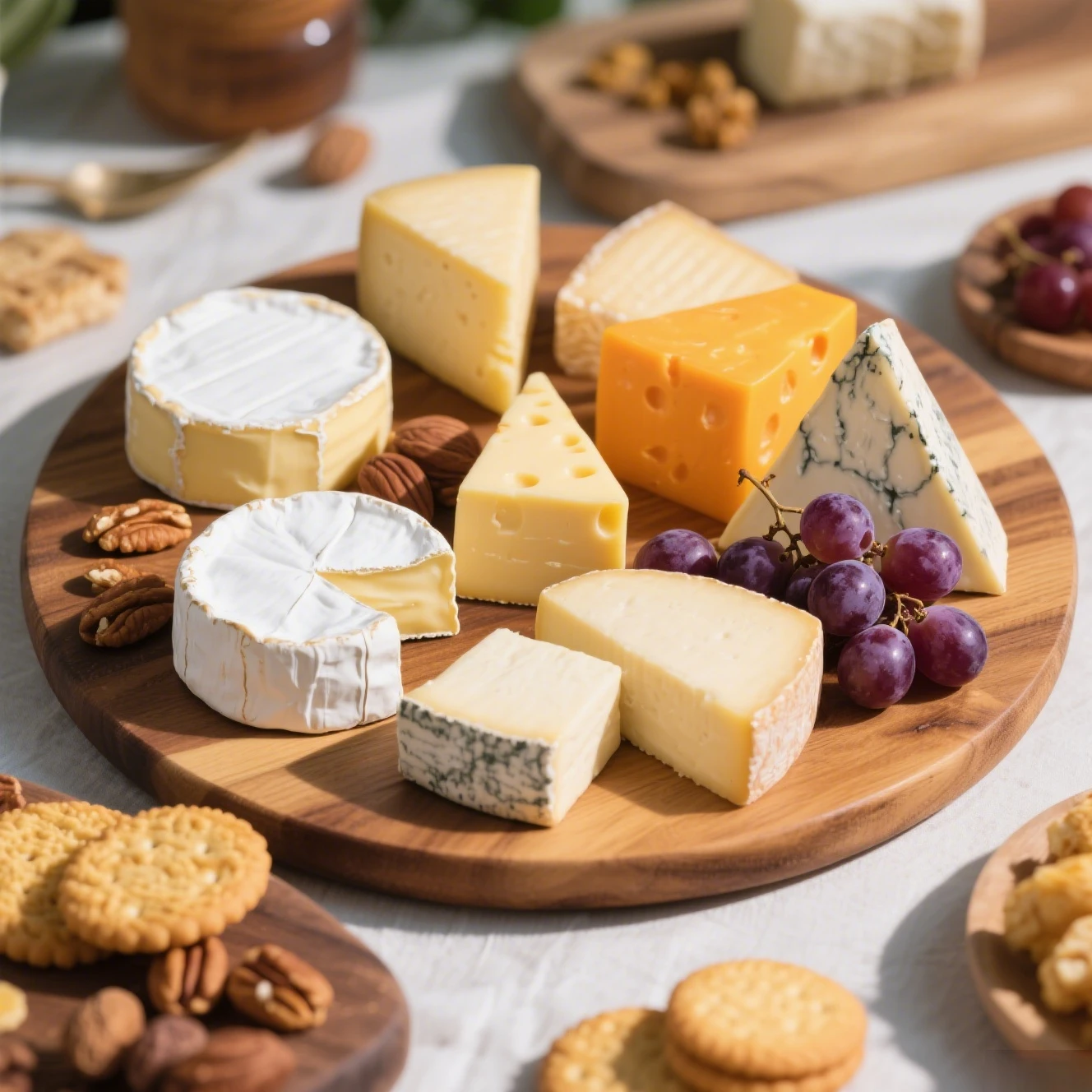
A professional cheese board distinguishes itself through meticulous attention to quality indicators, sourcing standards, and presentation excellence. Professional-grade selections require adherence to strict quality assessment criteria that encompass texture analysis, flavor complexity evaluation, and visual presentation standards.
The foundation of any exceptional cheese board lies in understanding the fundamental quality metrics that separate artisanal selections from mass-produced alternatives. Professional curators evaluate each cheese based on multiple sensory parameters, including aroma intensity, texture consistency, and flavor development patterns. These assessments follow established protocols developed by international dairy science organizations and refined through decades of culinary expertise.
Research conducted by the International Dairy Federation indicates that systematic quality evaluation processes significantly improve cheese selection outcomes¹. The IDF provides authoritative scientific information on quality standards relevant to the dairy sector, establishing frameworks that professional curators utilize when building exceptional cheese board selections.

How Do Texture and Consistency Standards Impact Cheese Board Quality?
Texture assessment forms the cornerstone of professional cheese board evaluation, with specific standards governing acceptable consistency ranges for different cheese categories. Professional curators utilize standardized texture analysis protocols that measure firmness, elasticity, and moisture content to ensure optimal quality selections.
The texture evaluation process involves systematic assessment of multiple parameters. Hard cheeses should exhibit firm consistency without excessive brittleness, while soft cheeses require creamy textures that maintain structural integrity without becoming overly runny. Semi-hard varieties demand balanced firmness that allows for clean cutting while preserving moisture content.
|
Cheese Category |
Optimal Texture Range |
Moisture Content (%) |
Firmness Rating |
|
Hard Cheeses |
Firm, non-brittle |
30-35% |
8-10/10 |
|
Semi-Hard |
Balanced flexibility |
35-45% |
6-8/10 |
|
Soft Cheeses |
Creamy, stable |
45-60% |
3-5/10 |
|
Fresh Cheeses |
Smooth, spreadable |
60-80% |
1-3/10 |
Professional assessments also consider textural evolution during serving periods. Premium cheese board selections maintain consistent texture profiles for extended periods, ensuring guest satisfaction throughout service duration. This stability factor distinguishes professional-grade selections from inferior alternatives that deteriorate rapidly under ambient conditions.
Which Flavor Profile Criteria Define Premium Cheese Board Selections?
Flavor assessment represents perhaps the most complex aspect of professional cheese board evaluation, requiring sophisticated palate training and systematic tasting protocols. Professional curators evaluate flavor complexity, balance, and development patterns using established sensory analysis frameworks developed by the American Cheese Society's Assessment and Evaluation Standards³. The ACS T.A.S.T.E. Test® methodology provides comprehensive evaluation criteria that assess both aesthetic and technical characteristics of cheese through systematic organoleptic assessment.
The flavor evaluation process encompasses multiple assessment dimensions. Initial aroma analysis provides crucial insights into cheese quality, with professional standards requiring distinct, well-developed aromatic profiles without off-odors or contamination indicators. Taste evaluation follows structured protocols that assess saltiness, acidity, sweetness, and umami characteristics across different cheese varieties.
Premium cheese board selections demonstrate flavor harmony that creates synergistic effects when consumed together. Professional curators carefully balance contrasting flavor profiles to create dynamic tasting experiences that showcase individual cheese characteristics while maintaining overall board cohesion. This sophisticated approach requires extensive knowledge of flavor chemistry and pairing principles.

|
Flavor Component |
Assessment Criteria |
Quality Indicators |
Scoring Range |
|
Aroma Intensity |
Distinct, clean scents |
No off-odors present |
1-5 scale |
|
Taste Balance |
Harmonious flavor blend |
Balanced salt/acid/sweet |
1-10 scale |
|
Finish Duration |
Lingering pleasant aftertaste |
Extended flavor persistence |
1-7 scale |

What Visual Presentation Standards Apply to Professional Cheese Boards?
Visual presentation standards play a crucial role in professional cheese board assessment, with specific criteria governing color consistency, surface appearance, and overall aesthetic appeal. Professional-grade selections must meet stringent visual standards that reflect underlying quality characteristics while creating appetizing presentations.
Color evaluation follows established protocols that assess natural cheese coloration without artificial enhancement or defects. Professional curators examine surface characteristics for proper rind development, absence of unwanted mold growth, and appropriate aging indicators. These visual assessments provide immediate quality insights that complement sensory evaluations.
The presentation aspect extends beyond individual cheese appearance to encompass board composition and arrangement standards. Professional cheese boards demonstrate thoughtful color distribution, size variation, and spatial organization that enhances visual appeal while facilitating optimal tasting experiences. This attention to visual detail reflects professional expertise and commitment to excellence.
How Should Sourcing and Provenance Factor into Quality Assessment?
Sourcing standards represent a critical component of professional cheese board quality assessment, with emphasis on artisanal production methods, geographic authenticity, and supply chain transparency. Professional curators prioritize selections from established producers with documented quality histories and consistent production standards.
Geographic provenance carries significant weight in quality assessment, with certain regions recognized for superior production conditions and traditional methods. Professional selections often feature cheeses from protected designation of origin (PDO) regions, which guarantee specific production standards and geographic authenticity². These certifications provide quality assurance that justifies premium pricing and professional positioning.
Supply chain considerations include proper storage conditions, transportation protocols, and aging management practices. Professional cheese board selections require documentation of proper cold chain maintenance, appropriate humidity control, and optimal aging environments. These factors significantly impact final product quality and determine suitability for professional applications.


What Storage and Handling Standards Ensure Optimal Quality Maintenance?
Storage and handling protocols are key to maintaining the quality of cheese boards throughout the entire service process, from preparation to consumption. Professional standards specify clear requirements for temperature ranges, humidity control, and handling procedures, aimed at preserving the inherent characteristics of cheeses while preventing contamination or spoilage.
Temperature management requires adherence to strict protocols, with specific requirements varying by cheese type and service stage (from storage to serving). For instance, hard cheeses should be stored at temperatures between 35–38°F (2–3°C), while soft cheeses require slightly higher temperatures, around 40–45°F (4–7°C), to preserve optimal texture ³. Professional handlers utilize temperature monitoring systems to ensure consistent conditions throughout storage.
Humidity control is equally critical: professional standards mandate a relative humidity of 80–85% for most cheeses. Proper humidity management prevents surface drying of cheeses while inhibiting excessive mold growth. Professionals use specialized storage equipment to maintain optimal environmental conditions throughout the process.
|
Storage Parameter |
Hard Cheeses |
Semi-Hard |
Soft Cheeses |
Fresh Cheeses |
|
Temperature (°F) |
35-38 |
36-40 |
40-45 |
38-42 |
|
Humidity (%) |
80-85 |
80-85 |
85-90 |
85-90 |
|
Air Circulation |
Moderate |
Moderate |
Gentle |
Minimal |
|
Maximum Storage (days) |
14-21 |
10-14 |
7-10 |
3-5 |
References and Professional Literature
International Dairy Federation (2022). "Food Standards and Quality Assurance Guidelines." Available at: https://fil-idf.org/our-work/food-standards/
Bredie, W.L.P., Mottram, D.S., & Guy, R.C.E. (2012). "Quality scoring – A tool for sensory evaluation of cheese?" Food Quality and Preference, 26(1), 16-23. Available at: https://www.sciencedirect.com/science/article/abs/pii/S0950329312000729
American Cheese Society (2023). "Assessment and Evaluation Standards - Domain 7." Available at: https://www.cheesesociety.org/acs-bok-domain7/
American Cheese Society (2023). "Certified Cheese Sensory Evaluator® (CCSE®) Program." Available at: https://www.cheesesociety.org/certification/certified-cheese-sensory-evaluator-exam-acs-ccse-exam
Journal of Dairy Science (2021). "American artisan cheese quality and spoilage: A survey of cheesemakers' concerns and needs." Available at: https://www.journalofdairyscience.org/article/S0022-0302(21)00532-4/fulltext
ScienceDirect Topics (2024). "Cheese Quality Standards and Assessment Methods." Available at: https://www.sciencedirect.com/topics/food-science/cheese-quality
Footnotes
¹ Based on International Dairy Federation quality assessment frameworks and industry best practices
² American Cheese Society survey findings on artisan cheese quality issues and professional standards
³ Temperature and humidity ranges established through American Cheese Society certification programs