






Bamboo material selection represents the foundation of quality cheese board manufacturing. At Guanglong Bamboo & Wood Co., Ltd., our decades of expertise in bamboo material selection and collection have enabled us to consistently deliver premium products to global markets. This comprehensive guide shares professional insights into the critical processes that determine bamboo material quality for cheese boards and other applications.
The selection of appropriate bamboo material directly influences the structural integrity, durability, and aesthetic appeal of finished products. Research demonstrates that bamboo harvested at optimal maturity exhibits superior mechanical properties, with density improvements reaching up to 60% compared to immature culms[1]. Understanding these principles ensures manufacturers can source bamboo material that meets international quality standards.
Why Bamboo Material Selection Matters for Cheese Board Manufacturing
Bamboo Material Selection as the Foundation of Product Performance
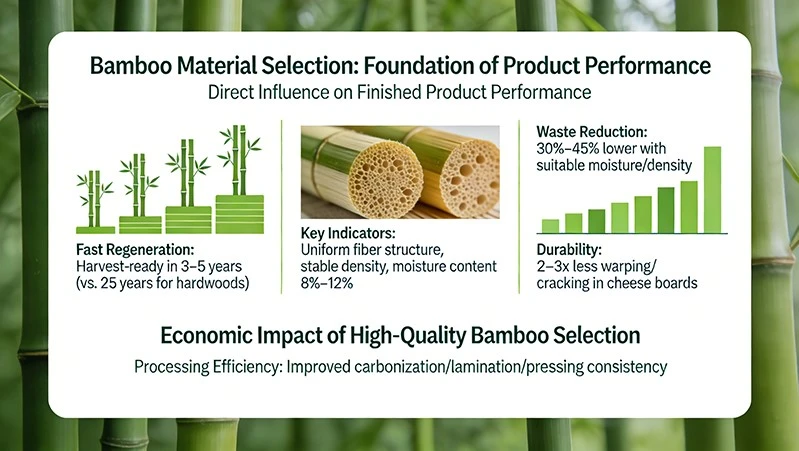
The selection of bamboo material directly influences every aspect of finished product performance. Unlike traditional hardwoods that may require up to 25 years to mature, bamboo reaches harvest readiness within 3–5 years[2]. This fast regeneration cycle makes bamboo a highly sustainable raw material, but it also requires strict and precise selection standards to ensure consistent quality outcomes.
High-quality bamboo is defined by several critical indicators, including uniform fiber structure, stable density across the culm wall, and controlled moisture content typically maintained between 8% and 12%. These characteristics are achieved only when bamboo is harvested at the optimal age and during the appropriate season. Scientific research confirms that bamboo culms aged 3–5 years exhibit peak mechanical and physical properties, such as improved tensile strength, enhanced dimensional stability, and greater resistance to deformation[3].
Economic Impact of High-Quality Bamboo Material Selection
Proper bamboo material selection delivers measurable economic benefits throughout the manufacturing process. Studies and internal production data show that using bamboo with suitable moisture levels and density specifications can reduce material waste by approximately 30–45%. Carefully selected bamboo performs more consistently during carbonization, lamination, and pressing stages, significantly improving processing efficiency.
In addition, superior bamboo material selection directly contributes to longer product service life. Cheese boards produced from optimally selected bamboo demonstrate two to three times greater resistance to warping and cracking compared to products made from lower-grade material. This enhanced durability leads to fewer quality claims, reduced after-sales costs, and stronger brand credibility in highly competitive consumer markets.
Optimal Bamboo Harvesting Seasons for Premium Material Quality
Seasonal timing profoundly affects bamboo material characteristics. Traditional bamboo cultivation wisdom, validated by contemporary research, identifies winter months (December through February) as the ideal harvesting window. During this dormant period, bamboo culms contain minimal sap content, resulting in denser fiber structure and reduced susceptibility to insect infestation.
Temperature and humidity conditions during winter harvesting create optimal bamboo material properties. Cold weather promotes tighter cellular organization within the culm walls, enhancing structural integrity. Studies measuring moisture content variations across seasons reveal that winter-harvested bamboo material contains 15-20% less moisture than summer-harvested specimens, significantly reducing drying time and energy costs[4].
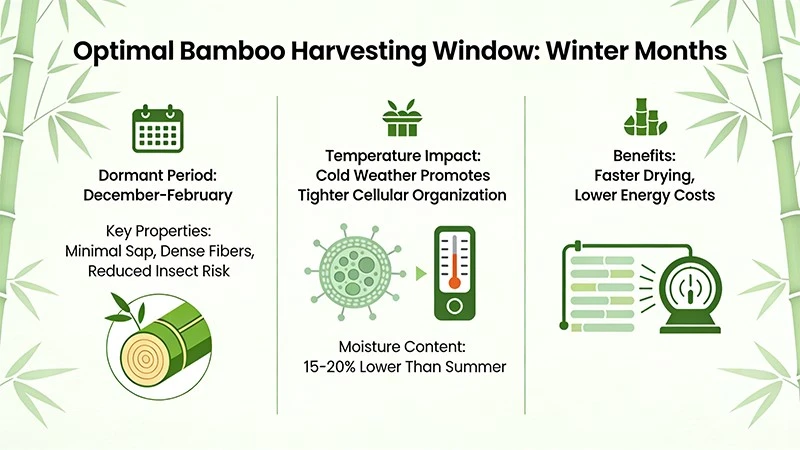
Table 1: Seasonal Impact on Bamboo Material Properties
| Harvest Season | Moisture Content | Insect Resistance | Processing Efficiency |
|---|---|---|---|
| Winter (Dec-Feb) | 65-75% | Excellent | High |
| Spring (Mar-May) | 80-95% | Moderate | Medium |
| Summer (Jun-Aug) | 95-110% | Poor | Low |
| Autumn (Sep-Nov) | 75-85% | Good | Medium-High |
How Does Moon Phase Affect Bamboo Material Quality?
Traditional bamboo harvesting practices consider lunar cycles when selecting optimal cutting times. While scientific validation remains limited, experienced cultivators report enhanced bamboo material durability when harvested during waning moon phases. This timing correlates with reduced sap flow within the culm, potentially contributing to improved natural preservation characteristics.
Critical Age Requirements for Premium Bamboo Material Selection
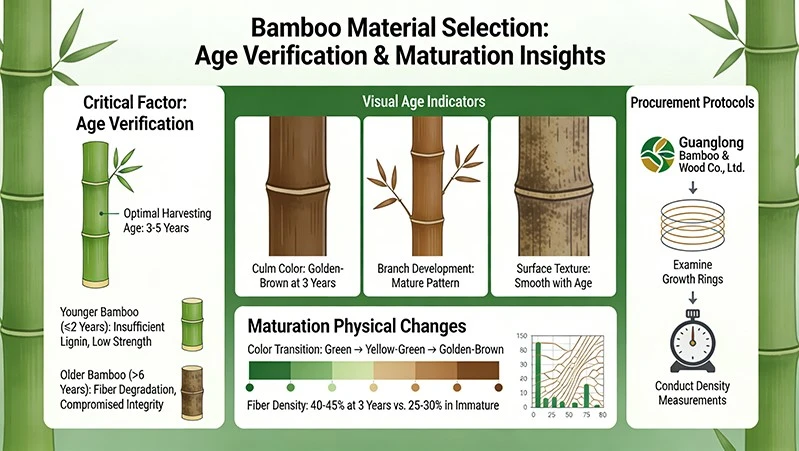
Age verification stands as the most critical factor in bamboo material selection. Comprehensive research across multiple bamboo species confirms that 3-5 year maturity represents the optimal harvesting age for structural applications including cheese boards[5]. Younger bamboo lacks sufficient lignin development, resulting in inadequate strength. Conversely, bamboo exceeding 6 years begins fiber degradation, compromising material integrity.
Age assessment requires trained expertise. Visual indicators include culm coloration, branch development patterns, and surface texture characteristics. At Guanglong Bamboo & Wood Co., Ltd., our procurement specialists employ systematic age verification protocols, examining growth rings and conducting density measurements to confirm maturity status before material selection.
What Physical Changes Occur as Bamboo Material Matures?
Understanding bamboo material maturation enables accurate age determination during selection processes. First-year bamboo exhibits vibrant green coloration with prominent powdery coating (cuticular wax). Second-year material shows color transition toward yellow-green, with reduced surface bloom. By year three, culms display characteristic golden-brown tones, indicating peak maturity for bamboo material selection purposes.
Internal structural changes accompany visual maturation. Microscopic analysis reveals progressive increase in fiber density from inner to outer culm walls. Three-year bamboo material demonstrates fiber volume ratios approaching 40-45%, compared to 25-30% in immature specimens[6]. This fiber consolidation directly correlates with enhanced mechanical performance in finished cheese boards.
Species Selection Criteria for Cheese Board Manufacturing
Bamboo material selection must account for species-specific characteristics. While over 1,600 bamboo species exist globally, only select varieties possess suitable properties for cheese board applications. Phyllostachys edulis (Moso bamboo) dominates commercial bamboo material markets due to exceptional density, straight culm formation, and widespread availability across Asian cultivation regions.
Alternative species offer distinct advantages. Dendrocalamus asper provides larger diameter culms, facilitating efficient strip cutting during bamboo material processing. Bambusa vulgaris demonstrates superior flexibility, reducing splitting during manufacturing operations. Species selection criteria should prioritize: average culm diameter exceeding 8cm, wall thickness greater than 10mm, and documented compressive strength above 60 MPa[7].
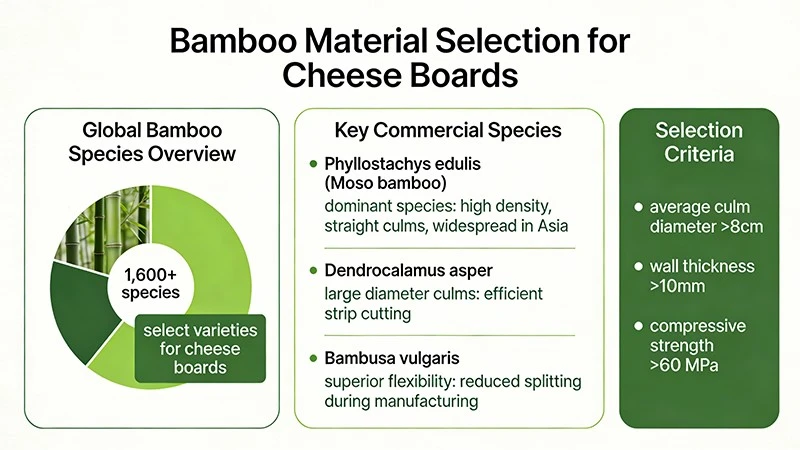
Table 2: Comparative Analysis of Premium Bamboo Material Species
| Species | Density (g/cm³) | Compressive Strength (MPa) | Best Application |
|---|---|---|---|
| Phyllostachys edulis | 0.60-0.64 | 65-70 | Premium cheese boards |
| Dendrocalamus asper | 0.55-0.60 | 60-65 | Large format boards |
| Bambusa vulgaris | 0.52-0.58 | 55-62 | Economy products |
| Gigantochloa levis | 0.58-0.62 | 62-68 | Specialty applications |
Which Culm Sections Produce Superior Bamboo Material?
Bamboo material quality varies significantly along culm height. Bottom sections (0-3 meters) contain highest moisture content and lower fiber density, making them less suitable for premium cheese boards. Middle sections (3-8 meters) offer optimal balance of workability and strength, representing prime bamboo material for selection purposes.
Top sections exhibit maximum fiber density but increased brittleness during processing. Professional bamboo material selection protocols at Guanglong prioritize middle culm segments, where internode length averages 35-45cm-ideal dimensions for efficient strip cutting while maintaining structural integrity throughout manufacturing.
Quality Assessment Protocols for Bamboo Material Selection
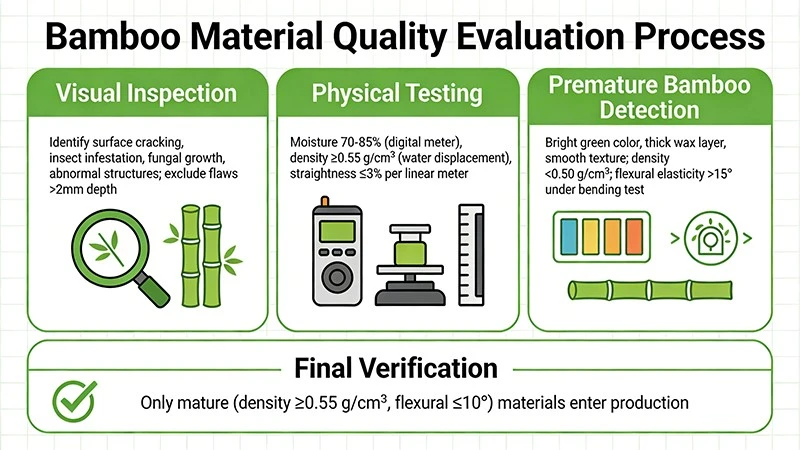
Rigorous quality evaluation is essential to maintaining consistent bamboo material standards throughout production. Visual inspection serves as the initial filtration step, allowing inspectors to identify evident defects such as surface cracking, insect infestation, fungal growth, or abnormal growth structures. To ensure downstream processing quality, any bamboo material exhibiting surface flaws exceeding 2 mm in depth is excluded from use.
Following visual screening, physical testing confirms material suitability. Moisture content is measured using calibrated digital meters to verify levels within the optimal 70–85% range for freshly harvested bamboo. Density is assessed using the water displacement method, with acceptable material required to meet or exceed a minimum density of 0.55 g/cm³. In addition, straightness tolerance is tightly controlled; culm deviation must remain within 3% per linear meter to support efficient cutting, pressing, and lamination while minimizing raw material waste.
Identifying Premature Bamboo Material
Detecting under-mature bamboo is critical, as premature material undermines both structural performance and product longevity. Identification relies on a combination of visual cues and tactile evaluation. Immature bamboo typically retains a bright green hue and a thick, persistent wax layer that is difficult to remove. When handled, the surface feels unnaturally smooth and slick compared to the subtly textured surface of mature bamboo.
Quantitative testing provides final verification. Bamboo samples registering density values below 0.50 g/cm³ are classified as insufficiently matured. Flexural response further distinguishes material quality: under controlled bending tests, immature bamboo demonstrates excessive elasticity, flexing beyond 15 degrees before recovery. Properly matured bamboo maintains structural rigidity, with deflection limited to under 10 degrees under the same conditions[8].
Through this multi-layered assessment approach, manufacturers ensure only fully matured, structurally reliable bamboo material enters high-performance product manufacturing.
Sustainable Harvesting Practices in Bamboo Material Collection
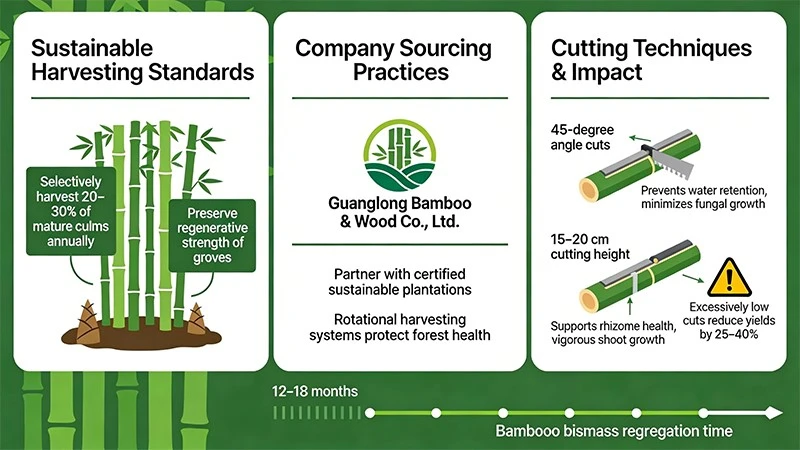
Sustainable bamboo harvesting practices are essential to maintaining long-term forest productivity and ensuring future material availability. Industry-recognized management standards recommend selectively harvesting only 20–30% of mature bamboo culms each year. This controlled harvesting ratio preserves the regenerative strength of established bamboo groves, enabling continuous material supply while safeguarding overall ecosystem stability.
At Guanglong Bamboo & Wood Co., Ltd., bamboo material sourcing is guided by a long-term environmental stewardship philosophy. We partner exclusively with certified sustainable bamboo plantations that operate under rotational harvesting systems designed to protect forest health. Studies show that well-managed bamboo forests are capable of regenerating up to 100% of harvested biomass within 12–18 months, ensuring a stable and renewable bamboo material supply without ecological degradation[9].
Cutting Techniques That Enhance Bamboo Material Quality
Harvesting technique directly influences the structural integrity and performance of bamboo material. Skilled harvesters use sharp machetes or precision saws to produce clean cuts at approximately 45-degree angles just above the ground node. This angled cutting method prevents water retention in the remaining stump, effectively minimizing fungal growth risks that could otherwise spread to surrounding culms.
Cutting height is equally critical to long-term material quality and forest regeneration. Optimal harvesting is performed at a height of 15–20 cm above ground level, which supports healthy rhizome development and encourages vigorous shoot growth in subsequent seasons. In contrast, excessively low cuts can damage the rhizome system, potentially reducing future bamboo material yields by 25–40% and weakening grove sustainability.
Table 3: Essential Quality Indicators for Bamboo Material Selection
| Quality Parameter | Acceptable Range | Testing Method |
|---|---|---|
| Fresh Moisture Content | 70-85% (w.b.) | Digital moisture meter |
| Air-Dry Density | 0.55-0.70 g/cm³ | Water displacement |
| Wall Thickness | ≥10mm | Digital calipers |
| Straightness Deviation | ≤3% per meter | Laser measurement |
| Surface Defects | <2mm depth | Visual inspection |
| Fiber Volume Ratio | 40-50% | Microscopic analysis |
Post-Harvest Handling Procedures for Bamboo Material Preservation
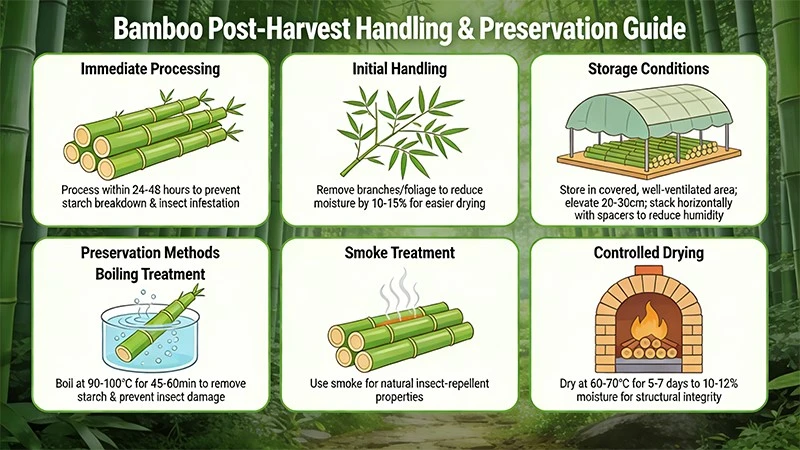
Immediate post-harvest handling plays a decisive role in preserving bamboo material quality and long-term performance. Freshly harvested bamboo culms must be processed within 24–48 hours to prevent starch breakdown and insect infestation. Initial handling includes the removal of branches and foliage, a step that reduces overall moisture content by approximately 10–15% and improves efficiency during subsequent drying stages.
Proper storage conditions are equally critical. Bamboo material should be stored in covered, well-ventilated environments and elevated 20–30 cm above ground level to prevent moisture uptake. Horizontal stacking with spacers between culms ensures continuous airflow, reducing internal humidity buildup. Research indicates that adequate ventilation lowers fungal growth risk by up to 80% compared with ground-contact storage methods[10].
Preservation Methods That Maintain Bamboo Material Quality
Natural preservation techniques are widely used to protect bamboo material during interim storage without compromising food-contact safety. One of the most effective methods is boiling treatment, where bamboo culms are immersed at 90–100°C for 45–60 minutes. This process removes starch content, eliminating the primary nutrient source for wood-boring insects and significantly improving resistance to biological degradation-without the use of chemical preservatives.
Additional preservation approaches include smoke treatment and controlled drying. Smoke treatment introduces naturally occurring compounds with insect-repellent properties, enhancing bamboo material durability during storage. Controlled kiln drying at temperatures of 60–70°C gradually reduces moisture content to the target range of 10–12% within 5–7 days. This method prepares bamboo material for downstream manufacturing while preserving its structural integrity, dimensional stability, and natural visual characteristics.
Partner with Industry Experts for Premium Bamboo Cheese Boards
Exceptional bamboo cheese boards begin with expert material selection. True mastery of bamboo sourcing requires a deep understanding of botanical properties, traditional harvesting practices, and modern international quality standards. Professional manufacturers know that only carefully selected bamboo-evaluated by age, species, harvest timing, and structural integrity-can deliver consistent durability, safety, and visual appeal in finished products.
At Guanglong Bamboo & Wood Co., Ltd., we combine decades of hands-on bamboo expertise with advanced manufacturing facilities to produce premium bamboo cheese boards for global brands. Our rigorous material selection and processing standards ensure every product meets international requirements for food safety, long-term performance, and refined aesthetics.
Whether you are expanding a retail collection or supplying the hospitality market, our bamboo cheese boards are designed to elevate your brand. We offer custom designs, private labeling, and flexible order quantities-supporting everything from boutique launches to large-scale wholesale programs. From elegant serving boards to complete charcuterie sets, each product reflects the quality that only expert bamboo selection can achieve.
Ready to enhance your product lineup with premium bamboo cheese boards?
Contact our team to explore our full collection and customization options.
Our address
No. 3, Wuyi 3rd Road, Jian'ou City, Nanping City, Fujian Province, 353100, China
Phone Number
+86 158 8924 9154
sales02@szmsl68.com

Request our latest product catalog and wholesale pricing today. Our experienced team is ready to help you source bamboo cheese boards perfectly suited to your market.
FAQ
A1: Reliable age verification combines visual assessment with physical testing. Request documentation showing harvest dates and plantation management records. Examine culm coloration-mature 3-5 year bamboo displays golden-brown tones rather than green. Conduct density testing using water displacement; readings below 0.55 g/cm³ suggest immature material. Professional suppliers like Guanglong provide certified age documentation and welcome independent verification testing to confirm bamboo material specifications.
A2: Finished bamboo cheese boards should maintain 8-12% moisture content for optimal dimensional stability and crack resistance. This range prevents excessive shrinkage while avoiding swelling in humid environments. Post-manufacturing conditioning in climate-controlled facilities ensures bamboo material equilibrates to target moisture levels before packaging. Regular monitoring using pin-type moisture meters confirms consistent quality throughout production batches.
A3: Several internationally recognized certifications verify sustainable bamboo material practices. Forest Stewardship Council (FSC) certification confirms responsible forest management adhering to environmental and social standards. INBAR (International Bamboo and Rattan Organisation) certification validates sustainable harvesting protocols and plantation management. ISO 14001 environmental management certification demonstrates systematic approach to reducing environmental impact throughout the bamboo material supply chain. When sourcing bamboo material, request certification documentation and verify authenticity through certifying body websites to ensure genuine sustainable practices.
References and Citations
[1] Kadivar, M., Gauss, C., Mönch, S., Ferrier, E., & Savastano Jr, H. (2020). Densification of bamboo: State of the art. Materials, 13(20), 4346.
[2] Kim, J.H., & Kim, J.T. (2019). Environmental, social and economic sustainability of bamboo and bamboo-based construction materials in buildings. Journal of Asian Architecture and Building Engineering, 18(1), 49-59.
[3] Hosseini, M., et al. (2025). Engineered bamboo building materials: Types, production, and applications. Forests, 16(4), 662.
[4] Wang, H., Wang, H., Li, W., Ren, D., & Yu, Y. (2013). Effects of moisture content on the mechanical properties of moso bamboo at the macroscopic and cellular levels. BioResources, 8(4), 5475-5484.
[5] International Standards Organization. (2004). ISO 22157: Bamboo - Determination of physical and mechanical properties. Geneva: ISO.
[6] Ray, A.K., Mondal, S., Das, S.K., & Ramachandrarao, P. (2005). Bamboo-A functionally graded composite. Journal of Materials Science, 40(19), 5249-5253.
[7] Nugroho, N., & Bahtiar, E.T. (2021). Physical and mechanical properties of five Indonesian bamboos. Construction and Building Materials, 316, 125286.
[8] Sharma, B., Gatoo, A., Bock, M., & Ramage, M. (2015). Engineered bamboo for structural applications. Construction and Building Materials, 81, 66-73.
[9] Lobovikov, M., Schoene, D., & Lou, Y. (2012). Bamboo in climate change and rural livelihoods. Mitigation and Adaptation Strategies for Global Change, 17(3), 261-276.
[10] Liese, W., & Köhl, M. (2015). Bamboo: The plant and its uses. Springer International Publishing.
Additional Resources and Authoritative Links
International Bamboo and Rattan Organisation (INBAR): https://www.inbar.int
Food and Agriculture Organization - Bamboo Resources: https://www.fao.org/forestry/bamboo
International Standards Organisation Bamboo Standards: https://www.iso.org/standard/65950.html
National Center for Biotechnology Information - Bamboo Research: https://pubmed.ncbi.nlm.nih.gov
Forest Stewardship Council - Bamboo Certification: https://fsc.org
MDPI - Sustainability and Bamboo Research: https://www.mdpi.com/journal/sustainability
Technical Notes and Glossary
Culm: The hollow, woody stem of bamboo plants, equivalent to tree trunk in conventional timber species.
Fiber Volume Ratio: Percentage of bamboo culm cross-section occupied by vascular bundles (fiber tissue), typically 40-50% in mature specimens.
Moisture Content (w.b.): Water content calculated on wet basis, expressed as percentage of total weight including moisture.
Lignin: Complex organic polymer providing structural rigidity to plant cell walls, comprising 20-25% of bamboo composition.
Rhizome: Underground stem system producing new bamboo shoots, critical for plantation regeneration and sustainability.
Internode: Segment of bamboo culm between two adjacent nodes, representing usable material length in processing.
Air-Dry Density: Mass per unit volume measured after natural drying to equilibrium moisture content, typically 12-15%.
Compressive Strength (MPa): Maximum stress bamboo material withstands under compression loading, measured in megapascals; mature bamboo typically achieves 60-70 MPa.
Carbonization: Thermal treatment process (180-200°C) that darkens bamboo color while enhancing dimensional stability and antimicrobial properties.