




Meta Description: Discover the top 10 science-backed benefits of bamboo cutting boards-from their natural antimicrobial properties to their eco-friendly credentials-and see why they've become an essential in modern kitchens. Combining durability, sustainability, and food-safe performance, bamboo cutting boards offer a smarter, cleaner, and more responsible choice for everyday food preparation.
Why Bamboo Cutting Boards Are Taking Over Modern Kitchens
Bamboo cutting boards have become one of the fastest-growing kitchen essentials worldwide, and the reasons are rooted in both science and sustainability. Whether you are upgrading your home kitchen or sourcing products for retail, understanding the full value of a bamboo cutting board helps you make smarter, more informed decisions. This article covers the top 10 benefits backed by real data and expert insight.
Are Bamboo Cutting Boards Actually Better Than Plastic or Wood?
This question comes up all the time in kitchens-both at home and in professional settings-and the answer, backed by research, leans strongly toward bamboo.
A 2015 study published in the Journal of Food Protection¹ found that bamboo surfaces retain significantly fewer bacteria than plastic cutting boards after standard washing. Unlike traditional hardwood, bamboo is actually a grass with a naturally dense, low-porosity² structure, which means it absorbs far less moisture-the main driver of bacterial growth.
Plastic boards, while easy to clean at first, tend to develop deep knife grooves over time. These grooves can trap food residue and moisture, creating ideal conditions for bacteria like Salmonella and E. coli³ to multiply. By comparison, bamboo holds up better under repeated use, maintaining a smoother surface and offering a more hygienic, long-lasting option.
Benefit 1 - Natural Antimicrobial Properties
Bamboo contains a naturally occurring antimicrobial compound known as "bamboo kun"⁴, which helps inhibit the growth of bacteria and fungi on its surface. Research from Kyoto University (2004) found that over 70% of bacteria placed on bamboo surfaces died within 24 hours-without any chemical treatment.
That makes bamboo cutting boards a particularly smart choice when handling raw meat, poultry, or seafood, where the risk of cross-contamination is highest.

Benefit 2 - Durable Yet Gentle on Knife Edges
Bamboo ranks at around 1,380 on the Janka Hardness Scale⁵-comparable to many hardwoods like maple (1,450) and beech (1,300). This balance gives it a durable surface that resists wear, while still being less abrasive on knife edges than materials like glass or ceramic.
Many professional chefs note that bamboo cutting boards help maintain blade sharpness longer than plastic alternatives. The American Culinary Federation also recommends wood or bamboo surfaces for precise knife work for this reason.
Benefit 3 - Outstanding Environmental Sustainability
Bamboo is the fastest-growing plant in the world, with some species capable of growing up to 91 cm (36 inches) per day⁶. It reaches full maturity in just 3–5 years, compared to 25–70 years for hardwood trees like oak or maple.
Choosing a bamboo cutting board is a more sustainable option. Bamboo absorbs around 12 tonnes of CO₂ per hectare annually-about 35% more than comparable tree species (UNEP, 2022)⁷. For environmentally conscious buyers, it stands out as one of the most eco-friendly materials available.

| Material | Harvest Maturity | Annual CO₂ Absorption | Biodegradable | Renewability |
|---|---|---|---|---|
| Bamboo | 3–5 years | ~12 tonnes/hectare | Yes | Very High |
| Rubber Wood | 25–30 years | ~6 tonnes/hectare | Yes | Moderate |
| Maple/Oak | 40–70 years | ~3–5 tonnes/hectare | Yes | Low |
| Plastic (HDPE) | N/A (petroleum) | Negative (emissions) | No | None |
| Glass | N/A (silica) | Negligible | Partial | Very Low |
Benefit 4 - Non-Toxic and Food-Safe for the Whole Family
Unlike some plastic boards that can release microplastics⁸ during use, bamboo is a natural, food-safe material that doesn't shed synthetic particles into your food. A 2023 study from the University of Portsmouth estimated that plastic cutting boards can release up to 50,000 microplastic particles per year through regular cutting.
By comparison, an organic or non-toxic bamboo cutting board poses no such risk. That makes it a reassuring choice for families-especially those with young children, pregnant women, or anyone prioritizing clean, chemical-free food prep. Most high-quality bamboo boards are also made with food-safe, water-resistant adhesives, typically urea-formaldehyde-free⁹, ensuring safety without compromising durability.

Benefit 5 - Moisture Resistance and Easy Maintenance
Thanks to its dense fiber structure, bamboo naturally resists moisture better than many traditional wood boards. When treated regularly with food-grade mineral oil, it repels water rather than absorbing it-helping prevent warping, cracking, and long-term damage.
Keeping your bamboo cutting board in top condition is simple:
Season every 4–6 weeks with food-grade mineral oil or beeswax
Hand-wash with mild soap and warm water, then dry immediately
Avoid soaking or placing it in the dishwasher (unless specifically labeled as dishwasher-safe bamboo cutting board)
Store upright or flat in a dry, well-ventilated area
With just a little care, a bamboo board can stay hygienic, stable, and good-looking for years of daily use.

| Care Factor | Bamboo | Hardwood | Plastic |
|---|---|---|---|
| Dishwasher Safe (standard) | No (unless certified) | No | Yes |
| Requires Oiling | Yes (every 4–6 weeks) | Yes (every 2–4 weeks) | No |
| Warp Resistance | High | Moderate | High |
| Odor Resistance | High | Moderate | Low (absorbs odors) |
| Average Lifespan | 5–10 years | 5–15 years | 2–5 years |
| Knife-Friendly | Yes | Yes | No (damages edges) |
Benefit 6 - Lightweight Yet Durable
One often overlooked advantage of bamboo is its impressive strength-to-weight ratio. With a tensile strength¹⁰ of around 28,000 PSI-comparable to mild steel-bamboo is remarkably strong while remaining significantly lighter than most hardwoods.
This means even a large or extra-large bamboo cutting board used in professional kitchens is easy to lift, move, and clean. That lightweight durability is a big reason bamboo boards are widely used in commercial kitchens and catering environments across Asia and Europe.

Benefit 7 - Versatility: From Prep Board to Serving Board
Bamboo cutting boards have evolved far beyond basic food prep. Today's designs combine functionality with thoughtful features, making them true multi-purpose kitchen tools.
Popular use cases driving demand include:
Bamboo cutting board with juice groove - Helps catch liquids when carving meat or juicy fruits
Bamboo cutting board with containers - Built-in trays keep chopped ingredients organized and reduce mess
Bamboo cutting board set - Multiple sizes support color-coded¹¹ prep, a food safety practice recommended by the FDA
Personalized bamboo cutting board - Custom-engraved options are popular for gifts and branding
Large bamboo board for serving - Doubles as an elegant charcuterie or presentation board
Is a Bamboo Cutting Board Set Worth It?
A well-designed set-usually including small, medium, and large boards-lets you separate tasks like meat, vegetables, and bread. This helps reduce cross-contamination risks, in line with the WHO's Five Keys to Safer Food guidelines¹². It also offers better long-term value compared to buying individual boards.

Benefit 8 - Cost-Effective Over Time
While bamboo boards may cost a bit more upfront than basic plastic options, they deliver better value over time. With proper care, a high-quality bamboo cutting board can last 7–10 years, compared to just 2–3 years for most plastic boards.
The global bamboo products market, valued at USD 68.8 billion in 2022, is projected to reach USD 98.3 billion by 2028 (Mordor Intelligence, 2023)¹³. This growth reflects not just sustainability trends, but a growing recognition of bamboo's durability and long-term cost efficiency.
Benefit 9 - Natural Aesthetic That Elevates Your Kitchen
Beyond performance, bamboo brings a warm, natural look that enhances any kitchen space. Its golden-toned grain adds a sense of texture and warmth that plastic or stainless steel simply can't match.
Whether it's a round board, paddle-style design, or an end-grain bamboo cutting board, these pieces easily double as serving platters for cheese, bread, or charcuterie. In today's kitchens, practicality and presentation go hand in hand-and bamboo delivers both.
| Style | Best Use | Consumer Popularity |
|---|---|---|
| Standard flat board | General food prep | ★★★★★ |
| Paddle / handle board | Serving & presentation | ★★★★☆ |
| End grain board | Heavy chopping, butcher use | ★★★★☆ |
| Board with juice groove | Meat carving | ★★★★☆ |
| Round board | Cheese & charcuterie serving | ★★★☆☆ |
| Set (3-piece) | Multi-purpose households | ★★★★★ |
Benefit 10 - Supporting Responsible Global Supply Chains
Bamboo is primarily cultivated in regions like China, India, and Southeast Asia, where it plays an important role in supporting rural economies. Choosing bamboo cutting boards from certified manufacturers-those compliant with FSC¹⁴ (Forest Stewardship Council) or ISO 14001¹⁵ environmental management standards-helps ensure your purchase supports responsible forestry practices and sustainable production.
For retailers and importers, responsible sourcing goes beyond ethics. Products from audited, compliant factories face fewer regulatory hurdles under frameworks like the EU Deforestation Regulation (EUDR, effective 2025) and U.S. import requirements-reducing risk across the supply chain.
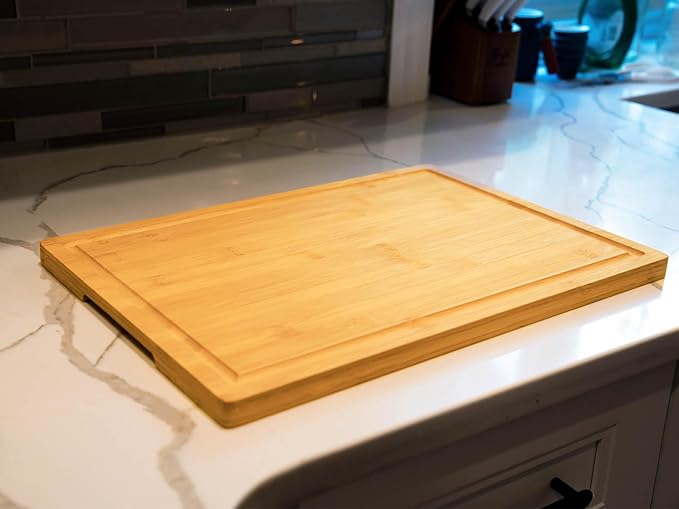
Key Takeaway - The Bamboo Cutting Board Is a Modern Kitchen Essential
The conclusion is hard to ignore: bamboo cutting boards deliver where it matters most. From natural antimicrobial properties and environmental sustainability to durability, cost efficiency, and visual appeal, bamboo consistently outperforms many conventional materials.
As kitchens shift toward healthier, more eco-conscious choices, bamboo is no longer just an alternative-it's quickly becoming the standard.
Ready to Find Your Perfect Bamboo Cutting Board?
Whether you're searching for the best bamboo cutting board for everyday home use, a complete cutting board set, a custom personalized option for gifting, or bulk wholesale supply for your business-we offer a full range to match your needs.
👉 Browse our complete Bamboo Cutting Board Collection to explore best-selling styles, sizes, and customization options.
👉 Request a wholesale quote for bulk bamboo cutting boards-we support retailers, distributors, and hospitality businesses worldwide.
We welcome OEM/ODM inquiries, custom engraving requests, and trade partnerships. Our team responds within 24 business hours.
Our address
No. 3, Wuyi 3rd Road, Jian'ou City, Nanping City, Fujian Province, 353100
Phone Number
+86 158 8924 9154
sales02@szmsl68.com

FAQ
Q1: Are bamboo cutting boards safe for cutting raw meat?
A: Yes. Bamboo's natural antimicrobial properties and low-porosity surface make it safe for raw meat preparation. Always wash thoroughly with hot soapy water after use and dedicate a separate board for meat and vegetables to prevent cross-contamination.
Q2: Can a bamboo cutting board go in the dishwasher?
A: Most standard bamboo boards should be hand-washed only - high heat and prolonged moisture in dishwashers can cause warping or cracking. Only boards specifically labeled "dishwasher safe bamboo cutting board" are engineered with heat-resistant adhesives for machine washing.
Q3: How do I stop my bamboo cutting board from cracking?
A: Season your board regularly (every 4–6 weeks) with food-grade mineral oil or beeswax conditioner. Always dry it immediately after washing, and never leave it submerged in water or exposed to direct sunlight for extended periods.
Annotations & Footnotes
¹ Journal of Food Protection (2015) - Peer-reviewed microbiology study comparing bacterial retention on cutting board surfaces post-washing.
² Low-porosity surface structure - A material surface with minimal microscopic pores, reducing the ability of liquids and microorganisms to penetrate and accumulate.
³ Salmonella and E. coli - Common foodborne pathogens responsible for millions of food poisoning cases globally each year (WHO, 2023).
⁴ Bamboo kun - A natural antimicrobial compound inherent to bamboo fiber, first identified and documented in Japanese textile and materials science research.
⁵ Janka Hardness Scale - An industry-standard measurement of wood hardness, expressed in pounds-force (lbf), indicating resistance to surface denting and wear.
⁶ Bamboo growth rate - Guinness World Records recognizes certain bamboo species (Phyllostachys spp.) as the fastest-growing plants on Earth.
⁷ UNEP (2022) - United Nations Environment Programme report on bamboo's role in climate mitigation and carbon sequestration.
⁸ Microplastics - Plastic particles smaller than 5mm that can contaminate food and beverages; linked to endocrine disruption and other health concerns in emerging research.
⁹ Urea-formaldehyde-free adhesives - Binding agents that do not contain urea-formaldehyde resins, avoiding potential off-gassing of formaldehyde, a known carcinogen at elevated concentrations.
¹⁰ Tensile strength - The maximum stress a material can withstand while being stretched before breaking, measured in PSI (pounds per square inch).
¹¹ Colour-coded food prep - A food safety protocol using different-colored cutting boards for different food types (e.g., red for raw meat, green for vegetables) to prevent cross-contamination, endorsed by the UK Food Standards Agency and the US FDA.
¹² WHO Five Keys to Safer Food - A globally recognized food safety framework published by the World Health Organization; Key 2 specifically addresses separating raw and cooked foods.
¹³ Mordor Intelligence (2023) - Global market research report: Bamboo Products Market - Growth, Trends, COVID-19 Impact, and Forecasts (2023–2028).
¹⁴ FSC (Forest Stewardship Council) - An international non-profit organization that certifies responsible forest and land management practices worldwide.
¹⁵ ISO 14001 - An internationally recognized standard for environmental management systems, certifying that organizations minimize environmental impact in their operations.
Authoritative Reference Links
WHO - Five Keys to Safer Food (Official Programme Page) https://www.who.int/activities/promoting-safe-food-handling/five-key-to-safer-food
PubMed - Plastic Cutting Boards as a Source of Microplastics in Meat (2022) https://pubmed.ncbi.nlm.nih.gov/35084287/
UNEP - Bamboo as a Nature-Based Climate Solution https://www.unep.org/resources/newsletter/what-can-investments-do-bamboo-nature-based-solutions-leading-way-forward
UNFCCC - BambooBoost Initiative (Bamboo for Climate Mitigation) https://unfccc.int/bambooboost
FSC International - Certification Standards https://fsc.org/en/standards
PMC (NIH) - Testing Antimicrobial Characteristics of Wood & Bamboo Materials https://pmc.ncbi.nlm.nih.gov/articles/PMC7277147/