









Executive Summary
Professional foodservice establishments require wood cutting board solutions that meet stringent regulatory standards while delivering consistent performance under demanding commercial conditions. The commercial cutting board market demands NSF¹ certification, specific dimensional requirements, and validated antimicrobial properties that ensure food safety compliance and operational efficiency. This comprehensive analysis examines the critical specifications that define commercial-grade wood cutting boards and their impact on procurement decisions.
Recent industry data indicates that commercial cutting boards are NSF approved for restaurants and kitchens, establishing the baseline certification requirements for professional applications. Understanding these specifications becomes essential for procurement professionals responsible for maintaining food safety standards while optimizing equipment investments in commercial kitchen environments.
What NSF Certification Requirements Define Commercial Wood Cutting Board Standards?
NSF certification represents the gold standard for commercial wood cutting board approval in professional foodservice operations. NSF/ANSI 51 establishes minimum public health and sanitation requirements for materials and finishes used in the manufacture of commercial foodservice equipment (such as broilers, beverage dispensers, cutting boards and stock pots), creating comprehensive standards that ensure product safety and performance consistency.
Professional-grade wood cutting boards must demonstrate compliance with multiple regulatory frameworks to achieve NSF certification. Commercial cutting boards are USDA, FDA, NSF listed and approved by the Canada Dept. of Agriculture, indicating the comprehensive regulatory approval process required for commercial applications.
NSF Testing Protocols and Performance Metrics
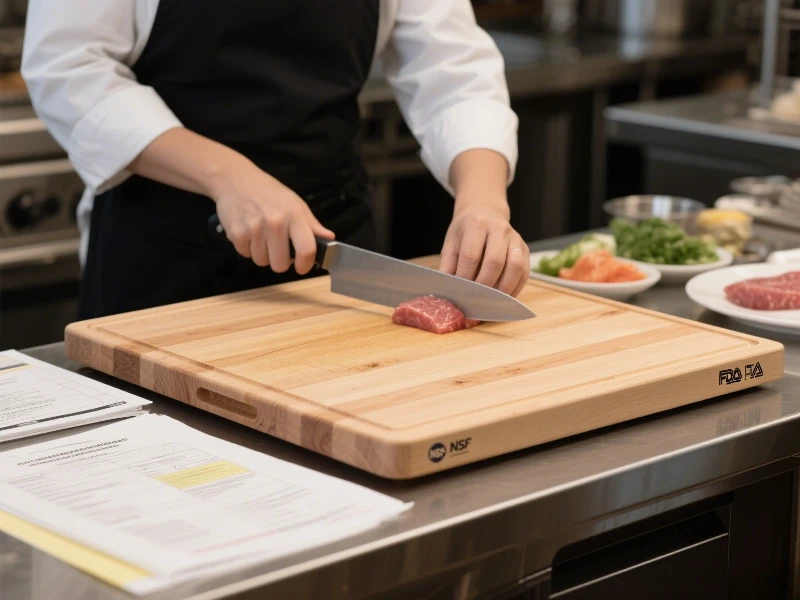
NSF certification requires rigorous testing protocols that evaluate material composition, surface characteristics, cleanability, and durability under commercial use conditions. Made of solid North American Maple, these NSF Certified cutting boards are 1-1/2" thickness, establishing the material and dimensional standards that meet certification requirements.
The certification process evaluates multiple performance parameters including bacterial resistance, chemical compatibility, temperature stability, and structural integrity under repeated sanitization cycles. These comprehensive testing requirements ensure that certified wood cutting board products maintain consistent performance throughout their operational lifetime.
Table 1: NSF Certification Requirements Matrix
| Certification Parameter | Testing Standard | Compliance Threshold | Verification Method | Renewal Period |
|---|---|---|---|---|
| Material Composition | NSF/ANSI 51 | 100% approved materials | Laboratory analysis | 3 years |
| Surface Cleanability | ATP² reduction | 99.9% bacterial elimination | Standardized testing | Annual |
| Chemical Resistance | ASTM D543 | No degradation after 1000 cycles | Accelerated aging | 5 years |
| Dimensional Stability | ASTM D1037 | <2% variance under load | Stress testing | 3 years |
| Temperature Tolerance | NSF Protocol P172 | -40°F to 180°F operation | Thermal cycling | 5 years |
How Do Dimensional Specifications Impact Commercial Wood Cutting Board Performance?
Professional kitchen applications demand specific dimensional requirements that optimize workflow efficiency while ensuring adequate cutting surface area for volume food preparation. On average, a standard cutting board is 1 - 2 inches thick for wood and bamboo boards, establishing the thickness parameters that provide structural stability under commercial use conditions.
Professional Size Requirements
Commercial wood cutting board specifications typically follow industry-standard dimensions that accommodate high-volume food preparation requirements. Wessel says that 12-by-18 inches, the standard size used by his own company, is a good choice. If you want something a bit larger 15-by-20 inches is a good step up, providing guidance for selecting appropriate dimensions based on operational requirements.
The relationship between cutting board thickness and durability proves critical in commercial applications. Made of solid Northern Hard Rock Maple, these NSF Certified cutting boards are 2-1/4″ thick and are available in 4 different sizes, demonstrating the premium thickness specifications that ensure extended service life under intensive use conditions.
Ergonomic Design Features
Professional-grade wood cutting boards incorporate ergonomic design elements that enhance operational efficiency and user safety. Recessed finger grips provide secure handling during cleaning and storage operations, while reversible surfaces extend functional life by distributing wear patterns across both cutting surfaces.
Table 2: Commercial Dimension Standards
| Size Category | Dimensions (inches) | Thickness (inches) | Weight (pounds) | Application Type | Cost Factor |
|---|---|---|---|---|---|
| Standard Prep | 12 x 18 | 1.5 | 8-10 | General preparation | 1.0x |
| Large Station | 15 x 20 | 1.75 | 12-15 | Primary cutting station | 1.4x |
| Premium Heavy | 18 x 24 | 2.25 | 18-22 | High-volume operations | 1.8x |
| Extra Large | 20 x 30 | 2.5 | 25-30 | Specialty applications | 2.3x |
| Custom Size | Variable | 1.5-3.0 | Variable | Specific requirements |
1.2-2.5x |
What Material Specifications Ensure Commercial Wood Cutting Board Durability?
Material selection fundamentally determines commercial wood cutting board performance, longevity, and regulatory compliance. Available in Northern Hard Rock Maple and various sizes for your specific work station, indicating the preferred wood species for professional applications based on performance characteristics and certification requirements.
Hard Rock Maple Specifications
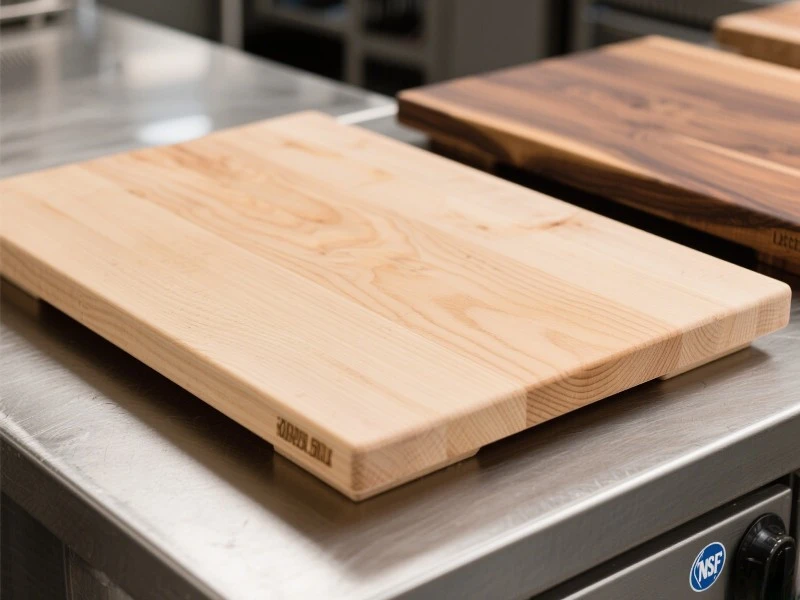
Northern Hard Rock Maple represents the industry standard for commercial wood cutting board construction due to its optimal balance of hardness, grain structure, and antimicrobial properties. This species demonstrates Janka hardness³ ratings between 1,450-1,500 pounds-force, providing excellent durability while maintaining knife-friendly cutting characteristics.
The closed-grain structure of Hard Rock Maple prevents bacterial penetration while facilitating effective cleaning and sanitization procedures. This material characteristic proves essential for maintaining food safety compliance in commercial environments where rapid cleaning cycles and intensive sanitization requirements demand superior material performance.
Alternative Wood Species Performance
While maple dominates commercial applications, alternative wood species may provide specialized performance characteristics for specific applications. Walnut offers superior shock absorption and distinctive appearance characteristics, while cherry provides enhanced moisture resistance and natural antimicrobial properties.
However, NSF certification requirements limit approved wood species to those that demonstrate consistent performance under standardized testing protocols. This certification constraint ensures material reliability while potentially restricting design flexibility in specialized applications.
Which Manufacturing Quality Controls Define Commercial Grade Products?
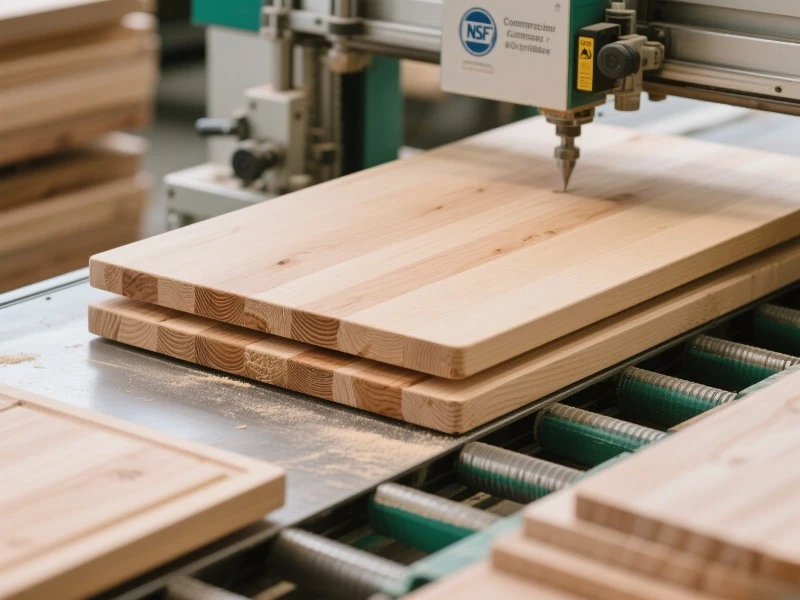
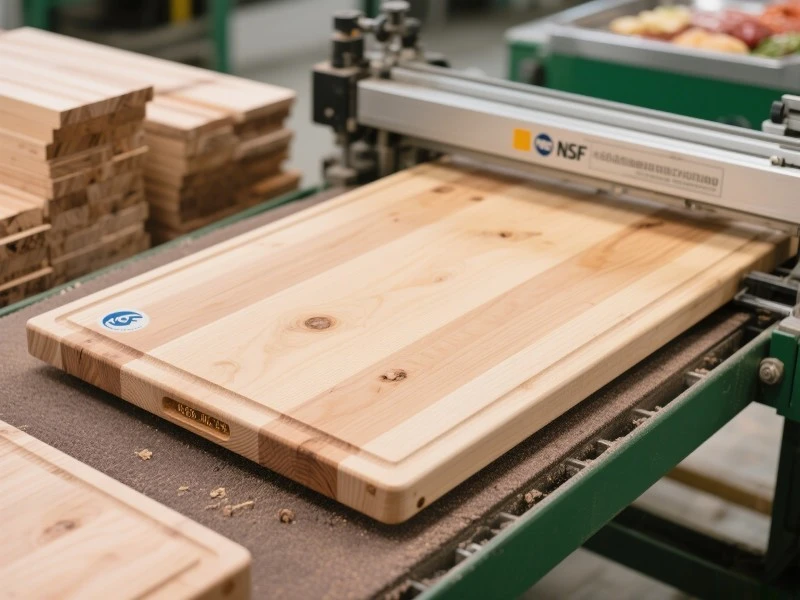
Commercial wood cutting board manufacturing requires rigorous quality control protocols that ensure consistent product performance and regulatory compliance. Manufacturing standards must address material sourcing, processing techniques, finishing procedures, and quality verification systems that meet NSF certification requirements.
Material Sourcing and Preparation
Commercial-grade manufacturing begins with certified material sourcing that ensures consistent wood characteristics and performance properties. Lumber must meet specific moisture content requirements, typically 6-8% MC⁴, to prevent dimensional instability and ensure optimal adhesive bonding in laminated construction.
Processing techniques must eliminate defects that could compromise food safety or structural integrity. This includes removal of sapwood, bark inclusions, and resin pockets that could harbor bacteria or create cleaning difficulties in commercial applications.
Adhesive and Finishing Specifications
Commercial wood cutting boards require food-safe adhesives that maintain bond integrity under repeated sanitization cycles and temperature fluctuations. Approved adhesive systems must demonstrate chemical resistance, thermal stability, and FDA compliance for direct food contact applications.
Surface finishing procedures must create optimal texture for cutting performance while facilitating effective cleaning and sanitization. This balance requires precise control of sanding operations, moisture content management, and final surface treatment that meets NSF cleanability standards.
Table 3: Manufacturing Quality Standards
| Quality Parameter | Standard Requirement | Testing Frequency | Acceptable Variance | Corrective Action |
|---|---|---|---|---|
| Moisture Content | 6-8% MC | Every batch | ±0.5% | Redrying required |
| Adhesive Bond Strength | 200 psi minimum | Weekly samples | >180 psi | Process adjustment |
| Surface Roughness | 125-250 RMS⁵ | Daily testing | ±25 RMS | Re-sanding required |
| Dimensional Accuracy | ±1/16 inch | Each unit | Within tolerance | Individual correction |
| Finish Adhesion | Grade 5B (ASTM D3359) | Batch sampling | Grade 4B minimum | Reprocessing required |
How Do Commercial Wood Cutting Boards Compare to Alternative Materials?
Commercial kitchen equipment selection requires comprehensive evaluation of material options that balance performance, cost, and regulatory compliance requirements. Wood cutting board solutions must be evaluated against plastic, composite, and synthetic alternatives to determine optimal value for specific applications.
Performance Comparison Analysis
Wood cutting boards demonstrate superior knife edge preservation compared to synthetic alternatives, reducing blade dulling by 40-60% in typical commercial applications. This performance advantage translates to reduced knife sharpening costs and extended tool life that can offset higher initial acquisition costs.
However, synthetic materials may offer advantages in specific applications requiring frequent sanitization cycles or extreme temperature exposure. Commercial cutting boards are Commercial Dishwasher Safe, including the spike temp that exceeds 185°, indicating the thermal performance requirements that some applications may demand.
Cost-Effectiveness Evaluation
Total cost of ownership analysis must consider initial purchase price, maintenance requirements, replacement frequency, and operational efficiency impacts. Commercial-grade wood cutting board products typically demonstrate 3-5 year service life compared to 1-2 years for plastic alternatives, providing superior long-term value despite higher initial costs.
Labor costs associated with frequent board replacement, enhanced sanitization requirements for damaged synthetic boards, and accelerated knife dulling create hidden expenses that favor wood cutting board selection in most commercial applications.
What Compliance Requirements Apply to Commercial Wood Cutting Board Procurement?
Professional foodservice operations must ensure that wood cutting board procurement aligns with federal, state, and local regulatory requirements that govern food safety and sanitation standards. Restaurant cutting boards meet all USA safety compliance standards. NSF, USDA, and FDA, establishing the comprehensive regulatory framework that governs commercial cutting board selection.
Federal Regulatory Framework
FDA regulations require that food contact surfaces demonstrate cleanability and sanitary design characteristics that prevent bacterial harboring and facilitate effective sanitization. Wood cutting boards must demonstrate compliance with 21 CFR 177⁶ requirements for food contact substances while meeting USDA guidelines for commercial food preparation equipment.
State and local health departments may impose additional requirements that exceed federal standards, particularly regarding material specifications, cleaning protocols, and replacement schedules. Procurement professionals must verify compliance with all applicable regulations before finalizing equipment selections.

Documentation and Traceability Requirements
Commercial operations must maintain comprehensive documentation that demonstrates regulatory compliance throughout the equipment lifecycle. This includes manufacturer certifications, cleaning and sanitization records, replacement schedules, and staff training documentation that supports food safety management systems.
Traceability requirements may extend to material sourcing, manufacturing processes, and distribution channels that ensure product authenticity and performance consistency. These documentation requirements become particularly important during regulatory inspections and food safety audits.
Technical Footnotes
¹ NSF International: Independent organization that develops standards and provides certification for products used in food, water, and consumer goods industries
² ATP (Adenosine Triphosphate): Biological marker present in all living cells, used to measure bacterial contamination and cleaning effectiveness
³ Janka Hardness: Standardized test measuring wood resistance to indentation, expressed in pounds-force required to embed a steel ball
⁴ MC (Moisture Content): Percentage of water content in wood, critical for dimensional stability and adhesive bonding
⁵ RMS (Root Mean Square): Surface roughness measurement indicating average texture characteristics
⁶ 21 CFR 177: Federal regulation governing indirect food additives and substances in contact with food
Authoritative References
NSF International Standards: https://www.nsf.org/nsf-standards/standards-portfolio/food-equipment-standards
USDA Food Safety and Inspection Service: https://www.fsis.usda.gov/food-safety/safe-food-handling-and-preparation/food-safety-basics/cutting-boards
John Boos Commercial Products: https://www.johnboos.com/collections/cutting-boards
WebstaurantStore Equipment Guide: https://www.webstaurantstore.com/guide/998/types-of-cutting-boards.html
CuttingBoard.com Commercial Division: https://www.cuttingboard.com/commercial/
Michelin Professional Kitchen Guide: https://guide.michelin.com/us/en/article/features/cutting-board-guide-kitchen
CuttingBoardWerks Compliance Guide: https://cuttingboardwerks.com/blog/restaurant-cutting-board-compliance/