








Bamboo dish racks are hygienic for everyday use when properly made and maintained. Their natural antibacterial properties, quick-drying design, and durable finish help support a clean kitchen environment. In practice, hygiene depends less on the bamboo itself and more on product quality, proper drainage, and regular cleaning.
What the Science Says About Bamboo and Bacteria
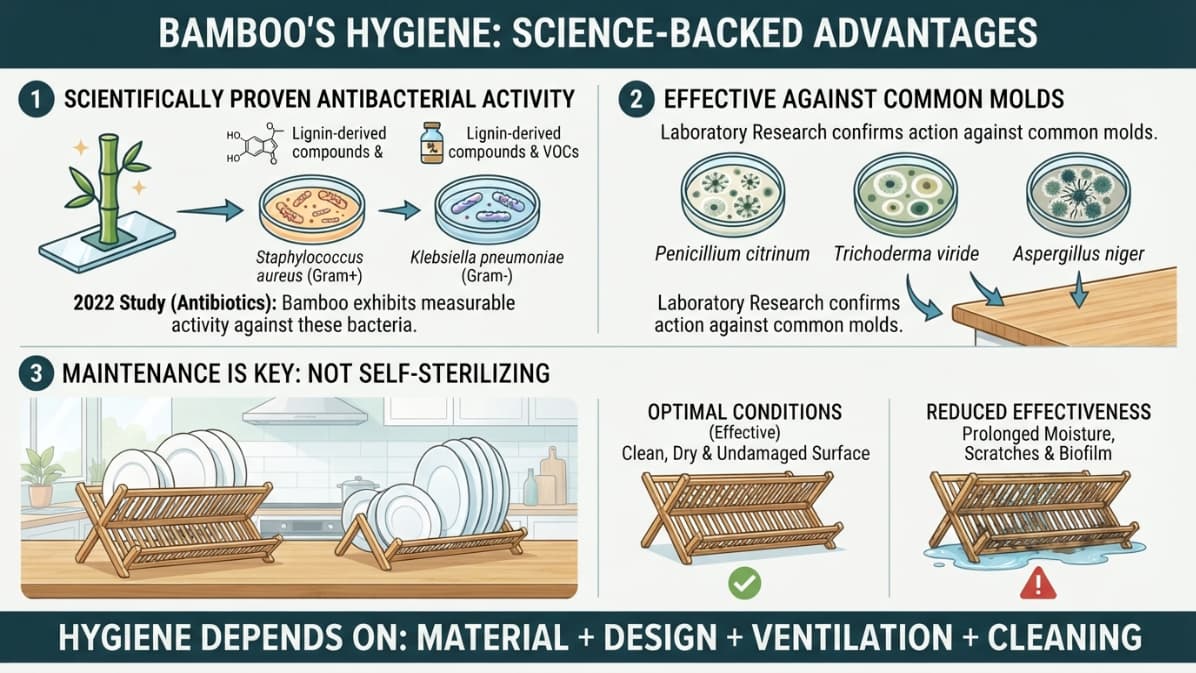
Bamboo's hygiene advantages are supported by scientific research rather than marketing claims. A peer-reviewed study published in Antibiotics (2022) found that bamboo exhibits measurable antibacterial activity against both Staphylococcus aureus and Klebsiella pneumoniae. Researchers attributed this effect to naturally occurring lignin-derived compounds and volatile organic compounds present in bamboo.
Additional laboratory research has also shown that bamboo interacts effectively with natural antibacterial agents against common mold species, including Penicillium citrinum, Trichoderma viride, and Aspergillus niger. These findings indicate that bamboo is a naturally hygienic material with documented antimicrobial characteristics.
However, bamboo is not self-sterilizing. Its natural antibacterial performance is most effective when the surface remains clean, dry, and undamaged. Prolonged moisture, deep scratches, or accumulated biofilm can reduce this protective effect. For this reason, the hygiene of a bamboo dish rack depends not only on the material itself, but also on proper product design, adequate ventilation, and routine cleaning.
How Does a Bamboo Dish Rack Compare to Plastic and Metal Alternatives on Hygiene?
When comparing bamboo with other dish rack materials, the evidence is more balanced than many product claims suggest.
A peer-reviewed NCBI/PMC (2022) study found that Escherichia coli, Staphylococcus aureus, and Klebsiella pneumoniae are among the most common foodborne bacteria found on household kitchen surfaces, including dish racks, sponges, and countertops.
The research concludes that kitchen hygiene depends more on cleaning habits and product design than on the material itself. Whether a dish rack is made of bamboo, stainless steel, or plastic, no material is self-sanitizing under everyday use.
| Material | Surface Porosity | Bacterial Adhesion Profile | Primary Hygiene Risk | Maintenance Requirement |
|---|---|---|---|---|
| Laminated bamboo (finished) | Low - sealed surface | Moderate; passive antibacterial inhibition documented | Surface cracks and joints if finish degrades | Periodic re-oiling; wipe dry after use |
| Stainless steel (304 grade) | Very low - non-porous | Low; no active antibacterial properties | Biofilm at welds and joints; rust at lower grades | Regular cleaning; weld joint inspection |
| Plastic (polypropylene / ABS) | Very low initially | Low initially; increases significantly as surface scratches | Micro-scratches trap bacteria; biofilm on aged surfaces | Replace when scratched; disinfect regularly |
| Chrome-plated iron wire | Non-porous surface | Low initially; rust accelerates bacterial adhesion | Rust creates porous sites for biofilm | Replace at first rust sign |
| Untreated bamboo | High - open cell structure | High; moisture absorbed into cell structure | Standing moisture and starch supporting bacterial growth | Not suitable for dish rack use |
The key distinction is between raw bamboo and a finished bamboo dish rack. Hygiene concerns associated with untreated bamboo-such as higher porosity, moisture absorption, and natural starch content-are greatly reduced through kiln drying[²], food-safe surface finishes, and effective drainage design. As a result, a well-manufactured bamboo dish rack offers a much more hygienic and durable surface than raw bamboo, making it suitable for everyday kitchen use.
Does Bamboo's Natural Antimicrobial Property Make a Dish Rack Self-Sanitizing?
This is one of the most common misconceptions about bamboo kitchen products. The research supports a more balanced explanation.
Bamboo contains natural compounds-often referred to as "bamboo kun"-that contribute to its antibacterial properties. A peer-reviewed study published in Antibiotics (2022) confirmed that these compounds can inhibit bacterial growth under controlled laboratory conditions. However, the effect is passive rather than active. It works best on clean, dry, and undamaged surfaces, and it slows bacterial growth instead of killing existing bacteria.

In practice, a bamboo dish rack is not self-sanitizing. Its natural antibacterial properties may help reduce bacterial growth between cleanings, but they do not replace regular washing and proper drying. A well-made bamboo dish rack offers a hygiene advantage when properly maintained, but routine cleaning remains essential.
What Design Features Determine the Hygiene Performance of a Bamboo Dish Rack?
Product design plays a key role in the hygiene of a bamboo dish rack. The following features help keep the rack cleaner and drier during everyday use.
Angled slats allow water to drain quickly, reducing standing water on the rack.
An integrated drain tray directs water away from the bamboo, helping prevent long-term moisture buildup.
Fully sealed surfaces, including cut edges and joints, reduce water absorption and improve durability.
Open-slat construction increases airflow, allowing dishes and the rack to dry faster after use.
Raised feet lift the rack off the countertop, preventing moisture from collecting underneath and improving ventilation.
Together, these design features help improve hygiene, reduce moisture retention, and extend the service life of a bamboo dish rack.

How Should a Bamboo Dish Rack Be Cleaned to Maintain Hygiene?
Cleaning protocol directly determines whether a bamboo dish rack maintains its hygiene performance over time. The USDA FSIS guidance on bamboo kitchen surfaces - developed primarily for cutting boards but applicable to bamboo dish rack maintenance - recommends hot soapy water washing, thorough rinsing, and complete air drying after each use cycle.
| Cleaning Action | Frequency | Method | Purpose |
|---|---|---|---|
| Hot soapy water wash | Weekly | Mild dish soap, soft cloth or brush | Remove accumulated food residue and surface bacteria |
| Rinse and air dry | After each heavy use period | Clear water rinse, upright air drying position | Prevent moisture pooling on rack surfaces |
| Drain tray cleaning | Every 2–3 days | Warm water, mild soap | Prevent bacterial buildup in pooled drainage water |
| Food-safe mineral oil application | Every 3–6 months | USP-grade food-safe mineral oil, soft cloth | Restore surface hydrophobic barrier; prevent micro-crack development |
| Diluted white vinegar wipe | If discoloration appears | 5% acetic acid solution on a cloth | Disrupt surface bacterial and early mold colonies without damaging finish |
| Inspect joints and edges | Every 6 months | Visual inspection | Detect early finish degradation before bacterial adhesion sites develop |
The USDA FSIS also notes that bamboo surfaces are harder and less porous than many wood alternatives - a characteristic that directly supports hygiene performance by reducing the surface area available for bacterial adhesion compared to softer, more porous materials. The FDA classification of food-safe mineral oil[⁵] under 21 CFR 172.878 as safe for food-contact surfaces makes it the appropriate maintenance product for bamboo dish racks used in food preparation environments.
Is a Bamboo Dish Rack Safe for Families With Young Children or Immunocompromised Members?
For households with vulnerable members, hygiene performance is an important consideration. A properly manufactured and maintained bamboo dish rack is safe for everyday use when standard food safety practices are followed.
NCBI/PMC kitchen microbiome research (2022) found that common kitchen pathogens, including E. coli, Staphylococcus aureus, and Klebsiella pneumoniae, can be present on household surfaces regardless of material choice. The main hygiene risks come from poor cleaning habits, cross-contamination[⁶], and trapped moisture - not from bamboo itself.
A bamboo dish rack that is cleaned regularly, kept dry, and properly maintained does not present a higher bacterial risk than stainless steel or plastic alternatives under similar conditions.
For households with immunocompromised[⁷] members, additional sanitization may be recommended. Follow appropriate food-safety guidelines when using disinfectants, and avoid excessive chemical exposure that may damage the bamboo finish over time.

Contact Us
Fujian Guanglong Bamboo & Wood Co., Ltd. manufactures premium bamboo dish racks and bamboo kitchen storage products for global retailers, distributors, and OEM/ODM brands. Product specifications, food safety certifications, and customization support are available upon request.
Address: No. 3, Wuyi 3rd Road, Jian'ou City, Nanping City, Fujian Province 353100, China
Phone: +86 158 8924 9154
Email: sales02@szmsl68.com
Related Articles:
Bamboo Rack OEM And Customization Guide
Can Bamboo Racks Mold in Humid Environments?
Why Bamboo Kitchen Organizers Sell Well Online
FAQ
Q: I've used my bamboo dish rack for months. Should I worry about bacteria?
A: Not if it's cleaned regularly and the finish remains intact. A sealed bamboo surface with good drainage is less likely to retain moisture, making it harder for bacteria to grow. If the surface becomes rough or shows signs of wear, lightly sand it and apply a food-safe mineral oil.
Q: Is it safe to dry my child's cups on a bamboo dish rack?
A: Yes. A properly finished bamboo dish rack is safe for everyday kitchenware, including children's cups and bottles. Just keep the drain tray clean and avoid standing water to maintain good hygiene.
Q: Is bamboo more hygienic than plastic?
A: Bamboo has natural antibacterial properties that can help slow bacterial growth on clean, dry surfaces. Plastic is also hygienic when new, but scratches can trap bacteria over time. With proper cleaning and maintenance, both are safe, while a quality bamboo dish rack can offer better long-term durability and moisture management.
Annotations
[¹] Biofilm - a structured community of microorganisms enclosed in a self-produced polymeric matrix and attached to a surface; once established, biofilm is significantly more resistant to cleaning and sanitization than individual bacterial cells; commonly develops in moist areas of kitchen surfaces including drain trays, joint interfaces, and aged plastic surfaces.
[²] Kiln drying - an industrial drying process using controlled heat and airflow to reduce bamboo moisture content from its initial 70–120% (green state) to 6–10% for manufactured products; eliminates the moisture environment required for bacterial and fungal proliferation during both storage and product use life.
[³] Angled slat construction - a dish rack design feature in which the dish-support elements are positioned at 5–10 degrees from vertical to promote gravity-driven water drainage toward a central or peripheral collection point; prevents standing water accumulation on rack surfaces and is the primary structural hygiene feature of quality bamboo dish drying rack designs.
[⁴] USDA Food Safety and Inspection Service (FSIS) - a United States federal agency under the Department of Agriculture responsible for ensuring the safety of the commercial supply of meat, poultry, and egg products; publishes authoritative food contact surface hygiene guidance including recommendations specifically applicable to bamboo and wood kitchen items.
[⁵] Food-safe mineral oil (21 CFR 172.878) - a refined, colorless, and odorless white mineral oil designated by the U.S. Food and Drug Administration under Title 21 of the Code of Federal Regulations as safe for use on food-contact surfaces; the standard maintenance product for bamboo and hardwood cutting boards and kitchen organizers used in food preparation environments.
[⁶] Cross-contamination - the transfer of harmful bacteria or other microorganisms from one food, surface, or utensil to another; the primary mechanism by which kitchen surfaces - including dish racks - become implicated in foodborne illness risk; prevented through separation of raw and cooked food preparation surfaces and regular cleaning of all kitchen contact surfaces.
[⁷] Immunocompromised - describes individuals with a significantly reduced ability to fight infection and disease due to medical conditions (HIV/AIDS, cancer, organ transplantation) or treatments (chemotherapy, immunosuppressive drugs); at heightened risk from bacterial exposures that would not present significant risk to healthy individuals, and therefore subject to more stringent food safety protocols.
Authoritative References
Ramful R. et al. (2022). Investigating the Antibacterial Characteristics of Japanese Bamboo. Antibiotics, 11(5), 569. NCBI/PMC Open Access. https://pmc.ncbi.nlm.nih.gov/articles/PMC9137583/
Zhang J. et al. (2021). Inhibition Mechanism and Antibacterial Activity of Natural Antibacterial Agent Citral on Bamboo Mould. Royal Society Open Science. NCBI/PMC. https://pmc.ncbi.nlm.nih.gov/articles/PMC8059595/
Garrison L. et al. (2022). Evaluation of the Kitchen Microbiome and Food Safety Behaviors of Predominantly Low-Income Families. NCBI/PMC. https://pmc.ncbi.nlm.nih.gov/articles/PMC9557297/
USDA Food Safety and Inspection Service (FSIS). Cutting Boards - Safe Food Handling and Preparation. https://www.fsis.usda.gov/food-safety/safe-food-handling-and-preparation/food-safety-basics/cutting-boards
USDA Food Safety and Inspection Service (FSIS). Food Safety Education Month: Preventing Cross-Contamination. https://www.fsis.usda.gov/news-events/events-meetings/food-safety-education-month-preventing-cross-contamination
Food and Agriculture Organization of the United Nations (FAO). World Bamboo Resources - Global Forest Resources Assessment. https://www.fao.org/4/a1243e/a1243e00.htm