






Bamboo racks can develop mold - but only under specific conditions that are well-understood and largely preventable. The distinction between raw bamboo's known vulnerability to fungal colonization and the mold resistance of properly manufactured, finished bamboo racks is the central fact that most buyers either do not know or do not fully understand. This article explains both sides of that distinction with precision, so every purchasing and care decision can be made with accurate information.
What Does the Research Actually Say About Bamboo and Mold?
Scientific research provides important insight into bamboo's relationship with moisture and mold resistance.
Research published in Frontiers in Multidisciplinary Research (2025) shows that humidity plays a critical role in bamboo mildew development. When relative humidity (RH)[¹] remains below 75%, mold growth on bamboo surfaces is significantly limited. However, when RH exceeds 95%, conditions become highly favorable for rapid fungal reproduction and decay development.
A peer-reviewed study published through NCBI/PMC (2022) found that untreated bamboo is more susceptible to mold because its natural starch and sugar content provides nutrients that support fungal growth. The study identified several common fungi associated with bamboo staining and mildew, including Botryodiplodia theobromae, Fusarium moniliforme, Alternaria alternata, Aspergillus niger, Penicillium citrinum, and Trichoderma viride - microorganisms commonly found in humid environments.
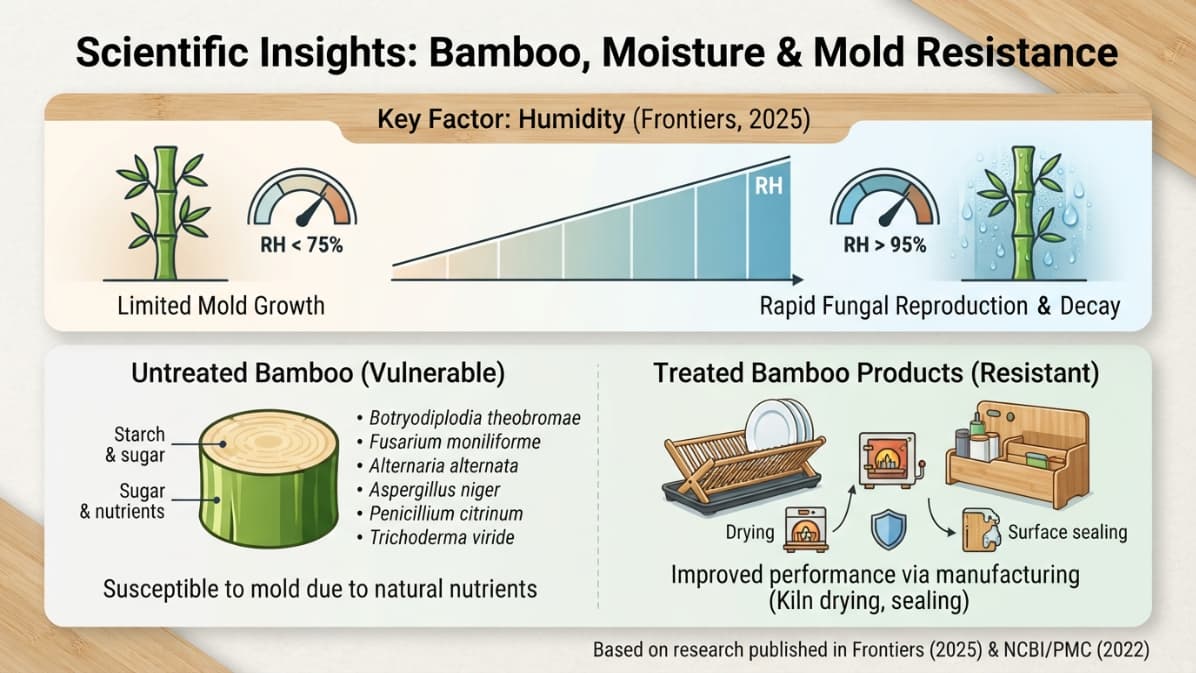
However, this vulnerability applies primarily to untreated bamboo rather than properly manufactured bamboo products. Another NCBI/PMC study (2022) on bamboo dimensional stability and mold resistance demonstrated that treated bamboo materials achieved significantly improved performance under accelerated testing conditions.
The key takeaway is that mold resistance is not simply a property of bamboo itself. For finished bamboo products such as dish racks and kitchen organizers, performance depends on proper kiln drying, moisture control, adhesive selection, and surface finishing processes during manufacturing.
Why Is Raw Bamboo Mold-Prone - and Why Does That Not Apply to Rack Products?
Understanding the difference between raw bamboo's mold vulnerability and a finished bamboo rack's real-world performance requires looking at what happens during the manufacturing process.
Freshly harvested bamboo contains a high moisture content of 70–120% and natural starch levels that make it highly susceptible to fungal growth if left untreated. According to a 2023 NCBI/PMC study on fungal community changes in deteriorating bamboo, researchers identified 459 fungal operational taxonomic units (OTUs)[²] from eight fungal phyla on untreated round bamboo exposed to outdoor weathering for 13 weeks. This demonstrates the significant risk of fungal colonization in unprotected bamboo materials.
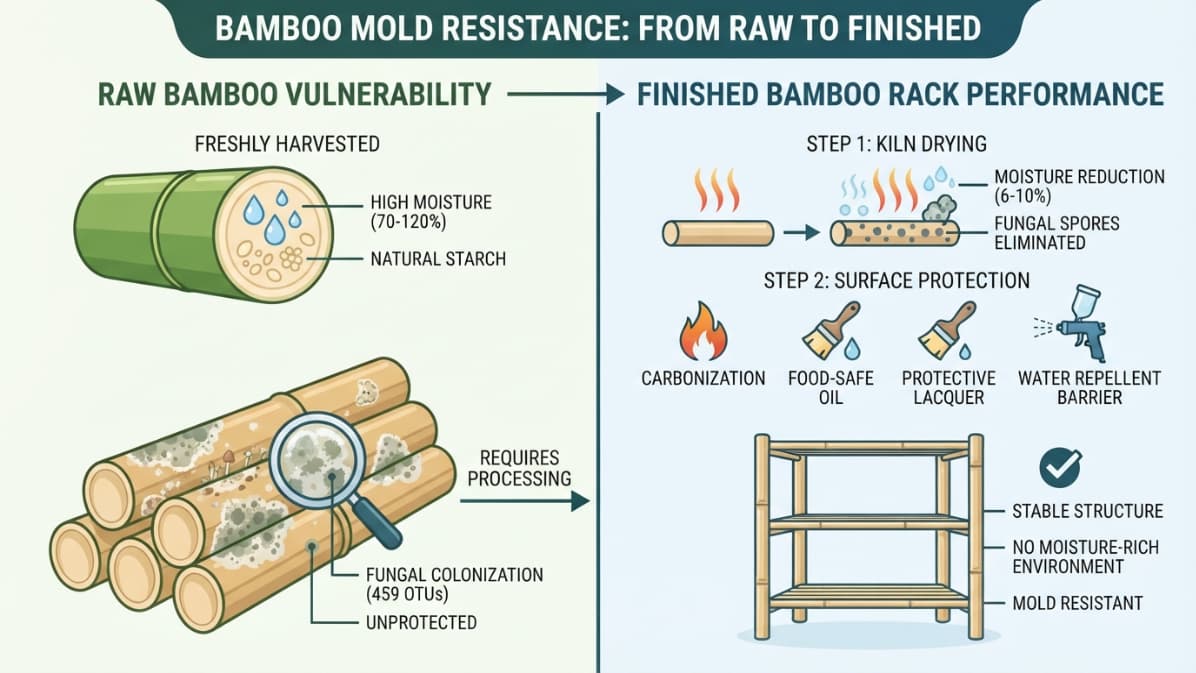
Commercial bamboo rack manufacturing addresses these vulnerabilities through controlled processing. The first critical step is kiln drying[³], which reduces bamboo moisture content from its original 70–120% range to approximately 6–10%. By removing excess moisture, the process eliminates the conditions required for fungal spores to germinate and spread.
The second step is surface protection, which may include carbonization treatment[⁴], food-safe oil finishing, or protective lacquer coating. These treatments help reduce moisture absorption and create a barrier against water penetration, limiting the conditions needed for fungal growth.
The natural starch and sugar components of bamboo remain within the material structure, but after proper drying and finishing, the bamboo no longer provides the moisture-rich environment required for mold development.
What Humidity Levels Actually Trigger Mold on a Finished Bamboo Rack?
The 75% RH threshold identified in studies of untreated bamboo does not directly represent the mold risk of finished bamboo racks. Instead, it refers to the moisture conditions at the bamboo surface itself - a factor that is significantly influenced by the protective finish applied during manufacturing.
A properly finished bamboo dish rack creates a barrier between environmental humidity and the hygroscopic[⁵] bamboo structure underneath. Even in environments where humidity temporarily reaches 80–85% RH, such as kitchens during cooking or bathrooms after showers, moisture vapor alone is typically not enough to trigger fungal growth when the protective coating remains intact.
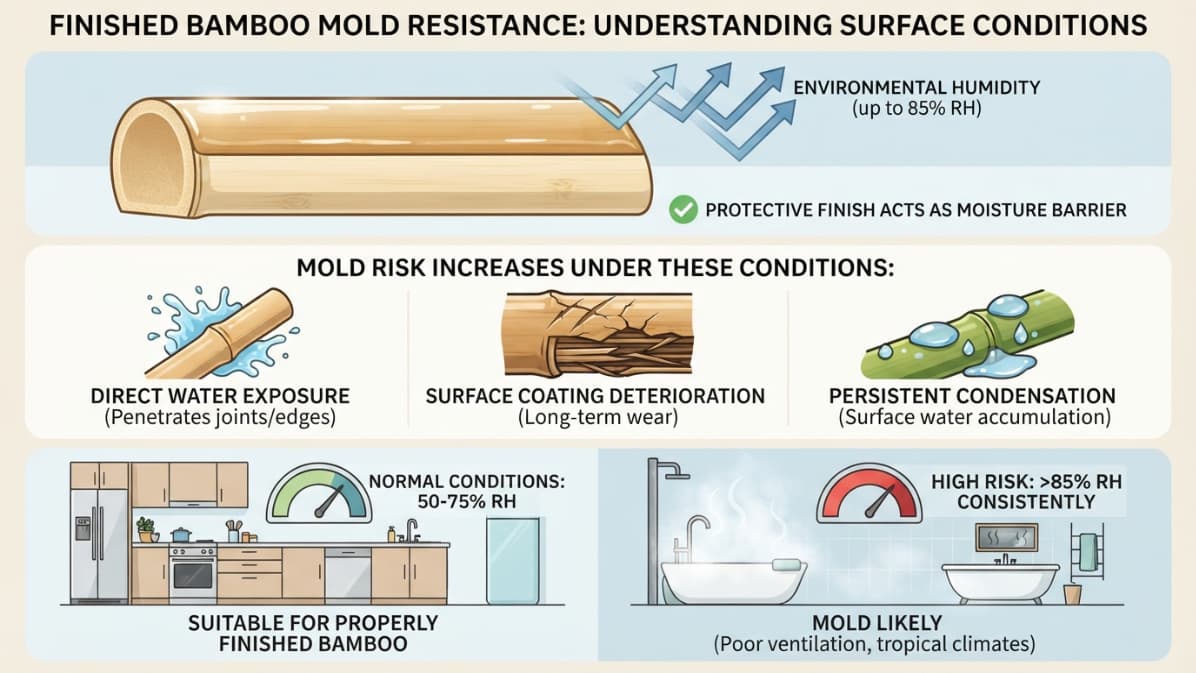
Mold risk usually increases under three specific conditions:
Extended direct water exposure that penetrates vulnerable areas such as joints, edges, or unfinished surfaces
Surface coating deterioration caused by long-term wear, leaving bamboo fibers exposed
Persistent condensation[⁶] where liquid water accumulates on the surface rather than existing only as airborne moisture
Under normal household conditions, kitchens and bathrooms where bamboo racks are commonly used typically remain within approximately 50–75% RH, which is generally suitable for properly manufactured bamboo products.
Higher risks are more likely in environments with consistently elevated humidity, such as poorly ventilated bathrooms with prolonged RH above 85%, or tropical climates where high humidity is combined with limited airflow and insufficient product maintenance.
Which Environments Pose the Highest Mold Risk for Bamboo Racks?
Not all humid environments carry equal mold risk for bamboo storage racks. The following table maps specific environments against their actual risk profile for finished bamboo rack products.
| Environment | Typical RH Range | Mold Risk for Finished Bamboo Rack | Primary Risk Factor |
|---|---|---|---|
| Kitchen (standard indoor) | 50–70% | Low | Manageable with proper drainage |
| Bathroom (well-ventilated) | 60–75% | Low to moderate | Steam cycles; ensure surface drying |
| Bathroom (poorly ventilated) | 75–90% | Moderate | Persistent high RH; re-oil finish regularly |
| Laundry / utility room | 65–85% | Moderate | Sustained moisture; avoid prolonged contact with wet fabrics |
| Tropical climate interior | 75–90% (year-round) | Moderate to high | Continuously elevated RH; requires active maintenance |
| Outdoor covered area | Variable; often 80%+ | High | UV degradation + moisture; not recommended for standard bamboo racks |
| Basement (unventilated) | 70–95% | High | Near-threshold humidity plus limited air exchange |
A bamboo bathroom shelf in a well-ventilated bathroom sits comfortably in the low-to-moderate zone. A bamboo drying rack in a poorly ventilated laundry room carries moderate risk - not from the rack's material failure, but from the combination of persistent high RH and direct contact with wet textiles. Moving the rack to a location with better air circulation, or choosing a model with open-slat construction that promotes airflow around all surfaces, resolves this risk without changing the product.
How Does Manufacturing Quality Determine Mold Resistance in Practice?
The most important factor influencing a bamboo rack's real-world mold resistance is manufacturing quality - especially the consistency and effectiveness of the surface treatment applied during production.
Research published in NCBI/PMC (2020) on polymer-treated bamboo found that treated bamboo demonstrated significantly improved mold resistance under controlled conditions of 25°C and 85% RH over a 30-day testing period, while untreated samples showed progressive fungal colonization. The improvement was not primarily due to antifungal chemicals, but rather because the treatment improved dimensional stability and created a moisture barrier that reduced water absorption - limiting the conditions required for mold growth.
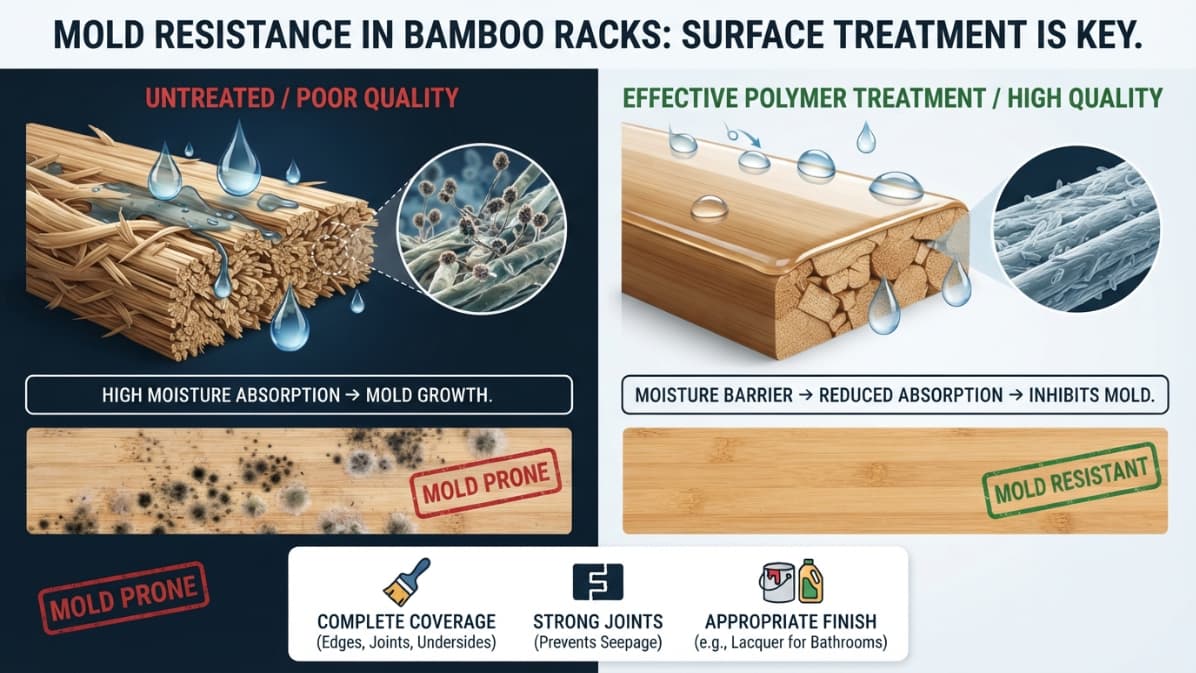
This principle directly applies to finished bamboo racks: effective surface treatment does not "kill" mold; instead, it reduces the moisture exposure that mold needs to develop.
When evaluating bamboo rack quality, buyers should focus on three key surface indicators:
1. Complete finish coverage
All surfaces - including undersides, cut edges, and joint areas - should receive proper protection. Exposed cut edges are among the most common points where moisture can penetrate into the bamboo structure.
2. Strong joint construction
Loose joints or gaps between laminated bamboo components can allow capillary moisture movement into the material, reducing the effectiveness of surface protection.
3. Appropriate finish selection
For humid environments such as bathrooms or near-sink kitchen areas, multi-layer lacquer finishes generally provide a stronger and longer-lasting moisture barrier than a single oil finish. Oil finishes can still be suitable for products positioned around a natural aesthetic, but require more regular maintenance.
Does Bamboo's Natural Antimicrobial Property Offer Any Mold Protection?
Bamboo's natural antimicrobial properties are often highlighted in consumer marketing, but they require proper context when discussing mold resistance. Scientific evidence shows that bamboo's natural antimicrobial effects are mainly associated with bacterial inhibition, not fungal prevention.
Research published in Antibiotics (2022) through NCBI/PMC confirmed that bamboo materials demonstrate antibacterial activity against bacteria such as Staphylococcus aureus, which is linked to naturally occurring compounds within bamboo, including lignin-related components and volatile organic compounds. However, these properties do not provide the same level of protection against mold fungi.
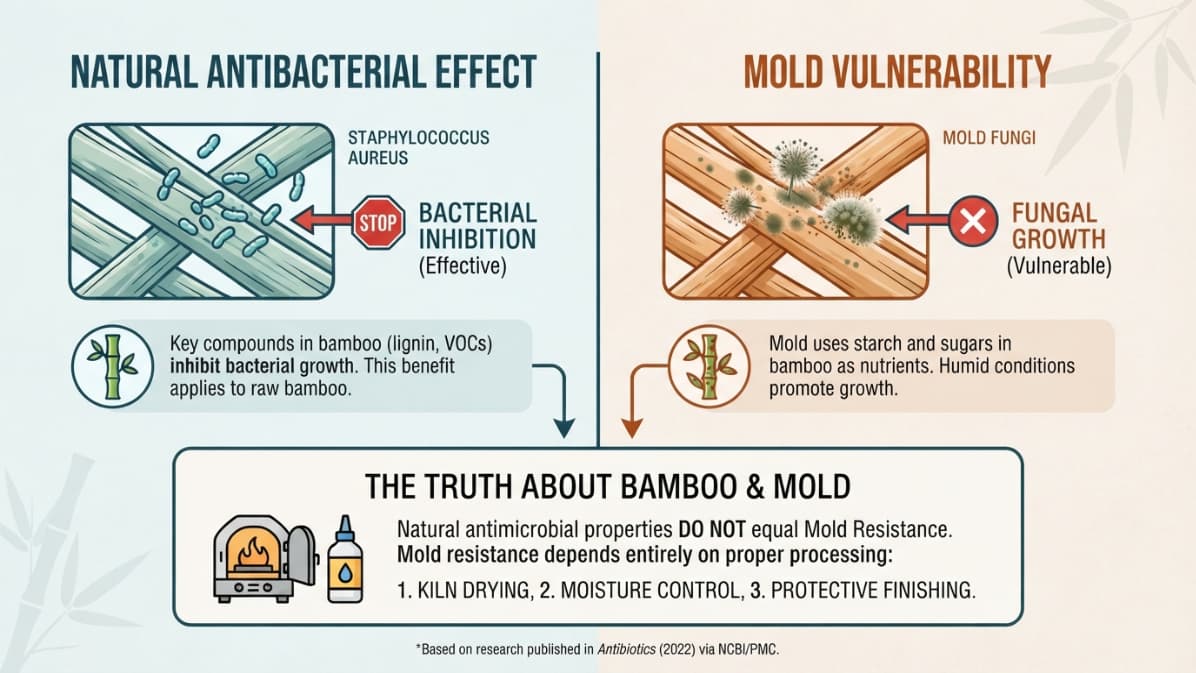
Unlike bacteria, mold fungi can utilize the starch and sugars naturally present in bamboo as a nutrient source. This means raw bamboo can still be vulnerable to fungal growth under humid conditions, even though it may show antibacterial characteristics.
The practical takeaway is straightforward: bamboo's natural antimicrobial properties can offer a valuable benefit in kitchen applications by helping limit certain bacterial activity, but they do not replace proper manufacturing processes for mold prevention. For bamboo dish racks, spice racks, and other kitchen organizers, long-term mold resistance depends primarily on factors such as kiln drying, moisture control, and protective surface finishing.
Suppliers who describe bamboo as "naturally mold-resistant" without explaining the role of processing and finishing are presenting an incomplete picture of the material's performance.
What Are the Warning Signs That a Bamboo Rack Is Developing Mold?
Early identification of mold-related issues allows for simple intervention before any structural damage occurs. On bamboo rack surfaces, mold development typically progresses through three recognizable stages.
The first sign is surface discoloration around joints and edges - usually appearing as slight darkening or a grayish tint where bamboo pieces connect or where exposed cut edges have absorbed moisture. This change is typically associated with early-stage fungal staining[⁷], caused by stain fungi such as Botryodiplodia theobromae and Alternaria alternata. At this stage, the bamboo structure remains intact, and the issue can usually be addressed with basic cleaning and maintenance.
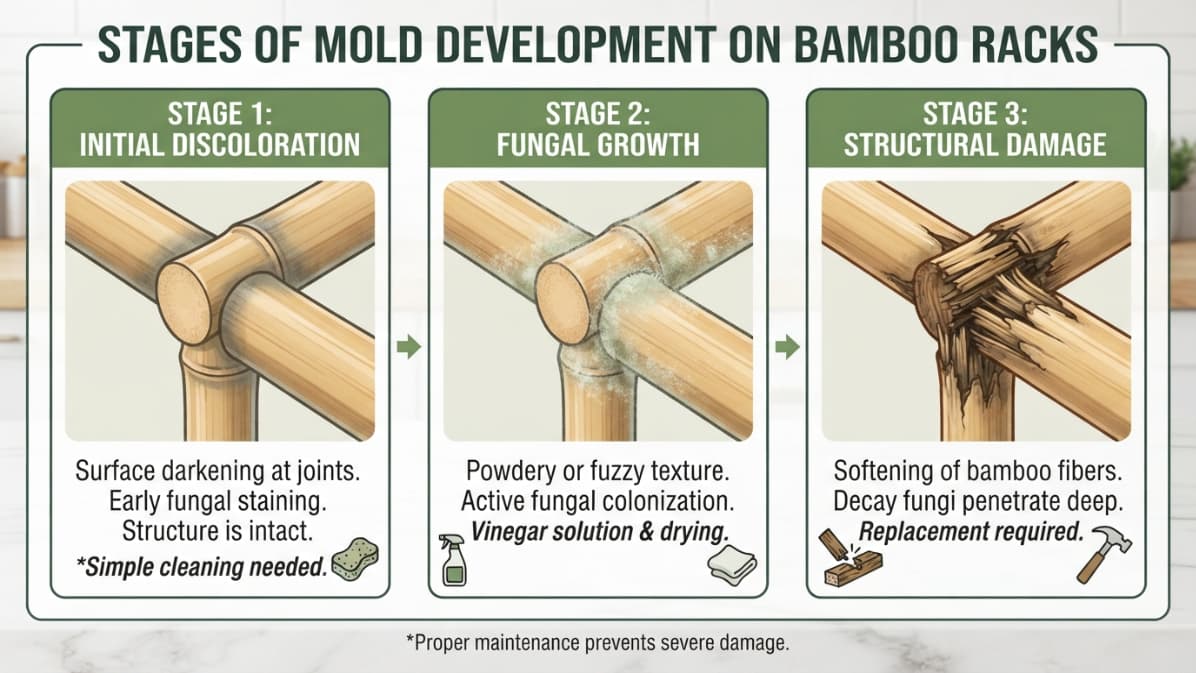
The second sign is a change in surface texture. Affected areas may develop a slightly powdery or fuzzy appearance as fungal hyphae[⁸] begin spreading across the surface. Visible growth indicates active fungal colonization. At this stage, cleaning with a diluted white vinegar solution, allowing the bamboo to dry completely, and restoring the protective surface with food-safe mineral oil can help stop further progression.
The third and most serious stage is structural softening. This indicates that decay fungi[⁹] have moved beyond the surface layer and begun affecting the bamboo's internal fibers. Once structural integrity is compromised, the affected sections typically cannot be fully restored and replacement may be necessary.
Fortunately, reaching this stage requires prolonged moisture exposure, poor ventilation, and a lack of routine care. Under normal kitchen use, a properly manufactured bamboo rack with appropriate maintenance is unlikely to experience this level of damage.
How Should a Bamboo Rack Be Maintained to Prevent Mold Long-Term?
Prevention is far simpler than remediation - and the maintenance protocol for mold prevention is genuinely minimal. The USDA Food Safety and Inspection Service recommends periodic mineral oil application for bamboo surfaces, and this single practice addresses the primary mold risk pathway by maintaining the hydrophobic[¹⁰] surface barrier that prevents moisture ingress.
| Maintenance Action | Frequency | Purpose | Product |
|---|---|---|---|
| Apply food-safe mineral oil | Every 3–6 months | Maintain moisture barrier; prevent surface drying and cracking | USP-grade food-safe mineral oil |
| Wipe surfaces dry after wet use | After each use | Prevent standing water at joints | Clean dry cloth |
| Inspect joints and edges | Every 6 months | Early detection of finish degradation | Visual inspection |
| Clean with diluted white vinegar | If early discoloration appears | Antifungal surface treatment | 5% acetic acid solution |
| Ensure adequate ventilation | Ongoing | Keep ambient RH below 75% at rack surface | Room ventilation or dehumidifier if needed |
| Re-sand and re-oil | When surface feels rough | Restore degraded finish before moisture penetration | 220-grit sandpaper + mineral oil |
For bamboo racks in bathrooms or high-humidity tropical environments, increasing mineral oil frequency to every 2–3 months provides additional protection. Running a bathroom exhaust fan during and after showering - which reduces peak RH from 85–90% to 60–70% within 15–20 minutes - eliminates the sustained high-humidity exposure window that represents the primary mold risk for bamboo bathroom shelves and bamboo drying racks in these environments.
What Bamboo Rack Designs Minimize Mold Risk in Humid Spaces?
Design plays an equally important role as material treatment when it comes to reducing mold risk in bamboo racks used in humid environments. A well-designed bamboo rack does not simply rely on coatings - it uses structural features that improve airflow, drainage, and moisture control.
1. Open-slat construction for better airflow
Open-slat designs allow air to circulate around the rack surface, helping moisture from water splashes, steam, and condensation evaporate more quickly. Compared with solid bamboo panels that can trap moisture in enclosed areas, open-slat structures reduce the chance of creating damp conditions where mold can develop.
2. Elevated base design
Raised feet or legs keep the bamboo rack away from wet countertops and floors, reducing the risk of moisture absorption through direct surface contact. A quality bamboo dish rack designed for humid kitchens should avoid flat-base construction that allows water to remain trapped beneath the rack.
3. Effective drainage system
A removable drain tray with proper water flow helps move excess water away from the bamboo structure. Poorly designed trays that collect water or allow it to flow back toward the rack base can create continuous moisture exposure around joints and connection points.
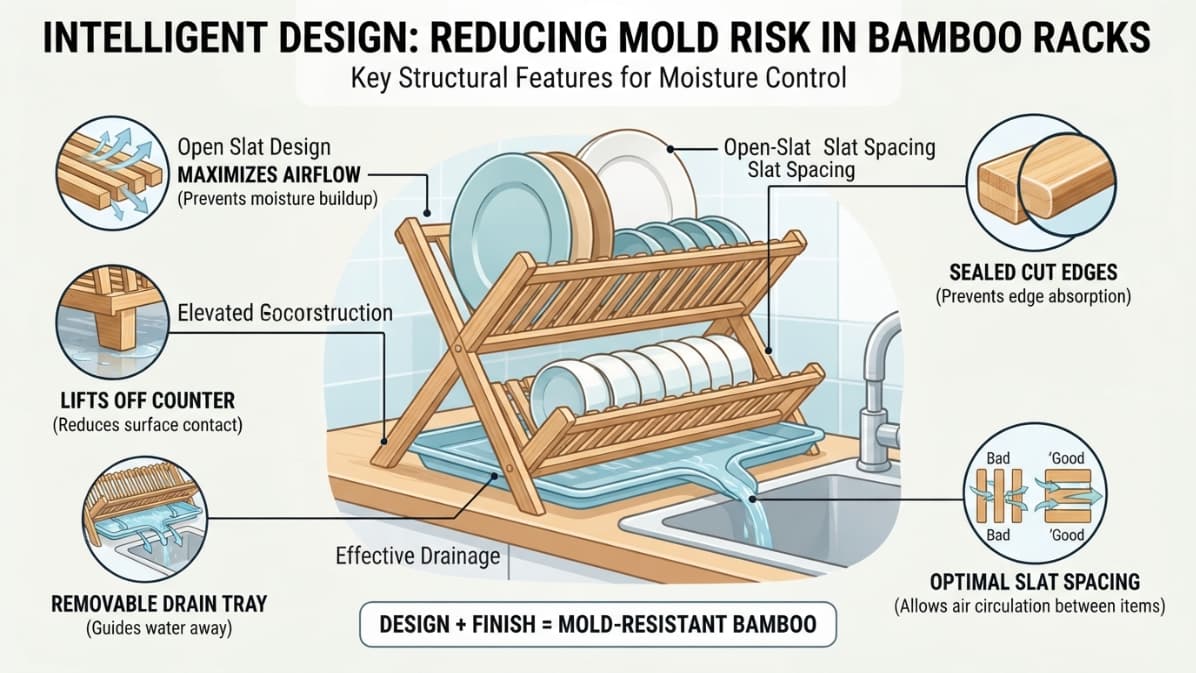
4. Fully sealed cut edges
For laminated bamboo panels, exposed cut edges are among the most vulnerable areas because they can absorb moisture more easily than finished surface faces. High-quality manufacturing ensures these edges receive proper sealing and protection as part of the finishing process.
5. Appropriate slat spacing
Wider spacing between bamboo slats improves airflow around stored items and prevents the formation of stagnant microenvironments[¹¹] where moisture can remain trapped. This is especially important for bamboo bathroom shelves, dish racks, and other products used in frequently humid spaces.
The best bamboo racks manage mold risk through a combination of material processing, protective finishing, and intelligent design. When these elements work together, bamboo products can perform reliably even in demanding kitchen and bathroom environments.
Bamboo Rack Mold Risk Across Different Product Types - A Summary
| Product Type | Typical Deployment Environment | Inherent Mold Risk | Key Design Mitigation |
|---|---|---|---|
| Bamboo dish rack | Kitchen countertop, near sink | Low - daily drying cycle natural | Integrated drain tray, elevated feet, open slats |
| Bamboo dish drying rack | Sink area, high moisture contact | Low-moderate - direct water contact | Angled drainage slats, positive-drain tray, sealed edges |
| Bamboo bathroom shelf | Bathroom, steam exposure | Moderate - consistent RH cycles | Full lacquer finish, open-shelf design, ventilation |
| Bamboo drying rack | Laundry / utility room | Moderate - wet textile contact | Elevated base, good airflow, mineral oil every 2–3 months |
| Bamboo spice rack | Kitchen cabinet or countertop | Low - dry environment | Standard oil finish, no special precautions required |
| Bamboo countertop shelf | Kitchen countertop | Low - ambient indoor conditions | Standard finish maintenance, periodic oiling |
| Bamboo bakers rack | Kitchen or pantry | Low - dry, ambient conditions | Standard maintenance; avoid placing directly against damp walls |
Mold in bamboo racks is a manageable and largely preventable issue - not an unavoidable outcome of using bamboo products.
The research is clear: untreated bamboo is naturally more vulnerable to moisture and fungal growth, while properly manufactured and maintained bamboo racks can deliver reliable long-term performance in humid household environments.
Our bamboo racks are produced using kiln-dried bamboo panels, protective surface treatments, sealed cut edges, and E0-grade adhesives. Every step - from material selection to finishing and structural design - is focused on improving durability, moisture resistance, and everyday usability.
👉 Shop Mold-Resistant Bamboo Dish Racks | Browse Bamboo Bathroom Shelves | View All Bamboo Kitchen Organizers

Contact Us
We manufacture and supply finished bamboo racks and bamboo kitchen storage solutions for global retailers, distributors, and OEM/private label brands. Detailed material specifications, finishing documentation, and compliance certificates are available upon request.
Address: No. 3, Wuyi 3rd Road, Jian'ou City, Nanping City, Fujian Province, 353100, China
Phone: +86 158 8924 9154
Email: sales02@szmsl68.com
FAQ
Q: My bamboo dish rack has developed dark spots after several months near the sink. Is it mold and should I replace it?
A: Dark spots around joints are often early signs of moisture-related staining rather than serious structural damage. Clean the area with diluted white vinegar, allow the rack to dry completely, and reapply a food-safe oil finish. Proper drying and maintenance can usually restore the surface and prevent future issues.
Q: Can bamboo dish racks be used in tropical or high-humidity climates?
A: Yes. Bamboo racks can perform well in humid environments with proper care. Regular oil maintenance, good airflow, and keeping the surface dry are key. Many households in humid regions use bamboo kitchen products successfully for years with routine maintenance.
Q: Is bamboo naturally mold-resistant?
A: Not exactly. Bamboo may have certain antibacterial properties, but raw bamboo is not naturally mold-proof. Its performance depends largely on proper manufacturing processes, including kiln drying, moisture control, and protective finishing. A quality bamboo dish rack's resistance comes from these treatments rather than the raw material alone.
Annotations
[¹] Relative humidity (RH) - the amount of water vapor present in air expressed as a percentage of the maximum amount the air can hold at a given temperature; the primary environmental variable governing mold germination and growth on organic substrates including bamboo.
[²] Operational Taxonomic Unit (OTU) - a cluster of microbial sequences (typically fungal or bacterial) grouped by sequence similarity; used in high-throughput DNA sequencing studies as a proxy for distinct species when exact species identification is impractical; reflects the diversity of fungal communities present on a substrate.
[³] Kiln drying - an industrial process using controlled heat and airflow in enclosed chambers to reduce the moisture content of bamboo or wood from its green state (70–120% for bamboo) to a target range of 6–10%; eliminates the moisture environment required for fungal germination and inhibits biological degradation during storage and use.
[⁴] Carbonization treatment - a controlled heat process applied to bamboo surfaces that caramelizes surface sugars, partially closes pore structure, reduces surface hygroscopic activity, and produces a warm amber color; partially reduces available nutrient substrate for fungal colonization at the surface level.
[⁵] Hygroscopic - the tendency of a material to absorb and retain moisture from the surrounding atmosphere; bamboo's cellulosic structure is naturally hygroscopic due to the presence of hydroxyl (-OH) groups that form hydrogen bonds with water molecules. Surface finishing reduces but does not eliminate this property.
[⁶] Surface condensation - the deposition of liquid water on a surface when that surface temperature falls below the dew point[DP] of the surrounding air; delivers liquid water directly to the bamboo surface at a rate and volume far exceeding vapor-phase moisture absorption, and represents the most acute moisture risk for bamboo racks in environments with rapid temperature cycling.
[⁷] Fungal staining - discoloration of bamboo or wood surfaces caused by stain fungi (Botryodiplodia theobromae, Alternaria alternata, and related species) that produce pigmented metabolites during colonization; a cosmetic damage preceding structural mold and decay, and an early warning indicator for moisture management.
[⁸] Fungal hyphae - the thread-like filamentous structures that constitute the vegetative body of fungi; visible to the naked eye as a white, gray, or colored fuzzy coating when present in sufficient density; their appearance on a bamboo rack surface indicates active fungal colonization in progress.
[⁹] Decay fungi - a class of fungi, including brown rot and white rot species, that enzymatically degrade the structural components of bamboo and wood (cellulose, hemicellulose, lignin), causing loss of mechanical integrity; distinct from surface mold and stain fungi, which primarily affect appearance rather than structure.
[¹⁰] Hydrophobic surface - a surface that repels water, characterized by a water contact angle exceeding 90°; created on bamboo rack surfaces through oil or lacquer coatings that reduce the density of hydrophilic hydroxyl (-OH) groups exposed at the material surface.
[¹¹] Stagnant microenvironment - a localized air volume with reduced circulation where temperature and humidity equilibrate slowly with the broader room environment; particularly relevant for tightly packed shelf loads where condensation, steam, or moisture from stored items accumulates between objects and the shelf surface without adequate airflow for evaporation.
Authoritative References
NCBI/PMC (2023). Succession of Fungal Community during Outdoor Deterioration of Round Bamboo. https://pmc.ncbi.nlm.nih.gov/articles/PMC10301112/
NCBI/PMC (2022). Mold and Stain Resistance of Bamboo Treated with Pyraclostrobin Fungicide. https://pmc.ncbi.nlm.nih.gov/articles/PMC9786610/
NCBI/PMC (2022). Improving the Mould and Blue-Stain-Resistance of Bamboo through Acidic Hydrolysis. https://pmc.ncbi.nlm.nih.gov/articles/PMC8778222/
NCBI/PMC (2020). Improved Dimensional Stability and Mold Resistance of Bamboo via In Situ Growth of Poly(Hydroxyethyl Methacrylate-N-Isopropyl Acrylamide). https://pmc.ncbi.nlm.nih.gov/articles/PMC7407111/
NCBI/PMC (2022). Investigating the Antibacterial Characteristics of Japanese Bamboo. Antibiotics, 11(5), 569. https://pmc.ncbi.nlm.nih.gov/articles/PMC9137583/
Food and Agriculture Organization of the United Nations (FAO). World Bamboo Resources - Global Forest Resources Assessment. https://www.fao.org/4/a1243e/a1243e00.htm