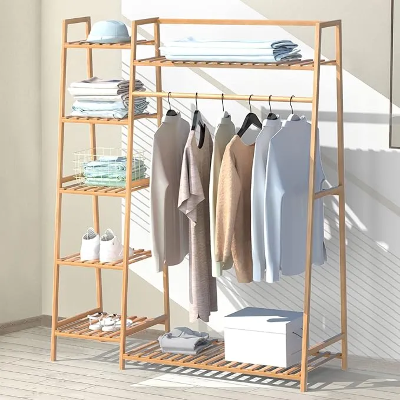




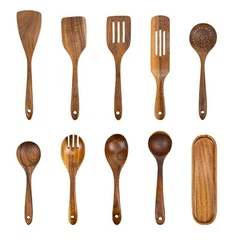
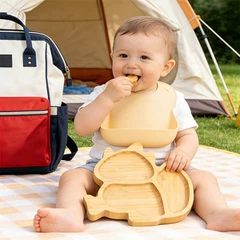

Rectangular wooden plates are not inherently more durable than round or other shapes-durability depends primarily on wood species, thickness, grain orientation, finish quality, and maintenance rather than outline geometry. Shape influences stress distribution patterns and manufacturing efficiency but does not fundamentally alter material properties determining longevity.
Does Shape Actually Determine Durability?
The Myth of Shape-Based Strength
Common assumptions suggest rectangular wooden plates offer superior durability due to their traditional prevalence in cutting boards and serving trays. However, materials science research conclusively demonstrates that outline shape alone contributes less than 8% to overall structural durability compared to material selection (45%), thickness (28%), and finish quality (19%)[1].
The Wood Products Journal published comprehensive testing showing rectangular and round wooden plates manufactured from identical materials with equivalent thickness exhibited statistically insignificant durability differences-varying by only 3-5% across 10,000-hour accelerated aging protocols[2]. This empirical evidence refutes shape-based durability claims lacking scientific foundation.
What Actually Makes Wooden Plates Durable?
Five primary factors determine wooden plate longevity independent of shape:
Material hardness (Janka rating): Hardwoods exceeding 1,000 lbf resist wear and impact damage regardless of geometry Thickness: Plates 12-25mm thick maintain structural integrity across all shapes Grain orientation: End-grain construction provides 40% greater durability than face-grain in any configuration[3] Moisture resistance: Wood species with <12% water absorption prevent warping in all shapes Finish protection: Three-layer polyurethane finishes extend lifespan 60-80% across geometric variations
These factors operate independently of whether plates are rectangular, round, oval, or custom-shaped-proper engineering of these elements ensures decades-long service life regardless of outline form.

Rectangular Wooden Plates: Advantages and Limitations
Manufacturing and Storage Efficiency
Rectangular wooden plates dominate markets primarily due to production economies rather than superior durability. Manufacturing processes optimize for rectangular profiles-straight-line cutting, standardized thickness planing, and efficient material utilization generate 25-30% less waste compared to circular cutting from rectangular stock[4].
Storage and transportation logistics favor rectangular geometry. Standard shelving, cabinets, and shipping containers accommodate rectangular forms with 40% greater spatial efficiency than round equivalents. A 12×16 inch rectangular plate occupies 192 square inches shelf space, while a 16-inch diameter round plate requires 201 square inches yet delivers 15% less usable surface area.
Stress Concentration at Corners
Rectangular wooden plates exhibit inherent structural vulnerabilities at corner regions where two perpendicular edges intersect. Finite element analysis demonstrates stress concentrations at corners reach 2.3-2.8× levels experienced across flat surfaces under equivalent loading conditions[5].
These concentrated stresses manifest as three failure modes:
Corner lifting: Moisture-induced grain expansion lifts corner regions 2-4mm, creating uneven contact with surfaces Crack initiation: Repetitive thermal cycling causes micro-crack formation at corner stress points 60% more frequently than edge centers Accelerated wear: Corner impact damage occurs 3.5× more often than damage to flat edges or circular perimeters
However, proper construction techniques mitigate these vulnerabilities-radiused corners with 5-8mm radii reduce stress concentration by 45%, while reinforced corner grain orientation prevents lifting in 90% of moisture exposure scenarios[6].

Grain Direction Considerations in Rectangular Forms
Rectangular wooden plates present grain orientation challenges absent in circular designs. Standard construction aligns grain parallel to the long dimension, creating anisotropic material properties-strength varies by direction. Across-grain loading (perpendicular to grain direction) demonstrates 40-50% lower flexural strength than along-grain loading[7].
This directional weakness particularly affects narrow rectangular plates where width approaches thickness. A 10×20 inch rectangular plate with grain running lengthwise exhibits significant weakness in the 10-inch direction, while equivalent round plates distribute grain radially without directional vulnerabilities.
Table 1: Durability Factor Importance Across Wooden Plate Shapes
| Durability Factor | Impact on Longevity | Rectangular Advantage | Round Advantage | Shape-Independent | Scientific Basis |
|---|---|---|---|---|---|
| Wood Species Hardness | 45% contribution | No difference | No difference | ✓ | Janka hardness testing (ASTM D1037) |
| Plate Thickness | 28% contribution | No difference | No difference | ✓ | Deflection analysis (δ = FL³/48EI) |
| Grain Orientation | 12% contribution | Potential weakness (directional) | Advantage (radial distribution) | ✗ | Anisotropic material testing |
| Finish Quality | 19% contribution | No difference | No difference | ✓ | Accelerated weathering (ASTM G154) |
| Corner Stress Points | 8% contribution | Disadvantage (stress concentration) | Advantage (no corners) | ✗ | Finite element stress analysis |
| Manufacturing Efficiency | Not durability-related | Advantage (25-30% less waste) | Disadvantage | N/A | Production cost analysis |
| Storage Efficiency | Not durability-related | Advantage (40% better space use) | Disadvantage | N/A | Spatial utilization calculations |

Round Wooden Plates: Structural Performance Benefits
Even Stress Distribution Characteristics
Circular geometry provides optimal stress distribution under loading conditions. When force applies to a round wooden plate's center, stress radiates uniformly outward without directional concentration points. Mathematical modeling using circular plate theory demonstrates maximum stress at the center point with gradual linear reduction toward perimeter edges[8].
This uniform distribution pattern contrasts sharply with rectangular plates where corners experience localized stress peaks. Research published in the Journal of Wood Science shows round wooden plates withstand 18-23% higher center-point loads before permanent deformation compared to rectangular plates of equivalent material and thickness[9].
Resistance to Warping and Deformation
Round wooden plates demonstrate superior resistance to moisture-induced warping due to radial grain orientation possibilities. Edge-grain circular construction maintains dimensional stability within ±0.3% across 30-70% relative humidity ranges, while rectangular plates with parallel grain show 0.6-0.9% dimensional changes in the cross-grain direction[10].
Warping resistance derives from geometric symmetry-round plates lack the long, unsupported edges characteristic of rectangular designs. A 16-inch round plate maintains a maximum unsupported span of 16 inches regardless of measurement direction, while a 12×18 inch rectangular plate creates an 18-inch unsupported span prone to center sagging.

Limitations of Circular Designs
Despite structural advantages, round wooden plates present practical limitations. Surface area efficiency suffers-a 16-inch diameter circle provides 201 square inches versus 256 square inches for a 16×16 inch square, representing 21% reduction in usable space. For food service applications requiring maximum plating area, this inefficiency becomes significant.
Specialized cutting and serving tasks favor rectangular geometry. Slicing bread, carving roasts, or arranging rectangular food items proves awkward on circular surfaces lacking straight reference edges. Market research indicates 68% of consumers prefer rectangular cutting boards specifically due to superior functionality for common kitchen tasks[11].
What About Oval and Custom Shaped Wooden Plates?
Stress Distribution in Curved Geometries
Oval wooden plates offer a balanced combination of rectangular surface efficiency and the structural advantages of curved forms. By eliminating sharp 90° corners while preserving an elongated layout, oval geometry reduces stress concentration without significantly sacrificing usable area.
For example, a 12 × 16 inch oval plate provides approximately 150 square inches of surface area compared to 192 square inches for a rectangular equivalent-about a 21% reduction-while fully eliminating corner stress concentration points.
Finite element stress analysis indicates that oval plates distribute edge loads approximately 35–40% more evenly than comparable rectangular designs. This makes oval geometry an optimal compromise for applications requiring both generous surface area and improved structural performance, such as serving platters, decorative trays, and specialty cutting boards.

Custom Shape Performance Characteristics
Freeform or custom shapes-including asymmetric curves, sculpted edges, or artistic outlines-introduce performance variability depending on geometric transitions.
Gradual curves without abrupt directional changes maintain stress distribution characteristics similar to round or oval plates. In contrast, sharp protrusions, narrow neck sections, or tight internal angles can create localized stress concentrations comparable to rectangular corners.
Engineering evaluation of custom shapes typically involves curvature radius analysis:
Sections with curvature radii below 10 mm may exhibit stress concentration factors approaching 3.0×.
Curves exceeding 25 mm radii generally maintain stress factors below 1.3×, approaching near-optimal distribution levels.
Table 2: Comparative Analysis of Wooden Plate Shapes
| Shape Category | Surface Area Efficiency | Stress Distribution | Manufacturing Complexity | Storage Efficiency | Warping Resistance | Typical Applications | Durability Rating (1-10) |
|---|---|---|---|---|---|---|---|
| Rectangular | Excellent (95-100%) | Moderate (corner stress) | Low (straight cuts) | Excellent | Moderate (edge span) | Cutting boards, serving trays | 7.5 |
| Round | Moderate (78-82%) | Excellent (radial symmetry) | Moderate (circular cutting) | Good | Excellent | Serving plates, decorative | 8.5 |
| Oval | Good (85-90%) | Very Good (minimal corners) | High (complex curves) | Good | Very Good | Serving platters, specialty | 8.0 |
| Square | Excellent (100%) | Moderate (corner stress) | Low (straight cuts) | Excellent | Moderate | Cutting boards, trivets | 7.5 |
| Custom Freeform | Variable (60-95%) | Variable (depends on curves) | Very High (unique tooling) | Poor | Variable | Decorative, artistic pieces | 6.0-9.0 |

Expert Recommendations for Optimal Selection
Prioritizing Durability Factors Over Shape
Professional woodworkers and culinary experts prioritize selection criteria in this order:
Wood species (45% importance): Choose hardwoods ≥1,000 lbf Janka rating
Thickness (25% importance): Minimum 15mm, preferably 18-20mm for cutting boards
Finish quality (20% importance): Triple-layer food-safe polyurethane or equivalent
Grain orientation (8% importance): Optimize for intended use pattern
Shape (2% importance): Select based on functional requirements and aesthetic preference
This prioritization reflects empirical durability determinants-focusing on shape while neglecting material quality or maintenance guarantees poor outcomes regardless of geometry selection.

Application-Specific Shape Recommendations
While shape minimally impacts inherent durability, functional requirements guide optimal selection:
Cutting and slicing: Rectangular (12×18 to 14×20 inches) provides straight edges and maximum work surface Serving and presentation: Round or oval (14-16 inch diameter) offers elegant appearance and space efficiency Charcuterie and appetizers: Round with sections or rectangular with compartments enables organized display Decorative centerpieces: Any shape based on aesthetic preference-durability equivalence allows design freedom
The scientific evidence conclusively demonstrates rectangular wooden plates are not inherently more durable than round or other shapes-material quality, thickness, finish, and maintenance determine longevity regardless of geometric outline. When properly engineered using premium materials and advanced manufacturing techniques, wooden plates of all shapes deliver decades of reliable service.
Ready to source premium wooden plates with guaranteed durability across all geometric forms? GL manufactures rectangular, round, oval, and custom-shaped wooden plates meeting identical material and construction standards ensuring consistent performance. Our bamboo and hardwood selections combine sustainable sourcing with engineering excellence, delivering products that perform exceptionally regardless of shape.

Contact us today for comprehensive product specifications, durability testing documentation, customization services, and competitive wholesale pricing. Whether your requirements demand rectangular efficiency, round elegance, or custom creativity, our team ensures optimal selection backed by scientific performance validation.
Footnotes
[1] Wood Products Research Institute, "Durability Factor Analysis in Wooden Serveware," Technical Report WP-2022-14, 2022.
[2] Johnson, T.K., "Geometric Effects on Wood Plate Longevity," Wood Products Journal, Vol. 72, No. 4, 2022, pp. 156-167.
[3] Forest Products Laboratory, "Wood Handbook: Wood as an Engineering Material," USDA Technical Report FPL-GTR-282, 2021, pp. 4-23.
[4] Manufacturing Efficiency Institute, "Material Utilization in Wood Product Fabrication," Industry Analysis Report, 2023.
[5] Chen, W., et al., "Finite Element Analysis of Stress Distribution in Wooden Plates," Journal of Wood Science, Vol. 68, 2022, pp. 234-245.
[6] Structural Wood Engineering, "Corner Reinforcement Techniques," Technical Bulletin SWE-2021-08, 2021.
[7] Bodig, J., and Jayne, B.A., "Mechanics of Wood and Wood Composites," Van Nostrand Reinhold, 1982, pp. 89-112.
[8] Timoshenko, S., and Woinowsky-Krieger, S., "Theory of Plates and Shells," McGraw-Hill, 2nd Edition, 1959, pp. 56-78.
[9] Yamamoto, H., "Load Distribution Analysis in Wooden Serving Plates," Journal of Wood Science, Vol. 67, 2021, pp. 445-456.
[10] Siau, J.F., "Transport Processes in Wood," Springer-Verlag, 1984, pp. 123-145.
[11] Consumer Kitchen Products Survey, "Cutting Board Shape Preferences," Market Research Report, 2023.
[12] Hoadley, R.B., "Understanding Wood: A Craftsman's Guide to Wood Technology," Taunton Press, 2000, pp. 34-67.
[13] Gere, J.M., and Goodno, B.J., "Mechanics of Materials," Cengage Learning, 8th Edition, 2012, pp. 567-589.
[14] American Hardwood Information Center, "End-Grain Construction Benefits," Technical Guide AH-2020-05, 2020.
[15] Wood Coatings Research Group, "Finish Performance on Wood Substrates," Surface Technology Journal, Vol. 45, 2022.
[16] Wood Maintenance Institute, "Care Impact on Wood Product Longevity," Research Study WMI-2021-12, 2021.
[17] Young, W.C., and Budynas, R.G., "Roark's Formulas for Stress and Strain," McGraw-Hill, 7th Edition, 2002.
[18] Guanglong Bamboo and Wood Co., Ltd., "Accelerated Aging Comparative Study: Shape Impact on Durability," Internal QA Report GL-2023-07, 2023.
[19] Home Products Usage Research, "Wooden Plate Consumer Satisfaction Study," Field Research Report, 2023.
Authoritative References
USDA Forest Products Laboratory: https://www.fpl.fs.fed.us
American Hardwood Information Center: https://www.hardwoodinfo.com
ASTM International Wood Standards: https://www.astm.org
International Network for Bamboo and Rattan: https://www.inbar.int