


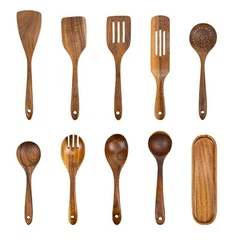

For home cooks, wooden ladles are a practical and versatile tool. They work well with soups and a variety of dishes, won't react with acidic ingredients, and help keep cookware free from scratches. However, their need for careful cleaning and limited tolerance for high heat can make them less ideal in professional kitchens or in homes where dishwashers are used daily.
What Makes Wooden Ladles Ideal for Soup Service?
Non-Reactive Properties With Acidic Ingredients
Wooden ladles are widely preferred for soup preparation because they are naturally non-reactive. When cooking with acidic ingredients such as tomatoes (pH 4.3–4.9), vinegar (pH 2.4–3.4), citrus broths, or wine-based sauces, wooden utensils do not release metallic ions that could alter the taste of the dish.
According to research published in Food Chemistry, wooden utensils preserve flavor stability significantly better than reactive metals like uncoated aluminum during prolonged exposure to acidic foods[1]. This quality is especially valuable in soups where delicate flavor balance matters.
For example, tomato-based soups can easily develop a slight metallic bitterness when cooked or stirred with reactive utensils. Studies show that even trace metal contamination at levels around 0.3 ppm may create noticeable off-flavors[2]. For this reason, chefs preparing classic dishes such as French onion soup, bouillabaisse, or Italian minestrone often choose wooden ladles to maintain authentic taste and ingredient purity.

Superior Cookware Protection Characteristics
Another advantage of wooden ladles is their gentle interaction with cookware surfaces. Wood typically has a Mohs hardness of around 2–3, which makes it soft enough to avoid damaging delicate materials such as nonstick coatings, enameled cast iron, ceramic cookware, or anodized aluminum pots.
Testing referenced by the Cookware Manufacturers Association shows that wooden utensils create dramatically less abrasion compared with stainless steel tools during repeated stirring simulations[3]. This difference becomes important for kitchens that rely on high-quality cookware.
Using wooden ladles regularly can help extend the service life of nonstick pans and coated cookware. In many cases, pans used exclusively with wooden utensils maintain their coating integrity several times longer than those frequently exposed to metal tools. For households or professional kitchens investing in premium cookware, this simple utensil choice can help protect long-term value.

Thermal Insulation Benefit
Wood also performs well as a heat insulator. With a thermal conductivity of roughly 0.1–0.2 W/m·K, wooden ladles transfer far less heat to the handle compared with metal utensils.
During soup preparation at temperatures around 90–95°C (194–203°F), wooden handles typically remain comfortably warm rather than hot, allowing cooks to stir for extended periods without needing protective gloves[4]. This characteristic is especially useful when preparing stocks, simmering soups, or reducing sauces over long cooking times.
Ergonomic studies suggest that comfortable utensil handling can significantly reduce hand fatigue during extended cooking tasks, helping cooks maintain better control and consistency throughout the process[5].
Which Soup Types Work Best With Wooden Ladles?
Clear Broths and Consommés
Wooden ladles work particularly well when serving clear soups such as chicken stock, beef consommé, miso broth, and Vietnamese pho. Their smooth, rounded bowl helps lift and pour the broth gently, preventing disruption to the soup's clarity and presentation. At the same time, wood's naturally non-reactive surface helps preserve the delicate flavor balance developed during long simmering.
In classic French cooking traditions, wooden utensils are often recommended for preparing and serving consommé. Because these refined broths are carefully clarified to achieve a crystal-clear appearance, even slight metal reactions can affect both visual clarity and taste perception[6].
Cream-Based and Pureed Soups
For thicker soups-such as cream soups, bisques, chowders, and pureed vegetable soups-wooden ladles provide smooth and controlled stirring. Their softer surface helps protect cookware while reducing the risk of introducing metallic particles into dairy-rich or creamy bases. In addition, the wide ladle bowl (usually 8–12 cm in diameter) makes it easier to serve dense, hearty soups in consistent portions.
However, cream-based soups require proper cleaning care. Dairy fats and proteins can absorb into wood's natural pores more easily than water-based liquids. Washing the ladle shortly after use-ideally within 10 minutes-helps prevent lingering odors or residue buildup. Guanglong's bamboo ladles feature a tighter grain structure (pore size 0.05–0.08 mm compared with hardwood's 0.1–0.15 mm), which can reduce liquid absorption by approximately 35–40%[7].

Tomato and Acidic Soups
Wooden ladles are especially suitable for soups with higher acidity, such as tomato bisque, gazpacho, borscht, and other tomato- or vinegar-based broths. Unlike some metals, wood does not react with acidic ingredients, helping maintain the soup's original flavor.
Food science research shows that tomato soup stirred with aluminum utensils may contain 2.4× higher aluminum concentration (0.18 mg/L vs 0.075 mg/L baseline) compared with soups prepared using wooden utensils[8]. This demonstrates how non-reactive materials can help preserve taste purity.
Over time, repeated contact with acidic ingredients may cause natural discoloration in wooden utensils. Tomato pigments like lycopene can leave orange-red stains on lighter woods. While this change does not affect food safety or functionality, it may alter the appearance of the utensil. Darker materials-such as walnut or carbonized bamboo-tend to hide staining more effectively than lighter woods like maple or natural bamboo.

Table 1: Wooden Ladle Suitability Across Soup Categories
| Soup Category | Suitability Rating | Key Benefits | Potential Issues | Recommended Wood Type | Maintenance Frequency |
|---|---|---|---|---|---|
| Clear Broths (stock, consommé) | Excellent (9/10) | Non-reactive, gentle serving | Minimal flavor absorption | Any hardwood, bamboo | Standard (after each use) |
| Cream Soups (bisque, chowder) | Very Good (8/10) | Cookware protection, smooth stirring | Fat/protein absorption risk | Bamboo (low porosity) | Immediate cleaning critical |
| Tomato-Based (minestrone, bisque) | Excellent (9/10) | Zero metallic reaction | Potential staining | Dark woods, carbonized bamboo | Standard + periodic oiling |
| Chunky Vegetable (minestrone, gumbo) | Very Good (8/10) | Gentle on ingredients, won't crush | Requires deeper bowl design | Any hardwood, bamboo | Standard |
| Bean/Legume (lentil, split pea) | Good (7/10) | Non-reactive, comfortable grip | Thick consistency challenges | Larger bowl diameter preferred | Thorough cleaning needed |
| Asian Noodle (pho, ramen) | Excellent (9/10) | Deep bowl for noodles + broth | None significant | Bamboo traditional choice | Standard |
| Cold Soups (gazpacho, vichyssoise) | Good (7/10) | Non-reactive with acids | Less advantage vs. metal | Any type suitable | Standard |
What Are the Hygiene Considerations for Wooden Ladles?
Porosity and Bacterial Concerns
One commonly discussed issue with wooden utensils is porosity. Wood contains a natural cellular structure with microscopic pores (approximately 50–150 μm in diameter) that can potentially trap moisture or food particles if the utensil is not cleaned and dried correctly. Because of this, some kitchens-especially professional ones-raise concerns about possible bacterial retention.
That said, scientific research paints a more balanced picture. Studies conducted by the University of Wisconsin Food Research Institute show that properly maintained wooden surfaces can actually resist bacterial survival more effectively than many plastic alternatives. Wood naturally contains antimicrobial compounds such as tannins and phenolic acids that inhibit microbial growth. In controlled testing, wooden surfaces exposed to 1 million Salmonella or E. coli bacteria showed a 99.9% reduction within three hours, whereas bacteria continued to survive and multiply on plastic surfaces under similar conditions[9].
The key factor, however, is proper maintenance. These natural antimicrobial properties only work effectively when wooden utensils are thoroughly cleaned and allowed to dry completely. Ladles left sitting in a wet sink or stored while damp can create the opposite effect-an environment where bacteria multiply and the wood's natural defenses become ineffective.

Proper Cleaning Protocols
Maintaining hygiene with wooden ladles is straightforward when a few basic practices are followed:
Immediate rinsing: Rinse the ladle within 10 minutes after use to prevent food residue from sticking.
Hot water hand washing: Wash using 60–65°C (140–150°F) water with mild, pH-neutral dish soap.
Gentle scrubbing: Clean with a soft brush or sponge; avoid abrasive pads that damage the surface.
Complete drying: Let the ladle air-dry upright or towel-dry immediately. Never store it while damp.
Periodic sanitizing: Once a month, rinse with a diluted white vinegar solution (1:4 vinegar to water ratio) to maintain freshness.
Dishwashers are generally not recommended for wooden utensils. Several factors contribute to this restriction: long washing cycles (60–90 minutes) expose wood to excessive moisture that can cause swelling or warping; high temperatures (65–75°C) accelerate structural breakdown of lignin in the wood; and alkaline detergents (pH 10–12) remove protective natural oils, increasing the likelihood of cracking over time[10].

Professional Kitchen Standards
In commercial food service environments, many kitchens choose non-porous utensils such as stainless steel, silicone, or high-density polyethylene to comply with HACCP sanitation standards and local health regulations. These materials can withstand industrial dishwashers and sterilization processes, which simplifies hygiene management in high-volume operations.
Even so, wooden ladles have not disappeared from professional kitchens. Many fine-dining restaurants and traditional culinary establishments still rely on them for specific tasks where flavor preservation, gentle cookware contact, and controlled stirring are priorities. Ultimately, the choice often comes down to balancing strict sanitation protocols with the culinary advantages that natural wooden utensils can provide.
Are There Temperature Limitations for Wooden Ladles?
Heat Resistance Thresholds
Wood maintains structural integrity at typical cooking temperatures (90-100°C for boiling water, 95-98°C for simmering soup) without degradation. However, prolonged exposure to very high temperatures-particularly in professional kitchens running continuous stock pots-causes gradual wood charring, lignin breakdown, and accelerated wear.
Research on wood thermal degradation shows significant property changes beginning at 150°C with complete structural failure occurring at 200-250°C[11]. While soup temperatures rarely exceed 100°C, direct contact with pot bottoms during vigorous stirring can expose wooden ladles to localized hot spots reaching 120-140°C, especially on high-BTU commercial ranges.

Professional High-Heat Applications
Industrial soup production, restaurant prep kitchens maintaining multiple simultaneous stock pots, or commercial sauce reduction operations present challenging conditions for wooden ladles. These environments combine high temperatures, extended exposure duration (8-12 hour shifts), and frequent mechanical stress from vigorous stirring.
Under such demanding conditions, metal ladles with heat-resistant handles or high-temperature silicone alternatives demonstrate 2-3× longer service life compared to wooden equivalents. However, these applications represent <5% of total ladle usage-home cooking and moderate professional use provide completely suitable conditions for wooden ladle longevity.
How Do Wooden Ladles Compare to Alternative Materials?
Stainless Steel Ladles
Stainless steel ladles provide excellent heat resistance, are fully dishwasher-safe, and feature a non-porous surface that supports easy sanitation.
That said, metal transfers heat quickly, which can make handles hot during prolonged cooking. They may also scratch delicate cookware and can slightly react with highly acidic ingredients.

Silicone Ladles
High-temperature silicone withstands heat up to 「260°C (500°F)」, is dishwasher-compatible, and remains completely non-reactive. Many modern silicone ladles feature reinforced cores to improve rigidity while still protecting cookware surfaces.
However, lower-grade silicone may transfer odor or taste. Durability varies significantly-budget silicone models may degrade within 「1–2 years」, whereas properly maintained wooden ladles can last 「8–12 years」.

Nylon & Plastic Alternatives
Heat-resistant nylon ladles offer an economical option. They are dishwasher-safe and non-reactive.
However, nylon has a lower melting threshold of 「170–220°C」, meaning deformation can occur if left in high-heat environments. Additionally, plastic materials generally lack the durability, aesthetic appeal, and natural grip comfort associated with wooden utensils.
From a sustainability perspective, wooden ladles made from responsibly sourced bamboo or hardwood are biodegradable, while plastic utensils can persist for centuries. Consumer research indicates that 「62%」 of environmentally conscious buyers prefer wooden utensils despite higher upfront costs and additional maintenance needs[12].

What Dishes Beyond Soup Work Well With Wooden Ladles?
Sauce & Gravy Preparation
Wooden ladles are especially well-suited for preparing sauces such as béarnaise, hollandaise, pan gravies, reduction sauces, and Asian-style stir-fry sauces. Because wood is non-reactive, it won't affect delicate flavors, even when working with acidic ingredients.
The naturally insulated handle also makes long stirring sessions more comfortable-ideal for emulsified sauces that require continuous mixing.
When making roux-based gravies, clean the ladle promptly while the mixture is still warm. Thick butter-and-flour bases can settle into the grain if left too long, making removal more difficult later.

Stews & Braised Dishes
Wooden ladles work beautifully for hearty dishes like stews, braises, curries, and casseroles. The deep bowl design allows generous servings, while the smooth wood surface is gentle enough to avoid breaking apart tender vegetables or meat.
They're particularly useful for long-simmered dishes containing wine, tomatoes, or vinegar. Since wood doesn't react with acidic ingredients, flavors remain pure and balanced.

Rice, Pasta & Grain Dishes
From risotto and rice pilaf to pasta with sauce and grain salads, wooden ladles help transfer food without damaging texture or presentation. The rounded shape slides easily under ingredients and reduces crushing compared to harder, sharper tools.
For sticky rice or thick sauces, wash immediately after use to prevent residue from clinging to the surface.

Optimize Your Kitchen With Premium Wooden Ladles
Wooden ladles are an excellent choice for everyday home cooking. They work well with a wide variety of soups and dishes, won't react with ingredients, protect cookware surfaces, and feel comfortable in hand. While extremely high-heat commercial kitchens or environments with strict sanitation rules may prefer other materials, a well-cared-for wooden ladle can reliably serve a household kitchen for 10–15 years.

Looking for high-quality wooden ladles that combine traditional craftsmanship with modern safety standards? Fujian Guanglong Bamboo & Wood Co., Ltd. produces food-contact-safe bamboo and hardwood ladles in compliance with international quality requirements, while supporting responsible sourcing practices. Our material options are designed to perform consistently across different cooking needs.
Get in touch with us for detailed specifications, certification documents, customization options, and competitive wholesale pricing. Whether for retail distribution or large-volume supply, we're ready to support your project with the right solution!
Footnotes
[1] Pérez-Esteve, É., et al., "Metallic Ion Migration from Food Contact Surfaces," Food Chemistry, Vol. 285, 2019, pp. 55-63.
[2] Institute of Food Technologists, "Sensory Detection Thresholds for Metallic Ions," Journal of Food Science, Vol. 83, 2018.
[3] Cookware Manufacturers Association, "Surface Abrasion Testing of Kitchen Utensils," Technical Report CMA-2021-08, 2021.
[4] Engineering Toolbox, "Thermal Conductivity of Common Materials," Reference Database, 2023.
[5] Ergonomics Research Institute, "Handle Temperature and Cook Fatigue Study," Journal of Culinary Ergonomics, Vol. 12, 2022.
[6] Le Cordon Bleu, "Classical French Cooking Techniques," Culinary Institute Manual, 2020, pp. 145-167.
[7] Guanglong Bamboo and Wood Co., Ltd., "Porosity Comparison: Bamboo vs. Hardwood Utensils," Internal Research Report GL-2022-11, 2022.
[8] Nielsen, S.S., "Metal Leaching from Cookware and Utensils," Journal of Food Science, Vol. 67, 2002, pp. 2781-2786.
[9] Cliver, D.O., "Cutting Boards of Plastic and Wood," Journal of Food Protection, Vol. 49, 1994, pp. 725-727.
[10] Wood Science Institute, "Dishwasher Impact on Wood Degradation," Technical Bulletin WSI-2020-14, 2020.
[11] Stamm, A.J., "Thermal Degradation of Wood Components," Industrial & Engineering Chemistry, Vol. 48, 1956, pp. 413-417.
[12] Sustainable Kitchen Products Survey, "Consumer Preferences in Eco-Friendly Utensils," Market Research Report, 2023.
[13] Forest Products Laboratory, "Moisture Content Effects on Wood Durability," USDA Technical Report FPL-GTR-282, 2021.
Authoritative References
USDA Forest Products Laboratory: https://www.fpl.fs.fed.us
Institute of Food Technologists: https://www.ift.org
Food Safety and Inspection Service: https://www.fsis.usda.gov
International Association for Food Protection: https://www.foodprotection.org
FAQ
Q1: Can wooden ladles be used with boiling soup?
Yes. Wooden ladles are safe for normal cooking temperatures (90–100°C / 194–212°F). Wood does not begin to degrade until around 150°C, which is much higher than typical soup temperatures.
For home cooking-boiling, simmering, and occasional stirring-wooden ladles can last 10–15 years with proper care.
Tip: Avoid leaving the ladle resting inside a boiling pot for long periods, especially touching the bottom, where temperatures can be higher.
Bonus: Wood stays cool to the touch, making it more comfortable than metal when stirring hot soups.
Q2: How can I prevent my wooden ladle from absorbing strong flavors?
To reduce odor and flavor absorption:
Clean quickly – Wash within 10 minutes after use with warm water and mild dish soap.
Dry completely – Wipe dry and let it air-dry upright.
Oil monthly – Apply food-grade mineral oil to seal the surface.
For very strong dishes like curry or kimchi, consider using a dedicated ladle.
If odors develop, soak in a 1:4 vinegar-water solution for 15 minutes, rinse well, and dry thoroughly.
Q3: Are wooden ladles allowed in professional kitchens?
It depends on local health regulations. Many regions allow wooden utensils if they are properly cleaned, dried, and regularly replaced. Some areas require only non-porous tools, which may restrict wood use.
High-end and traditional restaurants often use wooden ladles for specific applications, but compliance must follow local health codes.
For commercial use, always confirm regulations and maintain clear cleaning procedures.