



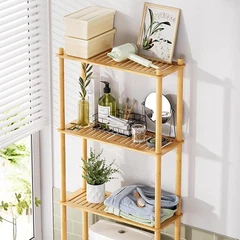
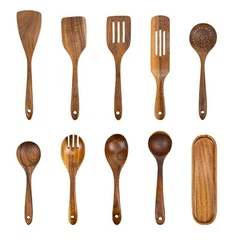
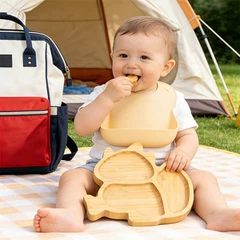

In modern kitchens, there's a growing preference for natural materials that are both aesthetically pleasing, environmentally friendly, and practical. Wooden plates, bowls, cutting boards, cups, and kitchen utensils have become popular choices for environmentally conscious consumers seeking alternatives to plastic or metal products. However, questions remain about the safety of these wooden items: Do they harbor bacteria, release harmful chemicals, or pose health risks when in contact with food? This guide will delve into the food safety aspects of wooden kitchenware, combining scientific research and expert insights to provide you with clear answers. Whether you're considering using wooden utensils for everyday cooking or serving food on wooden plates, understanding this information will help you make informed choices and create a healthier kitchen~
What Makes Natural Wood Inherently Safe for Food Contact?
Natural wood has been used for food preparation and serving for thousands of years, dating back to ancient civilizations. Unlike synthetic materials, untreated wood from non-toxic tree species is fundamentally food-safe. The U.S. Food and Drug Administration (FDA) recognizes properly finished wood as an approved food contact surface¹. Wooden kitchen utensils, plates, bowls, and cutting boards derive their safety from the material's cellular structure, which absorbs moisture and traps bacteria, preventing proliferation on the surface.
Hardwoods like maple, beech, walnut, acacia, and teak are preferred for wooden kitchen utensils and tableware due to their dense grain and natural oils. These compounds, such as tannins, exhibit antimicrobial properties that inhibit bacterial growth. For instance, wooden kitchen utensils made from olive wood or teak naturally resist moisture penetration, making them suitable for both cooking and serving.
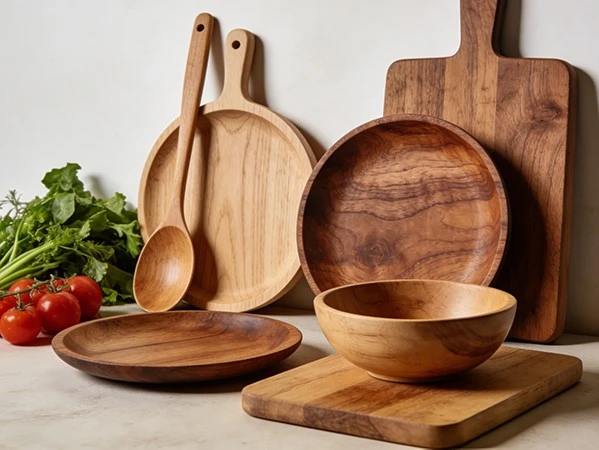
Why Do Scientific Studies Favor Wooden Cutting Boards Over Plastic Ones?
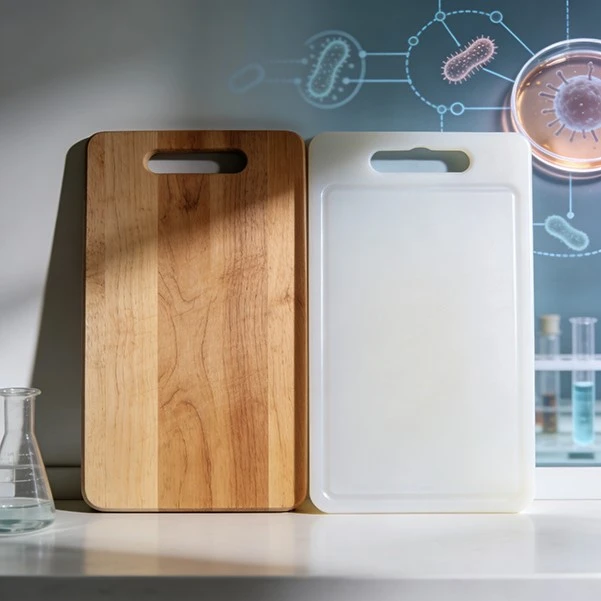
One of the most persistent myths is that plastic cutting boards are more hygienic than wooden ones. However, pioneering research contradicts this. In the 1990s, Dr. Dean Cliver at the University of California, Davis, conducted experiments inoculating wooden and plastic cutting boards with bacteria like Salmonella and E. coli. Results showed that 99.9% of bacteria on wooden cutting boards disappeared within minutes, while they persisted and multiplied on plastic surfaces².
A comprehensive 2016 review in Comprehensive Reviews in Food Science and Food Safety analyzed multiple studies and concluded that wood demonstrates superior microbial safety for food contact compared to many plastics, thanks to hygroscopic properties that draw in and kill pathogens³. This applies not only to wooden cutting boards but also extends to wooden kitchen utensils like spatulas and spoons, which experience similar contact with raw ingredients.
Are Wooden Plates and Bowls Safe for Serving Hot or Acidic Foods?
Wooden plates and bowls excel at serving a variety of foods, including hot soups, salads with vinaigrettes, or acidic fruits. Properly sealed wooden kitchen utensils and tableware do not react with food acids, unlike some metals that can leach ions. The insulating properties of wood keep foods warmer longer without scalding hands, a benefit over ceramic or metal.
Concerns about staining from beets or turmeric are valid but manageable. High-quality wooden plates finished with food-grade oils resist absorption better than unfinished ones. For families using wooden kitchen utensils alongside matching bowls, the consistent material choice minimizes cross-contamination risks during meal prep and serving.
| Material Type | Bacterial Retention | Chemical Leaching Risk | Heat Insulation | Durability | Eco-Friendliness |
|---|---|---|---|---|---|
| Wooden Kitchenware (e.g., plates, bowls, cutting boards) | Low (natural antimicrobial action) | None (if food-grade finish) | Excellent | High (with care) | Renewable, biodegradable |
| Plastic | High (scratches harbor bacteria) | Potential (BPA, phthalates in some) | Poor | Medium | Non-biodegradable |
| Ceramic/Glass | Low | Low (if lead-free glaze) | Fair | Brittle | Recyclable but energy-intensive production |
| Metal (Stainless Steel) | Low | Minimal | Poor (conducts heat) | High | Recyclable |
How Do Finishes Affect the Safety of Wooden Kitchen Utensils and Tableware?
The safety of wooden kitchen utensils, cups, and plates largely depends on the finish applied. Food-grade mineral oil, beeswax blends, or natural plant oils (e.g., walnut or linseed) create a protective barrier without introducing toxins. Avoid lacquers or varnishes containing volatile organic compounds (VOCs) unless explicitly labeled food-safe.
Manufacturers of premium wooden kitchen utensils often use tung oil or fractionated coconut oil for durability and safety. For wooden cups, interior finishes must be robust to handle liquids without warping or leaching. Regular maintenance with these oils restores the protective layer, ensuring long-term food safety for wooden kitchen utensils and related items.
What Are the Main Advantages of Choosing Wooden Kitchenware Over Alternatives?
Wooden kitchen utensils and tableware offer numerous benefits backed by both science and practical use:
1. Sustainability: Wood is renewable, unlike petroleum-based plastics.
2. No Chemical Risks: Free from PFAS, BPA, or heavy metals common in some synthetics⁴.
3. Gentle on Tools: Wooden kitchen utensils won't scratch non-stick pans or damage knife edges on cutting boards.
4. Aesthetic and Sensory Appeal: Unique grain patterns and warm feel enhance dining experiences.
5. Child-Safe: Shatter-resistant compared to glass or ceramic.
For wooden cutting boards and utensils used in raw meat preparation, the natural antibacterial action provides an edge over scratched plastics, where pathogens can hide in grooves.

Can Wooden Cups and Bowls Handle Liquids Without Health Risks?
Wooden cups, often crafted from dense hardwoods like cherry or bamboo, are safe for beverages when properly sealed. Historical examples include wooden tankards used for centuries without issue. Modern wooden kitchen utensils extend this tradition to items like coffee scoops or mugs.
However, avoid prolonged soaking; brief contact with water or drinks is fine. Food-safe seals prevent flavor transfer, making wooden cups ideal for hot teas or cold beverages. Similar care applies to wooden bowls for soups-hand wash and dry thoroughly to maintain integrity.
| Recommended Hardwoods | Natural Antimicrobial Properties | Best Uses | Density (Janka Hardness)⁵ | Maintenance Frequency |
|---|---|---|---|---|
| Maple | High | Cutting boards, utensils | 1,450 | Every 3-6 months |
| Acacia | Very High (natural oils) | Plates, bowls, serving utensils | 1,170 | Every 6-12 months |
| Walnut | High | Luxury cups, spoons | 1,010 | Every 4-8 months |
| Teak | Excellent (natural oils) | Outdoor tableware, kitchen utensils | 1,070 | Every 6-12 months |
| Beech | Moderate | Budget-friendly utensils, boards | 1,300 | Every 3 months |
What Potential Drawbacks Exist, and How Can You Mitigate Them?
While wooden kitchen utensils and tableware are safe, they require maintenance. Potential issues include:
1. Staining from pigmented foods.
2. Odor absorption if not cleaned promptly.
3. Warping from excessive moisture.
Mitigation is straightforward: Hand wash with mild soap, avoid dishwashers (which can crack wood due to high heat), and oil periodically. Damaged items with deep cracks should be replaced to prevent bacterial harboring, though intact wooden kitchen utensils remain safer than worn plastics.
| Common Concern | Risk Level | Prevention Strategy | Solution if Occurs |
|---|---|---|---|
| Bacterial Growth | Low | Prompt washing, thorough drying | Sanitize with vinegar or hydrogen peroxide |
| Staining/Odors | Medium | Immediate cleaning, regular oiling | Light sanding and re-oiling |
| Warping/Cracking | Medium | Avoid soaking/dishwasher | Discard if severe |
| Chemical Leaching | None | Use food-grade finishes only | N/A |
| Heat Damage | High if extreme | Avoid ovens/microwaves over 50°C |
Monitor use carefully
|
How Should You Properly Care for Wooden Kitchen Utensils and Tableware to Ensure Ongoing Safety?
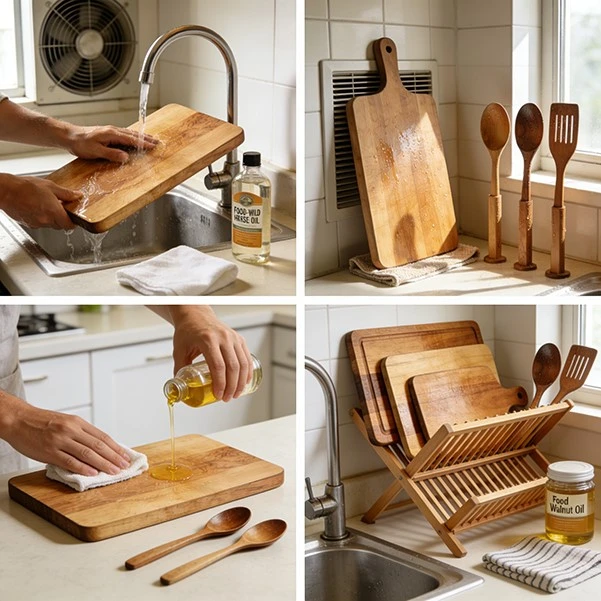
Maintaining wooden kitchen utensils, plates, and cutting boards involves simple routines:
1. Wash by hand immediately after use.
2. Dry upright in a well-ventilated area.
3. Apply food-grade oil when the surface looks dry.
4. Store away from direct sunlight or heat sources.
For heavily used wooden kitchen utensils like spatulas or wooden spoons for cooking, monthly oiling preserves both appearance and safety. This practice not only extends lifespan-often decades-but reinforces the natural barriers that make wooden kitchen utensils hygienic.
Is Wooden Kitchenware Suitable for All Households, Including Those with Children?
Absolutely. The shatter-resistant nature of wooden plates, bowls, and cups makes them ideal for families with young children, reducing injury risks from broken dishes. Combined with non-toxic properties, wooden kitchen utensils provide a safe environment for learning to cook.
In professional settings, chefs prefer wooden kitchen utensils for their non-reactive qualities and knife-friendly surfaces on cutting boards. Home users benefit similarly, enjoying durable, attractive items that align with health and environmental values.
The evidence is clear: When sourced from reputable makers and maintained properly, wooden plates, bowls, cutting boards, cups, and kitchen utensils are not only safe but often superior for food contact. Their natural properties, supported by decades of research, make them a smart choice for safe, sustainable living.
Our Guanglong Bamboo & Wood Co., Ltd., are your most loyal and reliable manufacturer. If you have any needs, please feel free to visit our website and contact our sales team!
How To Cooperate With Us?
If this guide has helped you appreciate the benefits of high-quality wooden kitchenware, we invite you to explore our premium selection. For wholesale inquiries, custom orders, or more details on food-safe products, please contact us today-we'd love to assist with your needs.
Our address
No. 3, Wuyi 3rd Road, Jian'ou City, Nanping City, Fujian Province, 353100
Phone Number
8615889249154
sales02@szmsl68.com

¹ FDA Compliance Policy Guide Sec. 540.725 Wood Food Contact Articles.
² Cliver, D.O. (UC Davis) studies on cutting board hygiene, summarized in various publications.
³ Aviat, F. et al. (2016). Microbial Safety of Wood in Contact with Food: A Review.
⁴ Concerns with plastics per EPA reports on persistent chemicals.
⁵ Janka hardness scale measures wood density; higher values indicate greater durability.
Authority Links and Resources:
Comprehensive Reviews in Food Science and Food Safety (Wiley Online Library): https://onlinelibrary.wiley.com/doi/full/10.1111/1541-4337.12199
USDA Forest Products Laboratory - Wood as a Food Contact Material: https://www.fpl.fs.fed.us/
UC Davis Food Safety Research Archives (Cliver Studies): https://faculty.vetmed.ucdavis.edu/faculty/docliver/
FDA Food Contact Substances Information: https://www.fda.gov/food/food-ingredients-packaging/food-contact-substances-fcs