




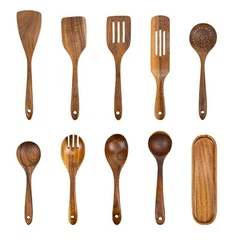

Wooden kitchen utensils remain a timeless choice for cooks worldwide, valued for their natural feel, gentleness on cookware, and inherent durability. From wooden spoons for cooking to wooden spatulas and ladles, these tools enhance everyday meal preparation. However, over time, wooden kitchen utensils can develop stains from foods like tomatoes, turmeric, or oils, leading to discoloration or odors. Proper care not only removes these issues but also extends the life of your wooden kitchen utensils, keeping them hygienic and functional. This guide draws on expert insights and scientific research to provide proven methods for stain removal and maintenance, ensuring your wooden kitchen utensils stay in top condition.
Why Do Wooden Kitchen Utensils Stain So Easily, and Is It a Hygiene Concern?
Wooden kitchen utensils are porous by nature, allowing them to absorb moisture, pigments from colorful ingredients, and sometimes odors. Common culprits include acidic foods (e.g., tomato sauce) or spices in curries, which can leave persistent marks on wooden spoons for cooking or wooden spatulas. Despite this, wooden kitchen utensils are remarkably hygienic. Research from the University of California, Davis, and reviews in Comprehensive Reviews in Food Science and Food Safety show that wood has natural antibacterial properties due to compounds like tannins, which cause bacteria to die off faster on wood than on plastic surfaces¹. A 2016 review confirms that hardwoods used in wooden kitchen utensils inhibit microbial growth effectively². Stains are primarily cosmetic and do not compromise safety when proper cleaning routines are followed.

What Are the Best Natural Methods to Remove Stains from Wooden Kitchen Utensils?
Restoring stained wooden kitchen utensils often starts with gentle, household remedies that lift discoloration without damaging the wood. For fresh stains on wooden kitchen utensils, act quickly to prevent setting.
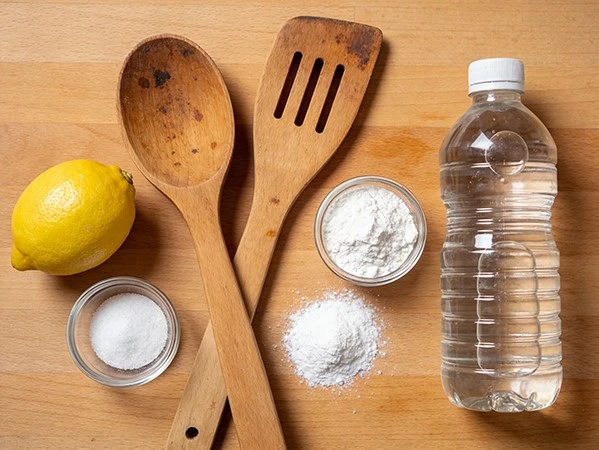
One effective approach is using lemon and salt: Cut a lemon in half, sprinkle coarse salt on the stained area, and rub gently along the grain. The citric acid in lemon breaks down stains, while salt provides mild abrasion. Rinse thoroughly and dry immediately. This works well for wooden spoons for cooking exposed to garlic or onion odors.
Baking soda paste is another reliable option. Mix baking soda with water to form a toothpaste-like consistency, apply to the stain, and scrub lightly with a soft cloth. Let it sit for 10-15 minutes before rinsing. For tougher food stains, combine with lemon juice for enhanced effectiveness.
Vinegar solutions also excel, especially for grease or old marks. Mix equal parts white vinegar and water, soak the wooden kitchen utensils briefly (no longer than 5-10 minutes to avoid swelling), then scrub and rinse. Hydrogen peroxide can be applied directly for deep disinfection and stain lifting-dab on, wait 5 minutes, and wipe clean.
These methods align with recommendations from wood care experts, preserving the integrity of wooden kitchen utensils while removing up to 99% of surface bacteria when combined with thorough drying³.
How Should You Handle Persistent or Deep Stains on Wooden Kitchen Utensils?
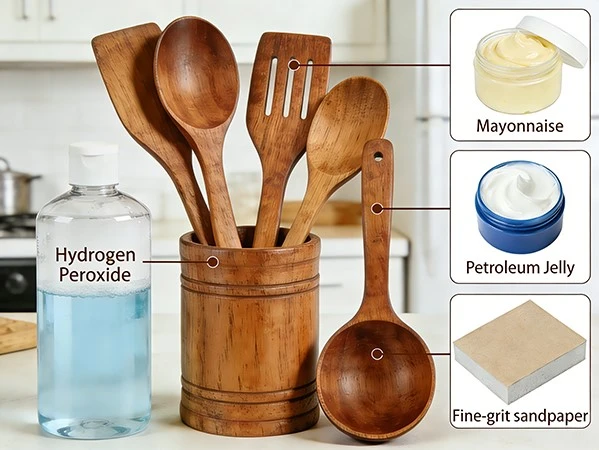
For stubborn stains that resist initial treatments, escalate to targeted remedies. Oxygenated bleach (like hydrogen peroxide-based products) is safe for wooden kitchen utensils when diluted properly. Soak in a solution per instructions for 15-20 minutes, scrub gently, rinse multiple times, and dry completely. This is particularly useful for wooden ladles or wooden spatulas used in heavy sauces.
Mayonnaise or petroleum jelly can lift oil-based stains: Apply a thick layer, let it sit overnight, then wipe away-the oils displace trapped grease. Follow with a mild soap wash.
In rare cases of very deep discoloration, light sanding with fine-grit paper (220+) along the grain removes the top layer. Always finish by oiling to reseal the wood. Avoid harsh chemicals, as they can compromise the food-safe nature of wooden kitchen utensils.
| Method | Best For | Materials Needed | Steps Summary | Precautions |
|---|---|---|---|---|
| Lemon & Salt | Food pigments, odors | Lemon, coarse salt, soft cloth | Rub salt with lemon half, rinse, dry | Use on dry utensils; avoid excess moisture |
| Baking Soda Paste | General stains | Baking soda, water | Apply paste, scrub, let sit, rinse | Gentle scrubbing to prevent grain raise |
| Vinegar Soak | Grease, old marks | White vinegar, water | Soak briefly, scrub, rinse thoroughly | Limit soak time to 10 minutes |
| Hydrogen Peroxide | Deep disinfection/stains | 3% hydrogen peroxide | Dab on, wait 5-10 min, wipe/rinse | Test on small area first |
| Mayonnaise Overnight | Oil/grease stains | Mayonnaise | Apply thick layer, sit overnight, wipe | Follow with soap wash |
Is Regular Oiling Essential for Maintaining Wooden Kitchen Utensils?
Yes, oiling is crucial to prevent cracking and maintain the luster of wooden kitchen utensils. Dry wood absorbs stains more readily, so periodic conditioning keeps them resilient. Food-grade mineral oil is the gold standard-it's odorless, non-rancid, and penetrates deeply⁴. Apply liberally with a cloth, let absorb for hours (or overnight), then wipe excess.
For enhanced protection, use a beeswax-mineral oil blend (spoon butter). Alternatives like walnut oil work but may go rancid over time. Oil monthly for heavily used items like wooden cooking utensils sets or wooden spatula sets.
| Oiling Option | Pros | Cons | Application Frequency | Best For |
|---|---|---|---|---|
| Food-Grade Mineral Oil | Non-rancid, affordable, penetrates well | Petroleum-based | Every 1-3 months | Everyday wooden kitchen utensils |
| Beeswax-Mineral Oil Blend | Adds water resistance, smooth finish | Slightly thicker application | Every 2-4 months | Wooden spoons for cooking, spatulas |
| Walnut Oil | Natural, enhances grain | Can rancidify over time | Monthly | Occasional use items |
| Fractionated Coconut Oil | Plant-based alternative | May not penetrate as deeply | Every 1-2 months | Eco-conscious users |
How Can You Prevent Stains and Extend the Life of Your Wooden Kitchen Utensils?
Prevention is key for long-lasting wooden kitchen utensils. Always hand-wash immediately after use with mild soap and warm water-never soak or dishwasher, as prolonged moisture causes warping⁵. Air-dry upright to promote even drying.
Store in a dry, ventilated area away from direct heat. For best wooden cooking utensils like teak or olive wood variants, regular oiling repels stains naturally.
What Common Mistakes Should You Avoid with Wooden Kitchen Utensils?
Common errors include dishwashing, which cracks wood due to heat and detergents, or neglecting drying, leading to mold. Soaking raises grain and invites bacteria despite wood's natural defenses. Using bleach routinely strips protective oils. Instead, embrace patina-minor wear adds character to wooden kitchen utensils.
| Common Mistake | Consequence | Correct Approach |
|---|---|---|
| Dishwasher Use | Warping, cracking | Hand-wash only |
| Prolonged Soaking | Swelling, mold risk | Quick rinse and dry |
| No Oiling | Dryness, increased staining | Regular mineral oil application |
| Harsh Scrubbers | Surface scratches | Soft cloth or sponge |
How To Cooperate With Us?
If this guide has helped you appreciate the benefits of high-quality wooden kitchenware, we invite you to explore our premium selection. For wholesale inquiries, custom orders, or more details on food-safe products, please contact us today-we'd love to assist with your needs.
Our address
No. 3, Wuyi 3rd Road, Jian'ou City, Nanping City, Fujian Province, 353100
Phone Number
8615889249154
sales02@szmsl68.com

With these practices, your wooden kitchen utensils can last decades, becoming cherished heirlooms.
¹ Dean O. Cliver, Ph.D., University of California, Davis studies on wood vs. plastic hygiene.
² Aviat et al., "Microbial Safety of Wood in Contact with Food: A Review" (2016).
³ USDA Forest Products Laboratory guidelines on food-safe wood finishes.
⁴ Food-grade mineral oil recommended by woodworkers and USDA for its stability.
⁵ Expert consensus from wood care specialists, emphasizing avoidance of extreme moisture.
Authority Links and Resources:
USDA Forest Products Laboratory: https://www.fpl.fs.fed.us/
Comprehensive Reviews in Food Science and Food Safety (Wiley): https://onlinelibrary.wiley.com/doi/full/10.1111/1541-4337.12199
Earlywood Designs Care Guide: https://www.earlywooddesigns.com/pages/theultimateguidetowoodutensilcare