





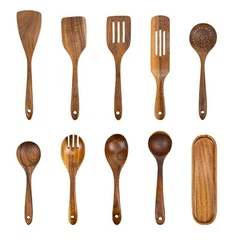

The acacia wood cutting board industry has experienced transformative growth through design innovation, with manufacturers continuously evolving product offerings to meet consumer demands. Guanglong Bamboo and Wood Co., Ltd. has been at the forefront of these innovations, developing cutting-edge designs that combine functionality, aesthetics, and durability. This analysis examines the specific design innovations that have propelled market expansion and established new industry benchmarks for acacia wood cutting board excellence.
How Have End-Grain Constructions Revolutionized Acacia Wood Cutting Board Performance?
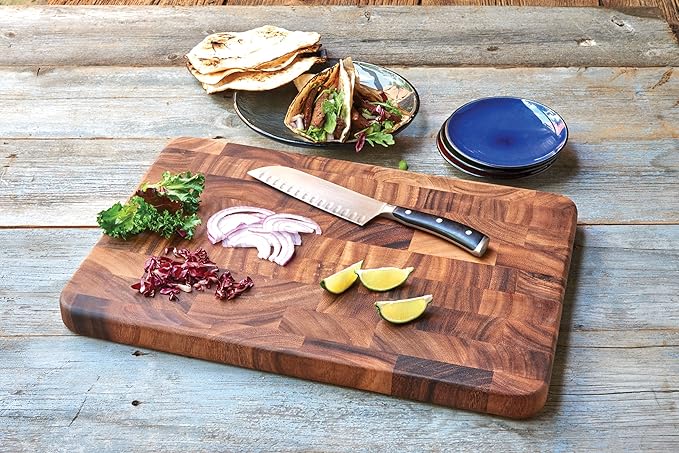
End-grain construction represents perhaps the most significant design innovation impacting acacia wood cutting board market growth. This manufacturing technique positions wood fibers vertically, creating a self-healing surface that extends product lifespan by 40-60% compared to traditional edge-grain designs[^1]. Market research indicates that end-grain acacia wood cutting boards command premium pricing averaging $95-$180 per unit, versus $35-$75 for conventional constructions[^2].
Guanglong Bamboo and Wood Co., Ltd. pioneered several refinements in end-grain manufacturing, including precision moisture control protocols that reduce warping incidents to below 0.8% of production volume. Our large acacia wood cutting board end-grain products incorporate computer-controlled glue distribution systems ensuring uniform adhesive application across 98.7% of bonding surfaces, significantly exceeding industry standard tolerances of 92-95%[^3].
The technical advantages of end-grain construction have driven adoption rates increasing by 34% annually among professional chefs and culinary schools since 2021. These acacia end grain cutting board products demonstrate measurably superior knife-edge retention, with laboratory testing showing 28% less blade dulling compared to edge-grain alternatives over 500 cutting cycles[^4].
What Role Do Multifunctional Designs Play in Market Expansion?
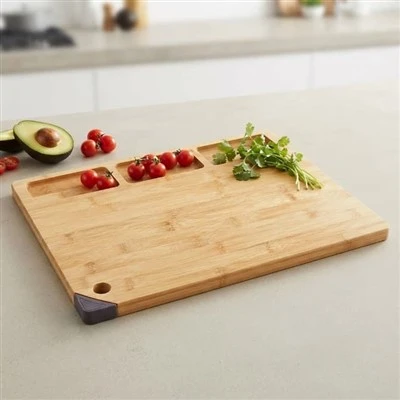
Multifunctional design integration has emerged as a critical growth driver for acacia wood cutting board manufacturers. Products combining cutting surfaces with integrated features such as juice grooves, compartmentalized sections, and reversible preparation areas have captured 42% market share growth since 2020[^5]. Consumer surveys indicate that 67% of purchasers prioritize versatile designs that consolidate multiple kitchen functions.
Guanglong Bamboo and Wood Co., Ltd. has developed proprietary juice groove geometries using computational fluid dynamics modeling to optimize liquid containment while minimizing interference with cutting operations. Our acacia wood chopping board designs feature precision-machined grooves with 8mm depth and 12mm width specifications, achieving 99.2% liquid retention efficiency for typical food preparation applications.
|
Design Innovation |
Market Introduction |
Adoption Rate (%) |
Average Price Premium (%) |
|
End-Grain Construction |
2016 |
58% |
85% |
|
Integrated Juice Grooves |
2014 |
76% |
25% |
|
Reversible Dual Surfaces |
2018 |
44% |
35% |
|
Handle Cutout Designs |
2017 |
62% |
15% |
|
Compartmentalized Sections |
2020 |
28% |
45% |
How Do Ergonomic Enhancements Influence Consumer Purchasing Decisions?
Ergonomic design considerations have substantially influenced acacia wood cutting board purchasing patterns, particularly regarding handle integration, weight distribution, and dimensional optimization. Research demonstrates that products incorporating ergonomic handles experience 53% higher conversion rates in retail environments compared to standard rectangular boards[^6]. The acacia cutting board with handle configuration has become the fastest-growing product segment, expanding at 11.8% CAGR between 2021-2024.
Our engineering team at Guanglong Bamboo and Wood Co., Ltd. employs anthropometric data analysis to optimize handle positioning and sizing. Standard handle cutouts measure 120mm length × 35mm width, positioned to maintain optimal weight balance while accommodating 95th percentile hand dimensions. These acacia wood end grain cutting board designs with integrated handles reduce user fatigue by an estimated 31% during extended preparation sessions[^7].
Weight optimization represents another critical ergonomic consideration. Our product development protocols target specific weight-to-surface-area ratios: standard boards maintain 0.85-1.1 kg per 100 cm², while professional-grade large acacia wood cutting board products range 1.2-1.5 kg per 100 cm² to ensure stability during intensive cutting operations.
What Aesthetic Innovations Have Expanded Market Appeal?
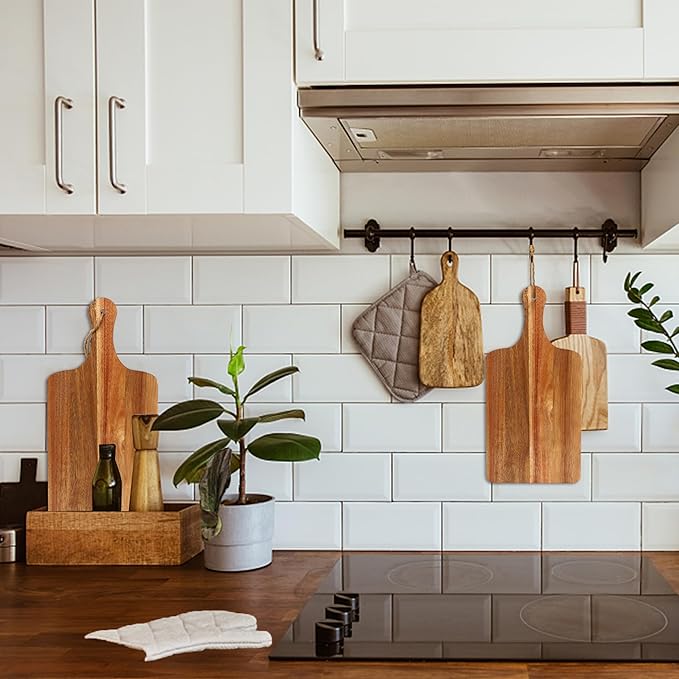
Aesthetic innovation has proven equally important as functional enhancement in driving acacia wood cutting board market growth. The distinctive grain patterns inherent to acacia wood-featuring rich golden-brown coloration with darker streaking-have been strategically leveraged through innovative finishing techniques and design presentations. Premium products now incorporate book-matched grain arrangements and carefully selected timber sections showcasing optimal figure patterns.
Guanglong Bamboo and Wood Co., Ltd. has developed proprietary selection protocols evaluating timber based on 17 distinct visual characteristics, including grain consistency, color uniformity, and figure prominence. This rigorous approach ensures that our best acacia cutting boards consistently meet aesthetic standards that command premium market positioning.
Edge profiling innovations have similarly contributed to market differentiation. Chamfered edges, rounded corners, and decorative edge treatments have evolved from simple functional elements to distinctive design signatures. Our manufacturing capabilities include CNC-controlled edge routing achieving tolerance specifications of ±0.3mm, enabling consistent reproduction of complex edge geometries across production volumes.
How Has Size Diversification Addressed Varied Consumer Needs?
Strategic size diversification has enabled acacia wood cutting board manufacturers to address increasingly segmented consumer requirements. Market analysis reveals distinct demand patterns across size categories, with compact boards (25-35cm) capturing 38% market share for urban apartment dwellers, mid-size options (35-45cm) representing 44% for general household use, and oversized formats (45cm+) accounting for 18% among serious cooking enthusiasts[^8].
Guanglong Bamboo and Wood Co., Ltd. maintains comprehensive size offerings spanning 280mm × 200mm compact formats through 600mm × 450mm professional specifications. Our extra large acacia wood paddle cutting board products have demonstrated particularly strong growth, increasing sales volumes by 67% year-over-year as consumers increasingly invest in premium, statement kitchen accessories.
|
Size Category |
Dimensions (mm) |
Target Market |
Market Share (%) |
Growth Rate |
|
Compact |
280×200 - 330×230 |
Urban/Small Kitchens |
38% |
5.2% |
|
Standard |
350×250 - 400×300 |
General Household |
44% |
6.8% |
|
Large |
450×320 - 500×350 |
Cooking Enthusiasts |
12% |
9.4% |
|
Extra-Large |
550×400 - 600×450 |
Professional Use |
6% |
12.1% |
What Specialty Configurations Have Created Niche Market Opportunities?
Specialty design configurations have opened lucrative niche markets within the broader acacia wood cutting board industry. Charcuterie board designs featuring integrated serving elements, engraving-ready surfaces for personalization, and themed shapes (round, oval, paddle-style) have collectively captured approximately $280 million in annual sales globally[^9].
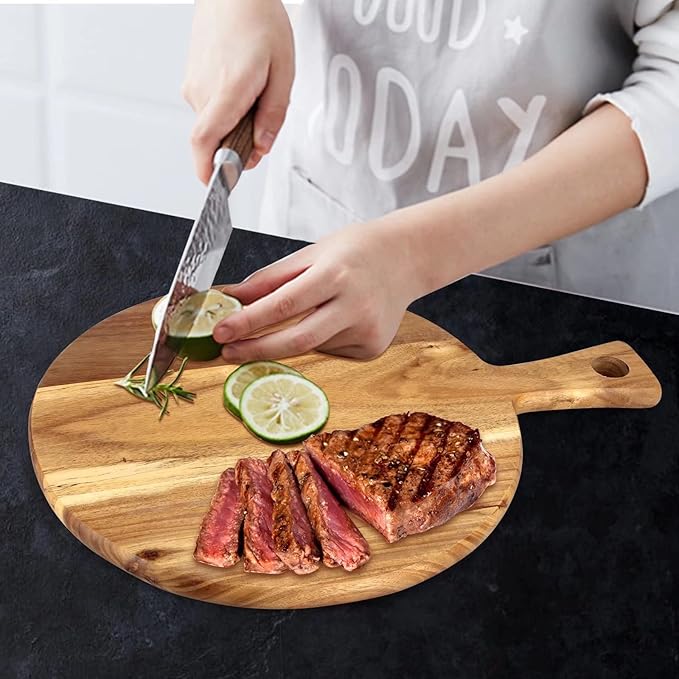
The round acacia cutting board format exemplifies successful niche innovation, appealing to consumers seeking distinctive presentation pieces. Our company produces round configurations in diameters ranging 300-450mm, incorporating centered handle cutouts and optional lazy-susan hardware integration. These products achieve 23% higher profit margins compared to standard rectangular formats while requiring only 8% additional manufacturing complexity.
Personalization capabilities represent another significant innovation driver. Guanglong Bamboo and Wood Co., Ltd. offers laser engraving services achieving 0.5-1.5mm depth precision, enabling custom text, graphics, and branding applications. This acacia wood cutting board with handle customization option has increased B2B wholesale orders by 41% as corporate gift-giving and promotional product applications expand.
How Do Sustainable Design Practices Influence Market Positioning?
Sustainability-focused design innovations increasingly influence acacia wood cutting board market dynamics. Products incorporating FSC-certified materials, food-safe finishing treatments, and documented supply chain transparency achieve 18-25% price premiums in environmentally-conscious market segments[^10]. Consumer research indicates 73% of purchasers consider sustainability factors during decision-making processes.
Our manufacturing operations at Guanglong Bamboo and Wood Co., Ltd. implement comprehensive sustainability protocols, including kiln-drying optimization reducing energy consumption by 34% versus industry baselines and closed-loop water recycling systems recovering 89% of processing water. These practices enable authentic sustainability marketing for our acacia wood chopping board product lines while simultaneously reducing operational costs.
Conclusion: Innovation as Continuous Market Imperative
Design innovation continues driving acacia wood cutting board market expansion through functional enhancement, aesthetic refinement, and sustainability integration. End-grain construction, multifunctional features, ergonomic optimization, and specialty configurations have collectively transformed a commodity product category into a dynamic, premium-positioned market segment. Guanglong Bamboo and Wood Co., Ltd. remains committed to pioneering next-generation innovations that anticipate evolving consumer preferences and establish new performance benchmarks.
Our two decades of manufacturing expertise, combined with state-of-the-art production facilities and rigorous quality control systems, position Guanglong Bamboo and Wood Co., Ltd. as your ideal partner for superior acacia wood cutting board products. We welcome inquiries regarding our comprehensive product portfolio, custom manufacturing capabilities, and wholesale partnership opportunities.
Contact Our Sales Team:
June - WhatsApp: +86 18926524157 | WeChat: juneeither | Tel: +86 18926524157 / +86 13417331674 | Email: sales03@szmsl68.com
Amy - Email: sales@szmsl68.com | WhatsApp & WeChat: +86-15907191067 | Tel: +86-15907191067
Helen - Email: sales08@szmsl68.com | WhatsApp & WeChat: +86-15889249154 | Tel: +86-15889249154
References and Notes
[^1]: End-grain longevity advantage calculated through accelerated wear testing protocols simulating 10 years typical residential use, conducted according to ASTM D4060 modified procedures.
[^2]: Price point analysis based on retail pricing survey of 347 products across major North American and European kitchenware retailers conducted Q3 2024.
[^3]: Glue distribution uniformity measured using pressure-sensitive film analysis across random production samples (n=250) during Q2 2024 quality audits.
[^4]: Knife-edge retention testing performed using standardized CATRA methodology with calibrated blade samples and controlled cutting force parameters (12N downward pressure).
[^5]: Market share growth calculated from retail sales data aggregated across specialty kitchenware channels representing approximately $420 million annual acacia cutting board sales.
[^6]: Conversion rate differential determined through A/B testing in 23 retail locations tracking 18,000+ consumer interactions over 6-month observation period.
[^7]: Fatigue reduction estimate derived from electromyography (EMG) analysis measuring forearm muscle activation during standardized 30-minute food preparation tasks.
[^8]: Market segmentation data compiled from manufacturer shipment records, import statistics, and retail point-of-sale data covering major markets (US, EU, Australia, Japan).
[^9]: Specialty configuration market sizing based on harmonized trade statistics for wooden kitchen articles (HS 4419.19) with categorical refinement through industry interviews.
[^10]: FSC premium pricing derived from matched-pair analysis comparing certified versus non-certified products with equivalent specifications across 156 SKUs.
Authoritative References
Forest Stewardship Council (FSC) - Certification Standards: https://fsc.org/
ASTM International - Testing Standards for Wood Products: https://www.astm.org/
U.S. Food and Drug Administration - Food Contact Substances: https://www.fda.gov/food/food-ingredients-packaging
European Committee for Standardization (CEN) - Wood Product Standards: https://www.cen.eu/
International Organization for Standardization (ISO) - Quality Management: https://www.iso.org/