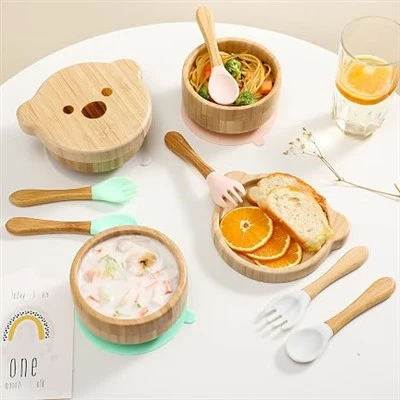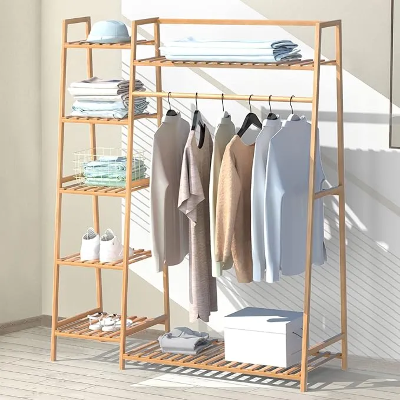

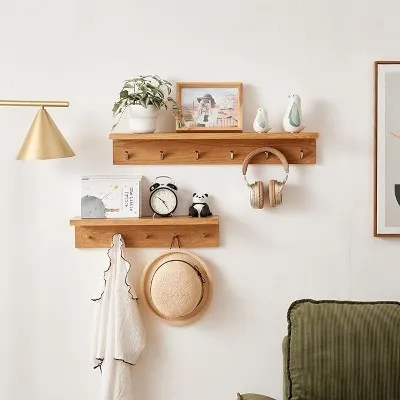


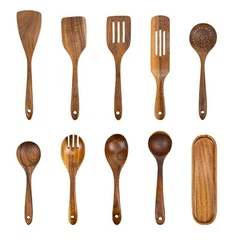
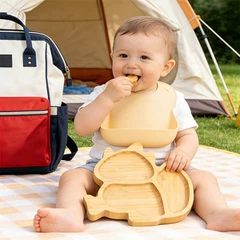


Bamboo racks and metal racks dominate the home storage market - but they are fundamentally different products built on different material logic. This article breaks down every key dimension, backed by data, so you can make an informed purchasing decision.
Why Material Choice Matters More Than You Think
A rack is more than just a shelf. In everyday kitchen use, it constantly deals with moisture, heat, food residue, and weight. The material it is made from directly affects how it performs, how long it lasts, and how much environmental impact it creates.
According to the World Steel Association, producing one tonne of crude steel generates approximately 1.92 tonnes of CO₂ emissions[¹]. By comparison, a lifecycle assessment published in Science of the Total Environment (2023) found that bamboo products helped mitigate 280 Mt CO₂e emissions between 2007 and 2022 by replacing more carbon-intensive materials, delivering climate benefits estimated at nearly 3.9 times greater than their operational emissions[²].
For many environmentally conscious consumers, that difference alone is enough to rethink the bamboo rack versus metal rack decision.
How Do Bamboo and Metal Racks Compare on Core Performance?
Performance is the first consideration for any practical buyer. Both bamboo and metal racks serve the same basic purpose - holding, organizing, and storing items - but they achieve this through very different structural properties.
Bamboo culm[³] has a tensile strength of 100–300 MPa, depending on species and processing, which is comparable to many softwood composites and more than enough for typical household rack loads. Metal racks, particularly those made from 304-grade stainless steel[⁴], can exceed 500 MPa in tensile strength, making them better suited for heavy-duty industrial or commercial use.
For everyday home applications - a bamboo dish rack supporting plates and cups, a bamboo spice rack holding jars, or a bamboo bakers rack carrying pantry items - the weight rarely exceeds 15–20 kg per shelf, well within bamboo's safe structural range.
| Performance Metric | Bamboo Rack | Stainless Steel Rack | Powder-Coated Iron Rack |
|---|---|---|---|
| Tensile strength | 100–300 MPa | 500–800 MPa | 350–550 MPa |
| Weight (typical unit) | 0.8–1.5 kg | 1.5–3.8 kg | 2.0–4.5 kg |
| Moisture resistance | Good (treated) | Excellent | Poor (rusts at welds) |
| Surface hardness (Janka equiv.) | ~1,380 lbf | N/A (metal) | N/A (metal) |
| Thermal stability | Good | Excellent | Good |
| Biodegradability | Fully biodegradable | Non-biodegradable | Non-biodegradable |
For everyday kitchen and home storage, bamboo's performance-to-weight ratio is highly competitive - and its significantly lower mass makes repositioning a bamboo dish rack or bamboo countertop shelf effortless compared to metal alternatives.
Is a Bamboo Rack Durable Enough to Last Long-Term?
Durability is one of the biggest concerns people raise about bamboo racks - and it deserves a clear, evidence-based explanation.
Untreated bamboo exposed to constant moisture will eventually crack, warp, or degrade. But modern bamboo racks are not made from raw bamboo alone. Most commercially manufactured bamboo racks go through kiln drying to reduce internal moisture levels below 8%, followed by carbonization or protective oil finishing. Many designs also use cross-laminated construction for additional strength and stability.
These processes greatly improve dimensional stability and long-term durability. With normal care, a quality bamboo dish drying rack can typically last 5–10 years in everyday kitchen use.
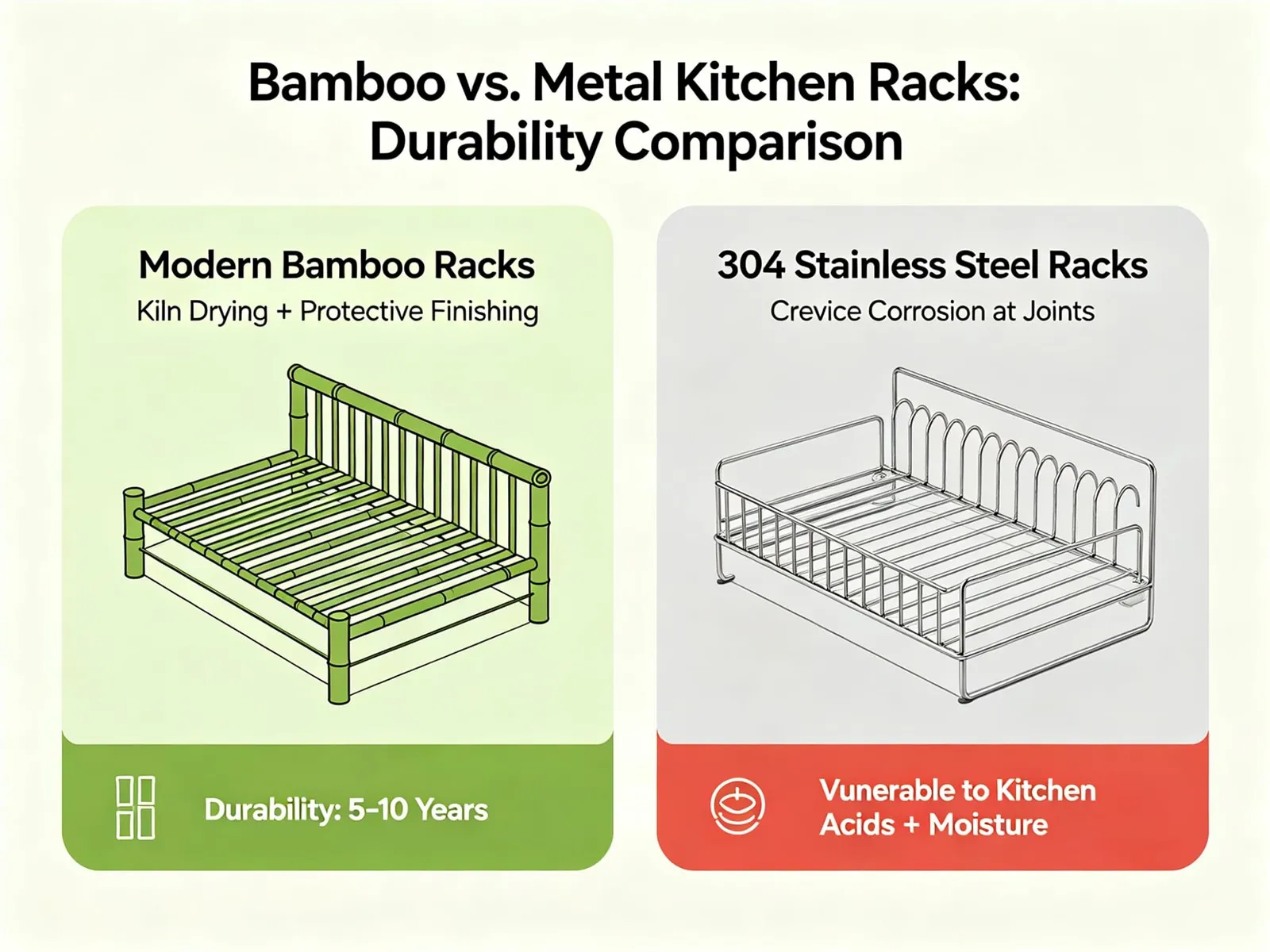
Metal racks are durable as well, but they are not completely maintenance-free. Most consumer metal racks use 304-grade stainless steel[⁴], which performs well in normal conditions but can still develop crevice corrosion[⁵] around welds and joints when repeatedly exposed to salt, acidic foods, vinegar, citrus, or constant moisture - all common conditions in kitchens.
Higher-end 316 stainless steel offers better corrosion resistance, but it is significantly more expensive and uncommon in most mass-market kitchen racks.
In real kitchen environments - where humidity, cleaning chemicals, and food acids are part of daily use - the practical durability gap between bamboo and metal is much smaller than many consumers assume.
Which Rack Wins on Sustainability and Environmental Impact?
Sustainability has moved from a secondary concern to a primary factor for many buyers.
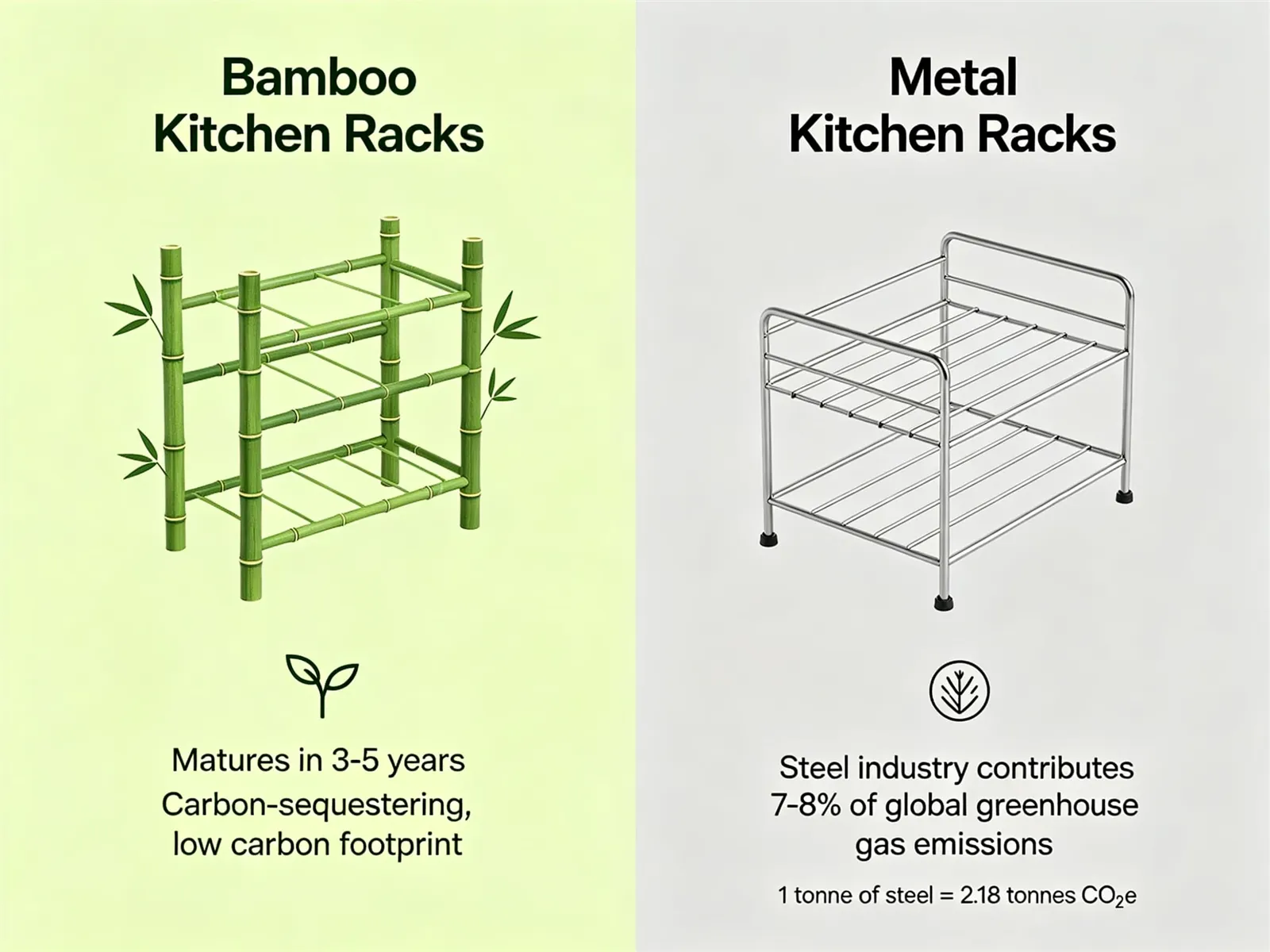
The steel industry alone contributes 7–8% of global human-made greenhouse gas emissions. Producing just one tonne of crude steel generates roughly 2.18 tonnes of CO₂e when including upstream scope 3 emissions, according to the World Steel Association 2025 Climate Action Report[⁶]. Even a small metal rack requires mining, smelting, and rolling - all energy-intensive processes.
Bamboo, in contrast, grows rapidly, reaching harvestable maturity in just 3–5 years compared with 20–50 years for hardwoods. It also actively sequesters carbon as it grows. A life cycle assessment[⁷] of bamboo products shows carbon footprints ranging from −0.55 to 4.02 kg CO₂e per kilogram, with some products achieving net negative emissions once carbon storage is considered.
For environmentally conscious consumers, the choice is clear: bamboo racks offer superior sustainability without compromising on function or style.
How Do the Two Materials Perform in Humid Kitchen Environments?
The kitchen is one of the toughest environments for any storage material. Heat, steam, water, food residue, and daily use constantly put pressure on racks and organizers.
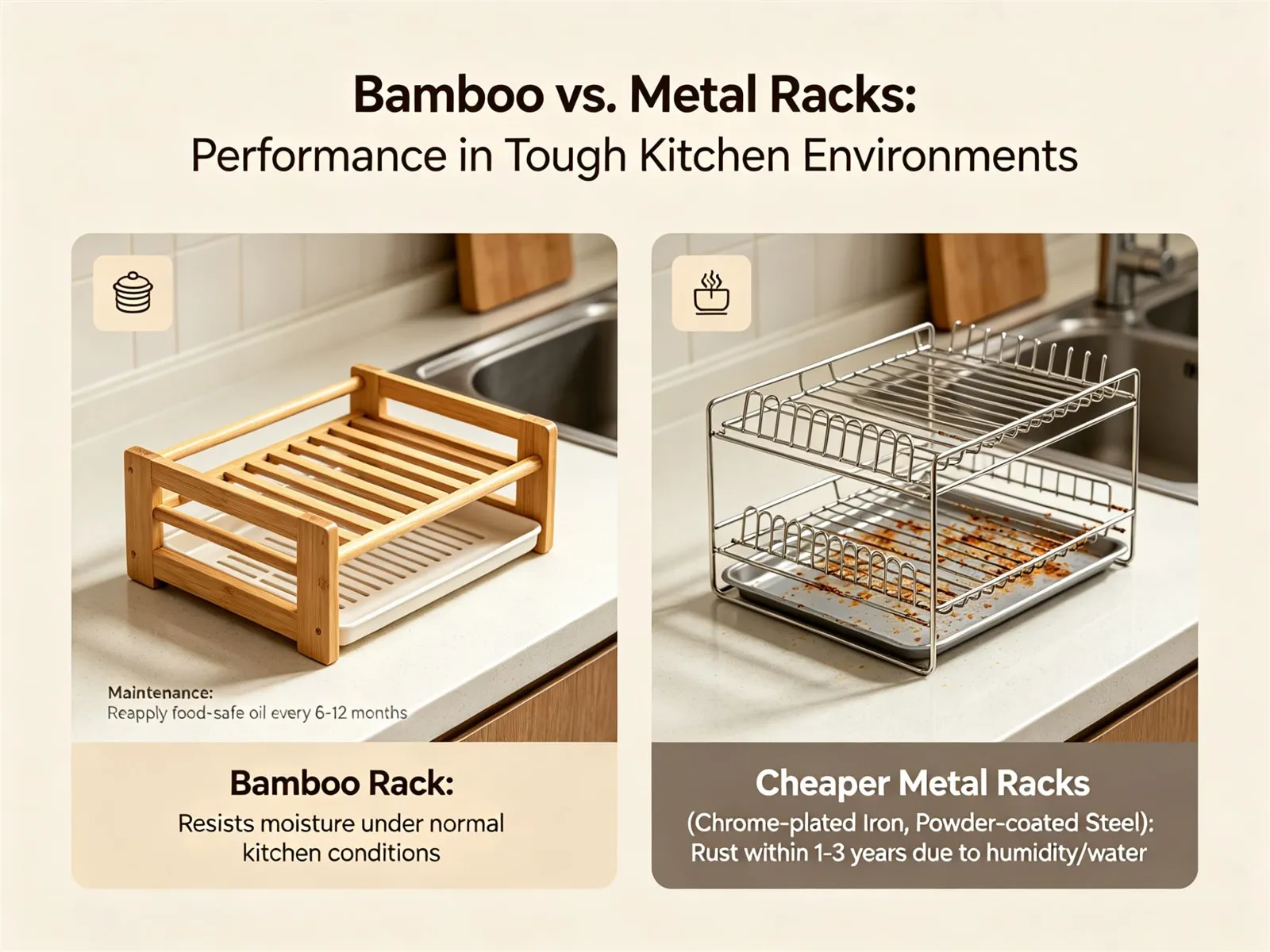
High-quality stainless steel handles moisture well, but many consumer metal racks are made from lower-grade chrome-plated iron or powder-coated steel wire. These cheaper materials often begin rusting around weld points after just 1–3 years of regular exposure to kitchen humidity and water. Once rust starts, it tends to spread quickly and is difficult to fully remove.
Bamboo performs differently. Properly finished bamboo racks resist moisture through their natural silica content and protective surface treatments such as food-safe oil or lacquer. While soaking bamboo in water for long periods will eventually cause swelling, normal kitchen conditions - steam, splashes, and everyday humidity - are generally well within the material's safe operating range.
Basic maintenance is simple. Reapplying a light coat of food-safe oil every 6–12 months helps maintain the protective surface and extend the rack's lifespan.
Many bamboo dish racks are also designed specifically for wet kitchen use. Models with integrated drain trays use angled slats to encourage water runoff, while the tray underneath collects excess water and keeps moisture away from the bamboo structure itself.
What Are the Real Cost Differences Over a Product Lifetime?
Price is rarely the whole story. Total cost of ownership[⁸] - including purchase price, maintenance, and replacement frequency - gives a more accurate financial picture.
| Cost Factor | Bamboo Rack | Stainless Steel Rack | Iron/Chrome Rack |
|---|---|---|---|
| Entry-level retail price | $18–$40 | $25–$60 | $15–$35 |
| Mid-range retail price | $40–$80 | $60–$120 | $35–$70 |
| Maintenance cost (annual) | ~$3–$5 (mineral oil) | Negligible | Cleaning products |
| Average replacement cycle | 5–10 years | 8–15 years | 1–4 years |
| End-of-life disposal | Compostable | Recyclable (metal) | Landfill (coated) |
| Estimated 10-year TCO | $50–$90 | $65–$125 | $90–$175 (replacements) |
Iron and chrome-plated racks may appear cheapest upfront, but their short replacement cycles make them the most expensive option over a decade of use. Bamboo racks sit in the economically rational middle ground: comparable to mid-range steel in initial cost, lower in long-term cost, and far lower in environmental impact at end of life.
Which Rack Type Is Better for Specific Use Cases?
The honest answer is that the better material depends on the application. Neither bamboo nor metal is perfect for every situation.
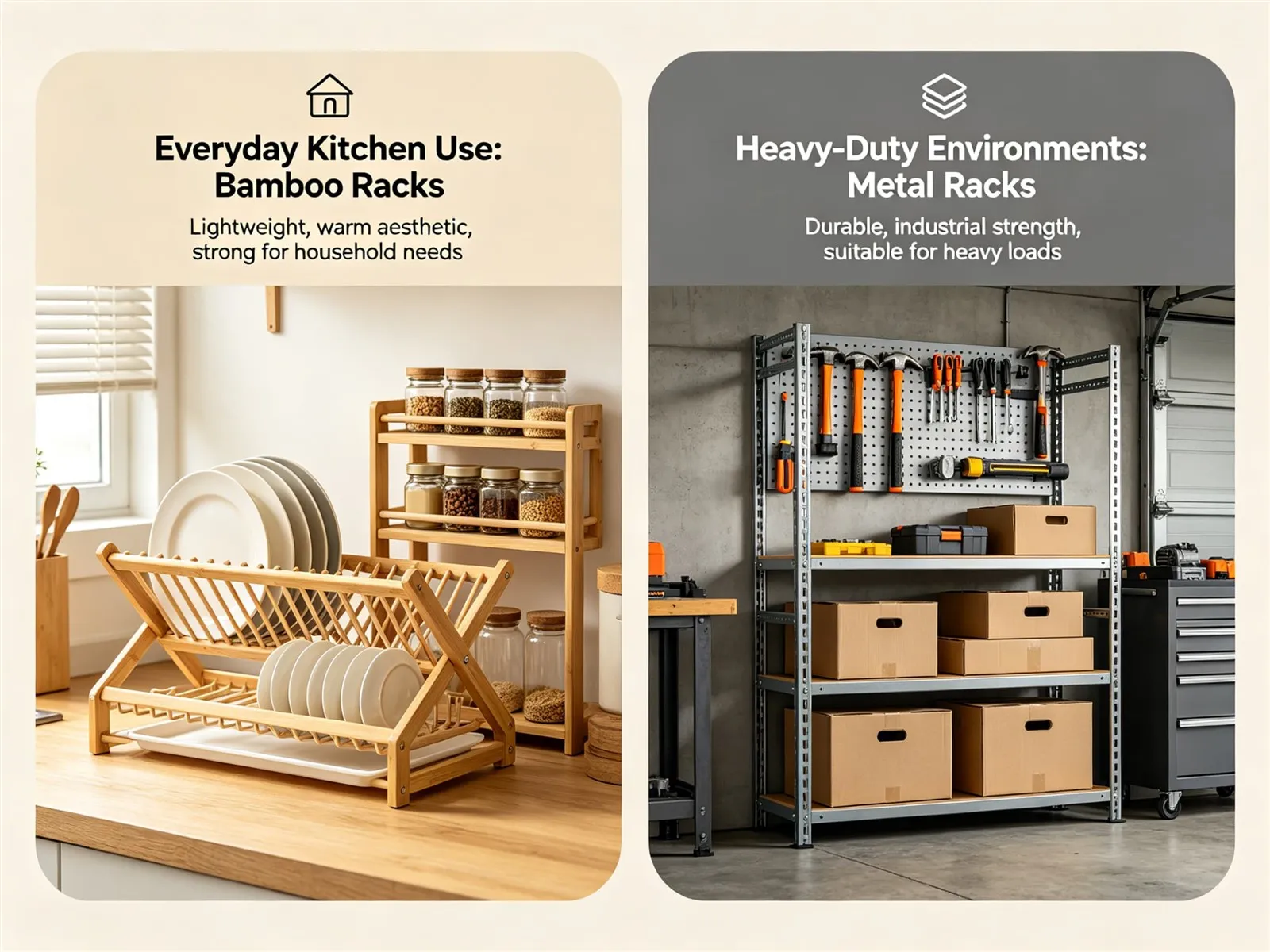
For everyday kitchen use - including bamboo dish racks, bamboo spice racks, bamboo countertop shelves, and bamboo bakers racks - bamboo is usually the better fit. It is lightweight, visually warmer, gentler on ceramic and glassware, and easily strong enough for normal household storage needs. It also blends naturally into modern kitchen styles such as Japandi and Scandinavian minimalism.
Metal racks make more sense in heavy-duty environments. For garages, outdoor storage, workshops, or commercial spaces where racks face heavy loads, constant moisture, or rough conditions, high-quality stainless steel is the stronger option. Bamboo can tolerate normal kitchen humidity, but long-term outdoor exposure and harsh wet conditions will eventually wear down the material without maintenance.
For most home kitchens, though, bamboo offers the strongest balance of durability, sustainability, appearance, and everyday practicality. A well-made bamboo dish rack or bamboo storage rack provides reliable long-term performance while creating a cleaner, more natural look in the space.
Can You Trust Bamboo's Hygiene Profile in a Kitchen Setting?
Food-contact safety is a critical requirement in any kitchen, and bamboo holds up well in this regard.
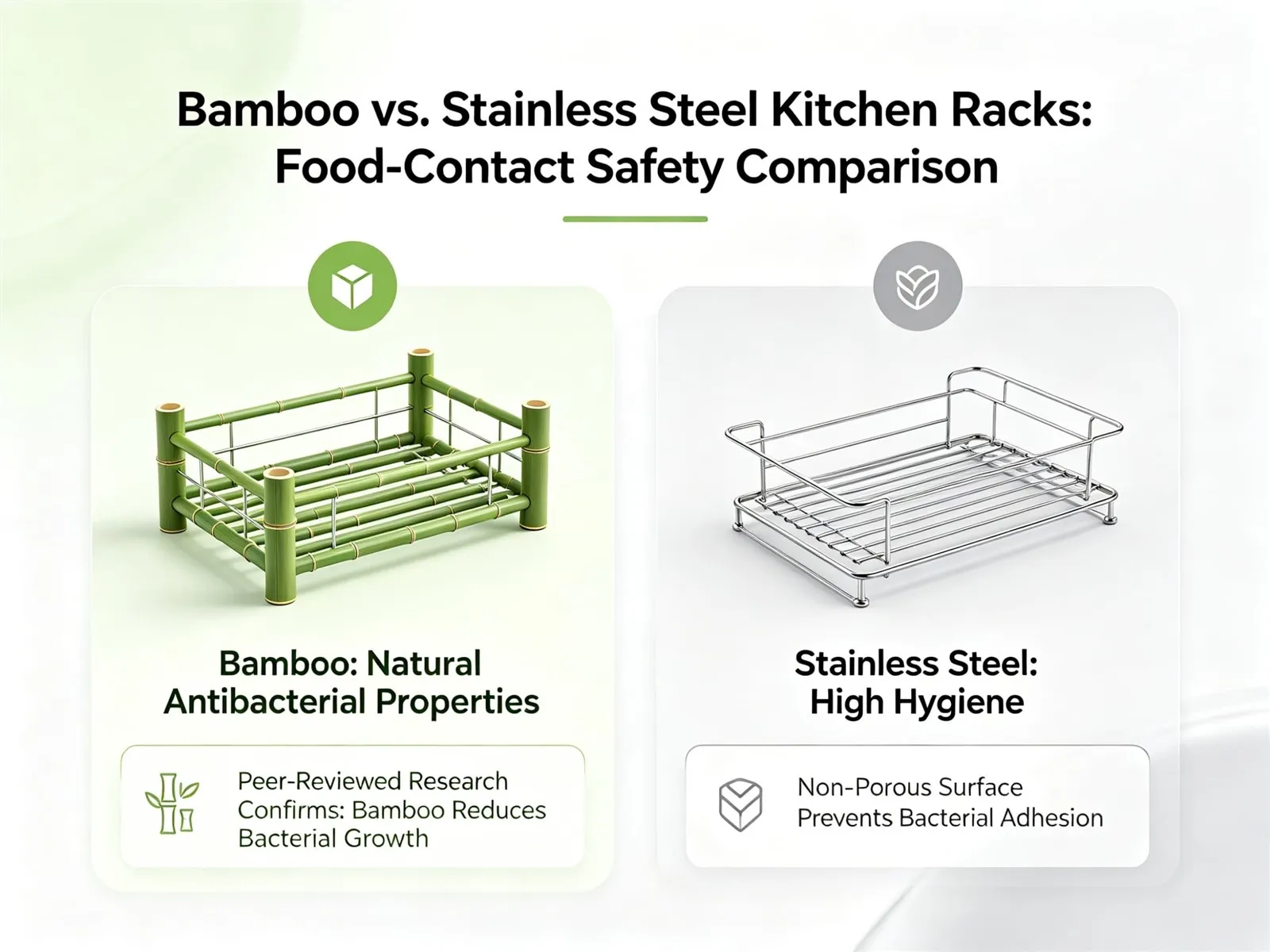
Peer-reviewed research, including studies published in Antibiotics (2022)[⁹], shows that bamboo has notable antibacterial properties against both Gram-positive and Gram-negative bacteria. These effects are linked to lignin-derived compounds and volatile organic compounds (BVOCs) naturally present in the plant. While some commercial claims about "bamboo kun" antibacterial effects have been questioned in processed fiber products, solid or laminated bamboo used in racks retains measurable microbial resistance.
Stainless steel is also highly hygienic - its non-porous surface effectively prevents bacterial adhesion, which is why it is standard in commercial kitchens. But in typical home kitchens, where food rarely rests directly on the rack surface for long periods, bamboo's natural antibacterial properties are more than sufficient to maintain safe conditions.
The Verdict: Bamboo Rack Leads for Home Kitchen Applications
Across sustainability, appearance, weight, long-term cost, and everyday usability, bamboo racks outperform most standard consumer-grade metal racks in the home kitchen environment. Metal still has advantages in heavy-duty commercial settings, outdoor use, or situations involving extreme weight loads and constant moisture exposure - conditions that go beyond what most household kitchens require.
The real question is not which material is universally "better," but which material fits the intended use best. For most modern home kitchens, bamboo strikes the strongest balance between practicality, durability, and design.
If you're ready to upgrade your kitchen organization with premium bamboo storage solutions, explore our full collection of bamboo dish racks, bamboo spice racks, bamboo bakers racks, bamboo countertop shelves, and bamboo dish drying racks - all designed for reliable everyday use and long-term sustainability.

👉 Shop Bamboo Dish Racks | Explore Bamboo Kitchen Organizers | View All Bamboo Storage Solutions
We manufacture and supply premium bamboo racks and bamboo storage systems for global retailers, wholesalers, and OEM/ODM partners. Contact our team for specifications, samples, and pricing.
Address: No. 3, Wuyi 3rd Road, Jian'ou City, Nanping City, Fujian Province, 353100, China
Phone: +86 158 8924 9154
Email: sales02@szmsl68.com
FAQ
Q: My kitchen gets steamy - will a bamboo rack warp over time?
A: Not if it's commercially treated. Quality bamboo racks are kiln-dried to below 8% moisture content before finishing. Normal kitchen steam won't cause warping; just avoid leaving water pooled on the surface for hours at a time.
Q: I found both a bamboo rack and a stainless steel rack at the same price. Which should I buy?
A: For countertop kitchen use - dishes, spices, pantry items - go with the bamboo rack. It's lighter, gentler on dishware, and won't rust at the joints the way most consumer-grade steel racks do after a year or two.
Q: How often does a bamboo rack actually need maintenance?
A: Once or twice a year, wipe on a thin layer of food-safe mineral oil and let it absorb. That's it. Takes five minutes and costs less than a cup of coffee
Annotations
[¹] CO₂ per tonne of steel - World Steel Association reports 1.92 tonnes of CO₂ emitted per tonne of crude steel cast (2023 data), calculated using a methodology covering scopes 1, 2, and selected scope 3 emissions.
[²] Bamboo climate mitigation data - sourced from a lifecycle assessment study published in Science of the Total Environment (2023), covering 60 bamboo product categories from cradle to grave across China's national bamboo industry (2007–2022).
[³] Bamboo culm - the hollow, segmented structural stem of the bamboo plant; the primary component used in manufactured bamboo products.
[⁴] Grade 304 stainless steel - the most widely used austenitic stainless steel grade, containing approximately 18% chromium and 8% nickel; standard in consumer kitchen products and cookware.
[⁵] Crevice corrosion - a localized form of corrosion that occurs in confined spaces (such as weld joints or gaps between mated surfaces) where oxygen levels are depleted and chloride concentration increases, accelerating metal degradation.
[⁶] World Steel Association CO₂ data - 2024 figure of 2.18 tonnes CO₂e per tonne of steel includes upstream scope 3 mining emissions; 2023 operational figure of 1.92 t CO₂/t steel reflects direct production only.
[⁷] Life Cycle Assessment (LCA) - a standardized methodology (ISO 14040/14044) for quantifying the environmental impact of a product across its entire lifecycle, from raw material extraction through manufacture, use, and end-of-life disposal.
[⁸] Total cost of ownership (TCO) - a financial metric that accounts for all costs associated with a product over its full useful life, including purchase, maintenance, and disposal or replacement costs.
[⁹] Bamboo antibacterial research - Ramful R. et al. (2022), Investigating the Antibacterial Characteristics of Japanese Bamboo, Antibiotics, 11(5), 569. Published via PubMed/NCBI.
Authoritative References
World Steel Association. Climate Change and the Production of Iron and Steel (2025). https://worldsteel.org/climate-action/climate-change-and-the-production-of-iron-and-steel/
World Steel Association. World Steel in Figures 2025. https://worldsteel.org/data/world-steel-in-figures/world-steel-in-figures-2025/
ScienceDirect. Carbon Footprint and Climate Mitigation Potential of Bamboo Products in China (2023). https://www.sciencedirect.com/science/article/abs/pii/S2352550923001173
PubMed / NCBI. Investigating the Antibacterial Characteristics of Japanese Bamboo. Antibiotics, 2022. https://pubmed.ncbi.nlm.nih.gov/35625213/
Outokumpu. What Makes Stainless Steel Corrosion Resistant? https://www.outokumpu.com/en/expertise/stainless-basics/corrosion-resistance