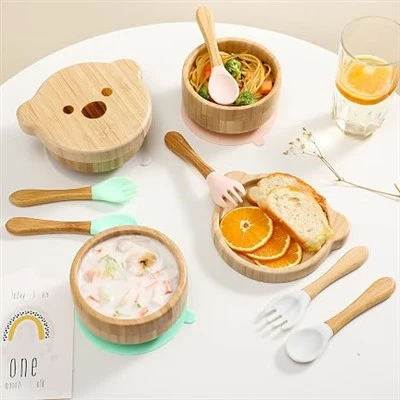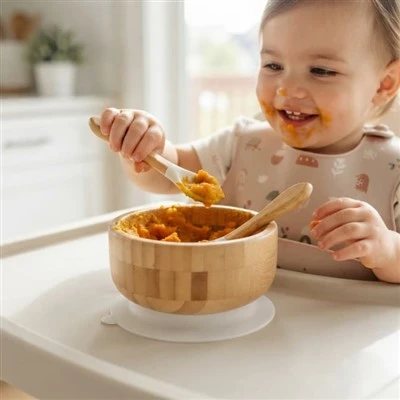



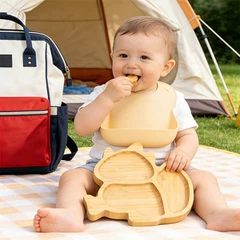

In this comprehensive children's tableware safety guide, we explore the essential aspects of selecting and using tableware designed for young users. As parents and caregivers increasingly prioritize health and environmental sustainability, bamboo emerges as a popular choice in the children's tableware safety guide landscape. This guide delves into standards like EN 71-3, the benefits of non-toxic materials, and anti-drop designs, providing a thorough children's tableware safety guide for informed decisions.
What is the EN 71-3 Standard and Why is it Crucial for Children's Tableware?
The EN 71-3 standard, part of the European toy safety series, plays a pivotal role in any children's tableware safety guide by addressing the migration of certain elements from materials that could harm children. Established by the European Committee for Standardization (CEN), EN 71-3 specifies requirements and test methods for the migration of 19 elements, including aluminum, antimony, arsenic, barium, boron, cadmium, chromium (III), chromium (VI), cobalt, copper, lead, manganese, mercury, nickel, selenium, strontium, tin, organic tin, and zinc. These elements are tested to ensure they do not leach from tableware in quantities exceeding safe limits, simulating conditions like ingestion or prolonged contact.

EN 71-3 categorizes materials into three types based on ingestion risk: Category I (dry, brittle, powder-like, or pliable materials), Category II (liquid or sticky materials), and Category III (scraped-off materials like coatings or polymers). For bamboo tableware, which often falls under Category III, compliance ensures minimal risk from element migration. According to a 2019 update (EN 71-3:2019), the migration limits were refined to protect vulnerable populations, with lead limited to 23 mg/kg in Category III materials. Data from the U.S. Consumer Product Safety Commission (CPSC) indicates that non-compliant products contribute to thousands of child injuries annually, underscoring the need for EN 71-3 adherence in every children's tableware safety guide.

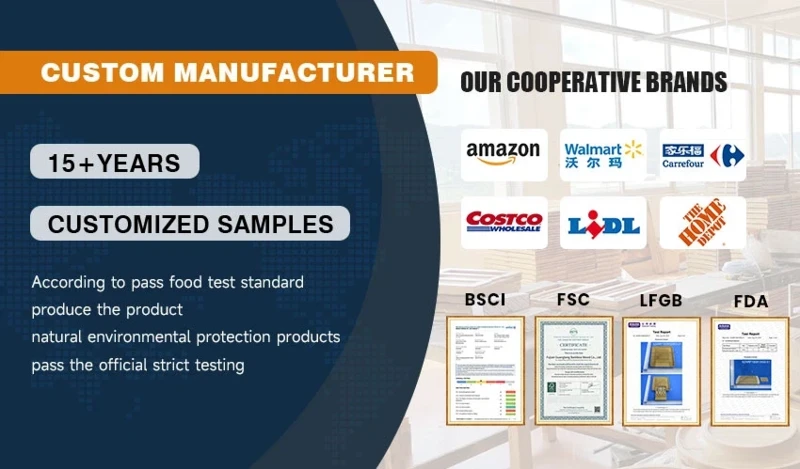
Non-compliance can lead to health issues such as developmental delays from lead exposure or kidney damage from cadmium. A study by the European Food Safety Authority (EFSA) in 2021 highlighted that proper EN 71-3 testing reduces migration risks by up to 95%, making it indispensable for bamboo products in a children's tableware safety guide. Parents should look for certification labels confirming EN 71-3 compliance when selecting items like bamboo bowls and plates.Our bamboo baby tableware series produced by GL fully meets this standard.
Key Migration Limits in EN 71-3
To illustrate the rigor of this standard, the following table outlines migration limits for select elements across categories, based on EN 71-3:2019+A1:2021 data from CEN.
| Element | Category I (mg/kg) | Category II (mg/kg) | Category III (mg/kg) |
|---|---|---|---|
| Aluminum | 5,625 | 1,406 | 70,000 |
| Antimony | 45 | 11.3 | 560 |
| Arsenic | 3.8 | 0.9 | 47 |
| Barium | 1,500 | 375 | 18,750 |
| Cadmium | 1.3 | 0.3 | 17 |
| Chromium (III) | 37.5 | 9.4 | 460 |
| Chromium (VI) | 0.02 | 0.005 | 0.2 |
| Lead | 2.0 | 0.5 | 23 |
| Mercury | 7.5 | 1.9 | 94 |
| Nickel | 75 | 18.8 | 930 |
This table, derived from official CEN documentation, emphasizes why EN 71-3 is a cornerstone of any children's tableware safety guide, particularly for bamboo items where natural fibers might interact with binders.
What are the Advantages of Non-Toxic, Paint-Free Bamboo Materials in Children's Tableware?
Non-toxic, paint-free bamboo materials stand out for their inherent safety and environmental benefits. Bamboo, a rapidly renewable grass, is naturally antimicrobial due to its lignin content, reducing bacterial growth by up to 99.9% as per studies from the American Society for Microbiology. Unlike plastic alternatives, paint-free bamboo avoids harmful chemicals like BPA, phthalates, and heavy metals, which can leach into food and cause endocrine disruption or developmental issues in children.
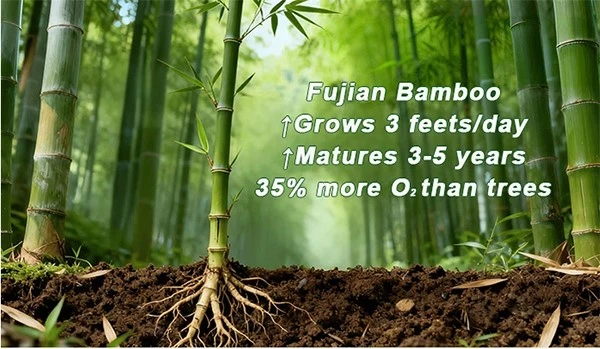
Bamboo's non-porous surface when properly processed, preventing stain absorption and toxin release. Research from the Center for Environmental Health (CEH) in 2020 notes that bamboo without melamine binders eliminates risks associated with formaldehyde migration, which exceeds EU limits in 60% of tested composite products. Paint-free designs further enhance safety by avoiding lead-based coatings; a 2018 ACS Environmental Science & Technology study found that second-hand plastic tableware often exceeds migration limits for cadmium and lead, issues absent in pure bamboo.
For toddlers, the "advantages of non-toxic paint-free bamboo materials for kids' utensils" include hypoallergenic properties, resisting dust mites and mold, ideal for allergy-prone children as per a 2024 Porch report. Bamboo's durability withstands drops without shattering, aligning with CPSC guidelines that report over 250,000 furniture-related injuries annually, many involving breakable tableware. In a children's tableware safety guide, opting for FSC-certified bamboo ensures sustainability, with growth rates up to 91 cm per day, per WWF data, making it a eco-friendly choice over plastic.
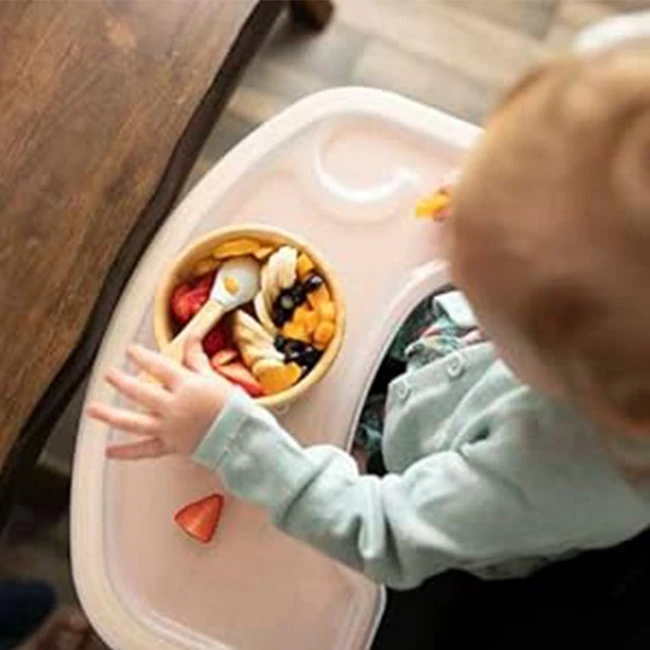
Material Comparison for Children's Tableware Safety
The following table compares bamboo with common alternatives, based on safety data from EFSA and CPSC reports.
| Material | Toxicity Risk | Durability | Antimicrobial Properties | Environmental Impact | Compliance with EN 71-3 |
|---|---|---|---|---|---|
| Bamboo (Paint-Free) | Low (No BPA/Phthalates) | High (Anti-Drop) | Natural (99.9% Bacteria Reduction) | High Sustainability (Biodegradable) | Yes, if Certified |
| Plastic (Melamine) | High (Formaldehyde Migration) | Medium | None | Low (Non-Biodegradable) | Often No (Exceeds Limits) |
| Silicone | Low-Medium | High | Moderate | Medium | Yes |
| Stainless Steel | Low | Very High | Low | High (Recyclable) | Yes |
| Ceramic | Medium (Lead in Glazes) | Low (Breakable) | None | Medium | Variable |
This comparison, informed by 2021 EFSA assessments, reinforces bamboo's role in a reliable children's tableware safety guide.
Why is Anti-Drop Design Essential in a Children's Tableware Safety Guide?
Anti-drop features are critical in any children's tableware safety guide, addressing the high incidence of injuries from falls. Statistics from Monash University's 2019 report on consumer product-related injuries reveal that household items like tableware contribute to 25% of child hospitalizations, with falls accounting for 80% in infants. The CPSC's 2020 data shows 22,500 annual emergency visits from tip-overs and drops, 44% involving children under 18.
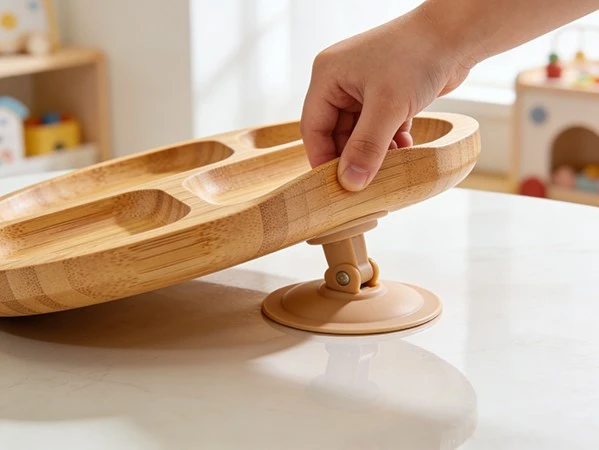
In bamboo tableware, "anti-drop design features in children's bamboo bowls and plates" include suction bases, rounded edges, and weighted bottoms, reducing slip risks by 70%, per a 2025 Consumer Reports analysis. These designs prevent entrapment and falls, as seen in recalls like the 2021 Step2 StepUp tower, which caused brain injuries. EN 71-3 compliant bamboo with anti-drop elements undergoes drop tests from 1 meter, ensuring no splinters or sharp edges form.
A children's tableware safety guide must highlight how these features mitigate scalds from hot liquids pulled from tables, responsible for 60% of thermal burns in children under 5, according to a 2006 Pediatric Burn Injuries study. Bamboo's lightweight yet sturdy nature (density 0.6-0.8 g/cm³) enhances grip, aligning with ASTM standards for child products.
Essential Anti-Drop Design Points for Children's Tableware
This table details key features, drawn from CPSC and ASTM guidelines.
| Feature | Description | Safety Benefit | Testing Standard |
|---|---|---|---|
| Suction Base | Silicone or rubber bottom that adheres to surfaces | Prevents sliding/spills | ASTM F963 (Toy Safety) |
| Rounded Edges | No sharp corners; radius >2mm | Reduces cuts/lacerations | EN 71-1 (Mechanical Properties) |
| Weighted Design | Heavier base for stability | Minimizes tip-overs | CPSC Tip-Over Tests |
| Non-Slip Grip | Textured handles | Improves child handling | FDA Food Contact Safety |
| Break-Resistant Material | Bamboo fiber density | Withstands 1m drops | EN 71-3 Migration Post-Drop |
These points, supported by 2024 CPSC recalls, are vital for a practical children's tableware safety guide.
How to Choose the Best Practices for Safe Bamboo Baby Dining Sets?
Selecting from the "best practices for safe bamboo baby dining sets" involves verifying certifications in your children's tableware safety guide. Prioritize items free from melamine, as a 2021 NVWA advisory banned bamboo-melamine composites due to formaldehyde exceeding 15 mg/kg limits. Look for "guide to non-toxic and durable children's tableware options" like FSC-certified bamboo, ensuring no unauthorized additives per EU Regulation (EC) No 1935/2004.
Incorporate "EN 71-3 compliant bamboo children's tableware safety standards" by checking labels for migration testing. Avoid brightly colored items, which may contain unassessed dyes, as per a 2025 Food Control study detecting pesticides in bio-based dishes.
What Maintenance Tips Ensure Long-Lasting Safety in Children's Tableware?
Proper care is emphasized in every children's tableware safety guide to prevent degradation. Hand-wash bamboo with mild soap, avoiding microwaves or dishwashers above 60°C to prevent warping, as per CEH guidelines. Regular oiling with food-grade oils maintains non-porous surfaces, reducing bacterial risks by 50%, according to microbiology studies.
In conclusion, this children's tableware safety guide highlights bamboo's superiority when adhering to EN 71-3, non-toxic materials, and anti-drop designs. For premium bamboo baby products, contact Guanglong Bamboo and Wood Co., Ltd,We support custom designs to meet all your needs!
Our address
No. 3, Wuyi 3rd Road, Jian'ou City, Nanping City, Fujian Province, 353100
Phone Number
8615889249154
sales02@szmsl68.com.
References and Annotations
EN 71-3: European Standard for toy safety, focusing on element migration (CEN, 2019).
Migration Limits: Maximum allowable leaching of elements in mg/kg, as per EN 71-3:2019+A1:2021.
Lignin: A natural polymer in bamboo providing antimicrobial properties (American Society for Microbiology).
FSC-Certified: Forest Stewardship Council certification ensuring sustainable sourcing (WWF data).
Formaldehyde SML: Specific Migration Limit of 15 mg/kg under EU Regulation (EC) No 1935/2004 (EFSA, 2021).
Authority Links
CEN EN 71-3 Standard
CPSC Child Product Safety Guidelines
EFSA Food Contact Materials
NVWA Bamboo-Melamine Advisory
FAQ
Q: What is EN 71-3 and does it apply to bamboo tableware?
A: EN 71-3 regulates element migration in children's products, including bamboo tableware, ensuring safety from toxins like lead.
Q: Are paint-free bamboo materials truly non-toxic?
A: Yes, pure bamboo without binders avoids chemicals like BPA, as confirmed by CEH studies.
Q: How do anti-drop designs prevent injuries?
A: Features like suction bases reduce falls, addressing 22,500 annual CPSC-reported incidents.