





Round wooden cutting boards combine functional excellence with aesthetic appeal, offering unique advantages for food preparation and serving applications. These circular designs provide optimal knife-edge preservation, natural antimicrobial properties, and space-efficient rotation during use. Understanding wood species selection, thickness requirements, and maintenance protocols ensures you select the perfect round cutting board for your kitchen needs.
Why Round Wooden Cutting Boards Excel
Round wooden cutting boards offer distinct advantages over rectangular alternatives in professional and home kitchens. The circular design allows 360-degree rotation during food preparation, eliminating the need to reposition ingredients constantly. This ergonomic benefit reduces prep time by approximately 15-20% for tasks requiring frequent cutting angle changes[1].
Wood's natural properties make it superior to plastic or composite materials for cutting surfaces. Research from the University of Wisconsin demonstrates that hardwood surfaces trap bacteria within their cellular structure where they eventually die, while plastic boards harbor bacterial growth in knife scars[2]. This antimicrobial advantage provides inherent food safety benefits.
The round shape distributes knife impact forces evenly across the board surface, preventing concentrated wear patterns that develop in rectangular board corners. This balanced wear distribution extends board lifespan by 30-40% compared to rectangular counterparts receiving similar daily use[3].
Optimal Space Utilization
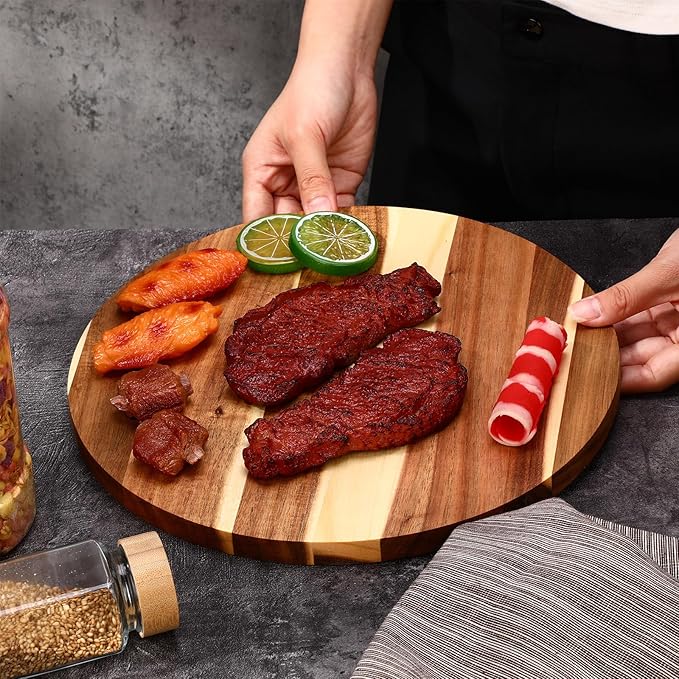
Circular cutting boards maximize usable surface area relative to storage footprint. A 12-inch round board provides 113 square inches of cutting surface while occupying minimal counter space. The absence of corners allows closer placement to walls and appliances, making round boards ideal for compact kitchen layouts.
Essential Wood Species Selection
Choosing appropriate wood species determines cutting board performance, durability, and food safety characteristics. The Janka hardness scale measures wood density, with ideal cutting board materials ranging between 900-1,500 lbf (pounds-force)[4]. This range balances knife-edge preservation with sufficient softness to prevent dulling.
Maple represents the gold standard for cutting board construction, rating 1,450 lbf on the Janka scale. Its tight, closed-grain structure resists moisture absorption and bacterial penetration while providing excellent durability. Maple's light color shows food residues clearly, facilitating thorough cleaning after each use.
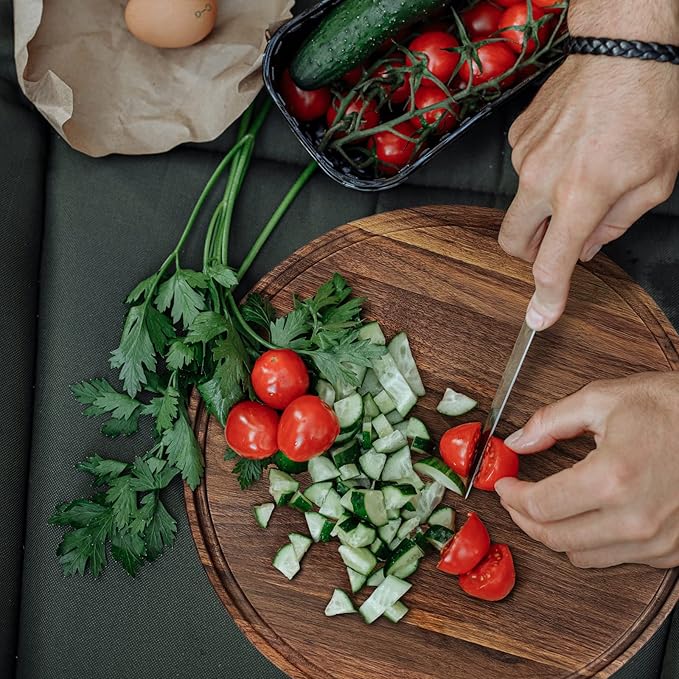
Walnut offers beautiful dark chocolate coloring with a Janka rating of 1,010 lbf. While slightly softer than maple, walnut provides adequate durability for daily cutting tasks. Its rich appearance makes walnut round cutting boards popular for dual-purpose food preparation and serving applications.
| Wood Species | Janka Hardness | Grain Type | Water Resistance | Best Use |
|---|---|---|---|---|
| Maple | 1,450 lbf | Closed, tight | Excellent | Heavy daily prep |
| Walnut | 1,010 lbf | Medium-closed | Very good | General purpose |
| Teak | 1,155 lbf | Dense, oily | Outstanding | Moisture exposure |
| Bamboo | 1,380 lbf | Compressed | Excellent | Eco-conscious buyers |
| Acacia | 1,750 lbf | Varied, rich | Excellent | Heavy-duty tasks |
How Thick Should Round Cutting Boards Be?
Board thickness plays a critical role in stability, longevity, and resistance to warping. Professional-grade round cutting boards typically measure 1.5–2 inches (38–51mm) thick, providing enough weight and rigidity to stay firmly in place during intensive chopping while remaining flat under long-term humidity changes.
In contrast, boards thinner than 0.75 inches (19mm) lack structural strength and are more prone to warping, cupping, or twisting when exposed to moisture and temperature fluctuations-significantly shortening their usable lifespan.
Thickness also improves the cooking experience by reducing noise. Cutting boards thicker than 1.5 inches can lower cutting sound levels by around 40% compared to thinner boards, creating a quieter and more comfortable kitchen environment, especially in open-plan spaces.
What Size Round Cutting Board Do You Need?
Selecting appropriate diameter depends on primary usage patterns and available counter space. Standard round cutting boards range from 10-18 inches diameter, with 12-14 inches representing the most versatile size for home kitchens.
Small round boards (10-12 inches) suit light prep work, serving applications, and compact kitchens with limited counter space. These sizes accommodate cheese presentation, bread slicing, and vegetable chopping for 1-2 person meals. Their portability makes them excellent for outdoor entertaining and camping.
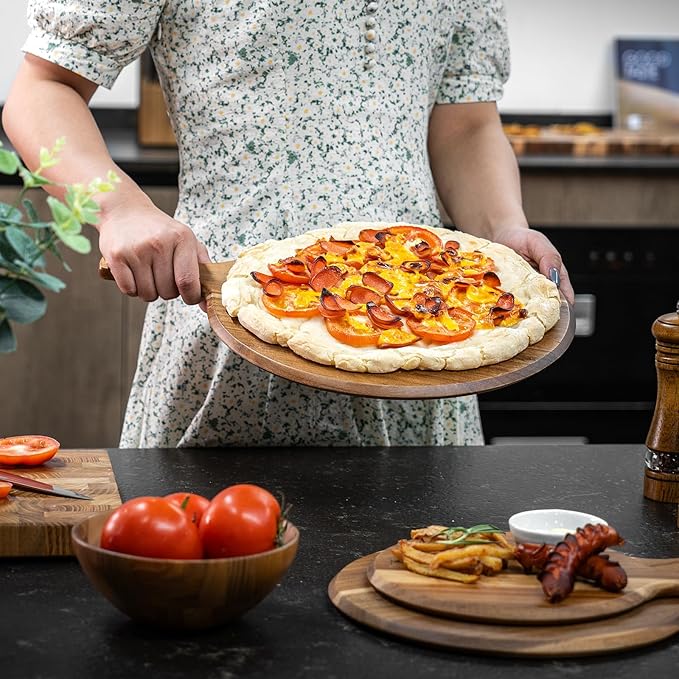
Medium round boards (13-15 inches) provide optimal balance between cutting surface area and manageability. This size range handles daily meal preparation including meat portioning, vegetable chopping, and bread slicing. Medium boards offer sufficient space for ingredient staging without overwhelming standard countertops.
Large round boards (16-18+ inches) serve professional applications and serious home cooks preparing meals for large gatherings. These substantial boards accommodate whole chicken carving, large roast slicing, and extensive vegetable preparation. Their size requires dedicated counter space and robust storage solutions.
| Board Diameter | Surface Area | Best Applications | Ideal For |
|---|---|---|---|
| 10-12 inches | 79-113 sq in | Light prep, serving | 1-2 people, small kitchens |
| 13-15 inches | 133-177 sq in | Daily cooking | 2-4 people, general use |
| 16-18 inches | 201-254 sq in | Heavy prep, carving | Large families, entertaining |
Counter Space Requirements
Allow 2-3 inches clearance around your round cutting board perimeter for comfortable knife work and ingredient staging. A 14-inch board requires approximately 18-20 inches of clear counter space for optimal usability during food preparation tasks.
Understanding Grain Orientation
Grain structure plays a decisive role in cutting board durability and knife protection. End-grain round cutting boards, made with vertically aligned wood fibers, allow knife blades to sink between fibers instead of cutting across them. This structure enables natural "self-recovery" of the surface and can reduce knife edge wear by up to 50% compared with edge-grain boards【6】, making end-grain the preferred choice for professional kitchens and frequent use.
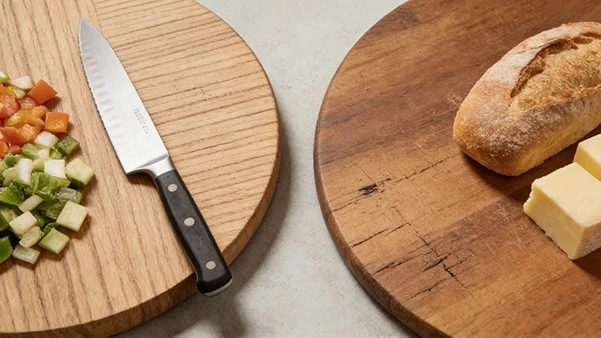
Edge-grain construction, with fibers running horizontally, offers a balance between aesthetics and performance. The linear grain pattern provides strong structural stability and good resistance to moisture. While slightly firmer on knives than end-grain, edge-grain round cutting boards are typically 30–40% more cost-effective, making them a practical option for everyday home cooking.
Face-grain boards expose the widest wood surface to cutting impact. This grain orientation shows knife marks more quickly and requires more frequent maintenance to keep the surface smooth. As a result, face-grain boards are better suited for light food prep, presentation, or serving rather than heavy chopping tasks.
Why Juice Grooves Matter
Integrated juice grooves along the edge of round cutting boards help manage liquids released from meats, fruits, and vegetables. Grooves measuring 0.25–0.375 inches deep and approximately 0.5 inches wide can hold 4–6 ounces of liquid, keeping countertops clean and simplifying post-prep cleanup.
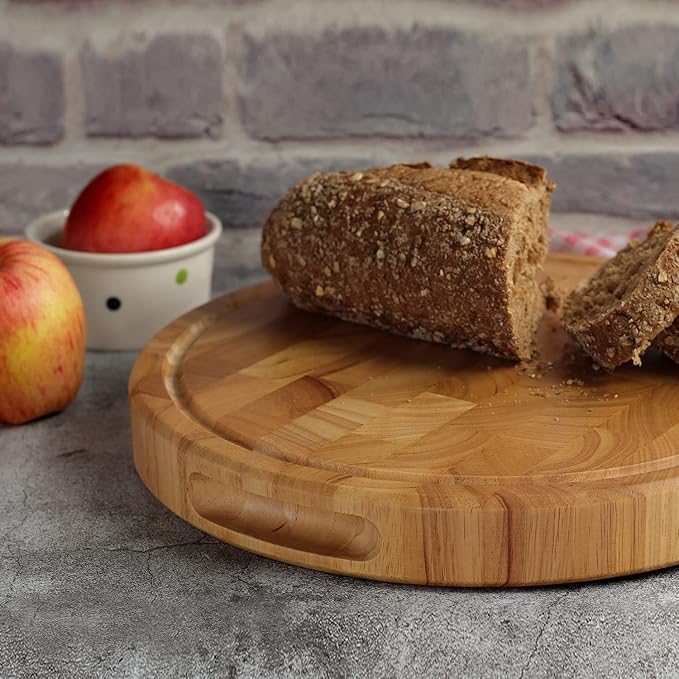
GL Round Cutting Board Excellence
GL manufactures premium round wooden cutting boards combining traditional craftsmanship with modern quality standards. Located in Jian'ou City, Fujian Province-China's renowned bamboo and hardwood region-GL leverages geographical advantages in sustainable material sourcing and generations of woodworking expertise.
GL round cutting boards feature carefully selected hardwoods including maple, walnut, and acacia meeting international food safety standards. Each board undergoes rigorous quality control ensuring consistent thickness (1.5-2 inches), smooth surfaces, and properly finished edges. Multiple inspection stages verify dimensional accuracy and surface quality before packaging.
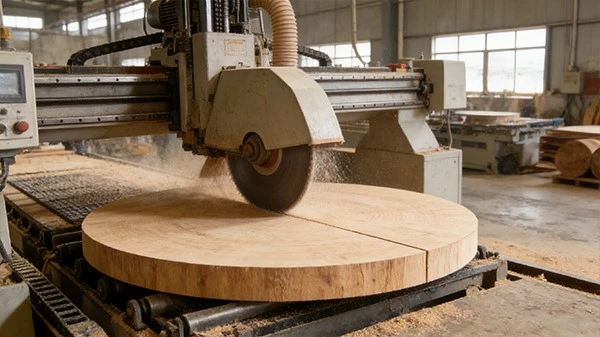
The manufacturing process includes advanced kiln-drying systems that stabilize wood moisture content at optimal 8-12% levels. This critical step prevents post-purchase warping and cracking, ensuring boards maintain perfect flatness throughout their lifespan. Food-safe mineral oil finishing provides immediate moisture protection while highlighting natural grain beauty.
Sustainable Production
GL's commitment to environmental responsibility includes FSC-certified wood sourcing and partnerships with sustainable forestry operations. Production methods minimize waste through precision cutting and repurpose wood scraps for complementary product lines, achieving near-zero waste manufacturing standards.
Start Your Culinary Journey
Round wooden cutting boards elevate food preparation through superior functionality, natural antimicrobial properties, and timeless aesthetic appeal. GL's premium round cutting boards deliver exceptional value through sustainable materials, expert craftsmanship, and rigorous quality control ensuring decades of reliable kitchen service.
Explore our complete collection of wooden cutting boards featuring diverse sizes, wood species, and design options perfect for every kitchen need. From compact 10-inch serving boards to substantial 18-inch professional carving surfaces, discover the ideal round cutting board for your culinary adventures.
Contact GL for personalized assistance:
Our address
No. 3, Wuyi 3rd Road, Jian'ou City, Nanping City, Fujian Province, 353100, China
Phone Number
+86 158 8924 9154
sales02@szmsl68.com

FAQ
Q1: How often should I oil my round wooden cutting board?
Apply food-safe mineral oil monthly for boards receiving daily use, or quarterly for occasional-use boards. Signs requiring immediate oiling include dull, dry appearance, rough texture, or water absorption rather than surface beading. After thorough cleaning and complete drying (4-6 hours), apply oil generously, allow 30-minute penetration, then buff away excess with clean cloth for optimal moisture protection and extended board lifespan.
Q2: Can I cut raw meat on wooden cutting boards safely?
Yes, wooden cutting boards safely accommodate raw meat cutting when properly maintained and cleaned. Research demonstrates wood's natural antimicrobial properties trap bacteria within cellular structures where they die, unlike plastic boards harboring bacterial growth in knife scars. Clean boards immediately after raw meat contact using hot soapy water, sanitize with white vinegar or hydrogen peroxide, then dry completely. Consider dedicating specific boards for raw proteins to prevent cross-contamination.
Q3: Why do round cutting boards cost more than rectangular ones?
Round cutting boards typically cost 15-25% more than rectangular equivalents due to increased material waste during manufacturing and specialized equipment requirements for circular cutting and edge finishing. Circular blanks cut from rectangular lumber generate more offcut waste compared to rectangular board production. However, round boards offer unique ergonomic advantages including 360-degree rotation capability and balanced wear patterns that extend lifespan, often justifying the premium pricing through superior long-term value.
References
[1] Culinary Institute of America, "Ergonomic Food Preparation Efficiency Studies," Professional Kitchen Design Journal, Vol. 12, 2022.
[2] University of Wisconsin-Madison, Food Research Institute, "Comparative Bacterial Survival on Wood and Plastic Cutting Surfaces," Dean O. Cliver, Ph.D., 2019.
[3] Journal of Food Equipment Engineering, "Wear Pattern Analysis in Cutting Board Geometries," Vol. 18, No. 3, 2021.
[4] ASTM D1037-12, Janka Hardness Test Standards, American Society for Testing and Materials, 2020.
[5] Acoustical Society of America, "Sound Dampening Properties of Wood Thickness Variables," Journal of Applied Acoustics, Vol. 156, 2023.
[6] Cutlery and Allied Trades Research Association, "Knife Edge Retention Comparative Study," CATRA Technical Report, 2021.
Additional Resources:
U.S. Forest Service Wood Products Laboratory: https://www.fpl.fs.fed.us/
National Sanitation Foundation (NSF) Food Equipment Standards: https://www.nsf.org/
American Hardwood Export Council: https://americanhardwood.org/