



Square coasters are manufactured from diverse materials, each offering unique performance characteristics, aesthetic qualities, and functional benefits. Material selection directly impacts moisture absorption, heat resistance, durability, and overall user experience. Understanding the properties, advantages, and limitations of various coaster materials enables informed purchasing decisions that align with specific usage requirements and design preferences.
Why Material Selection Matters for Square Coasters
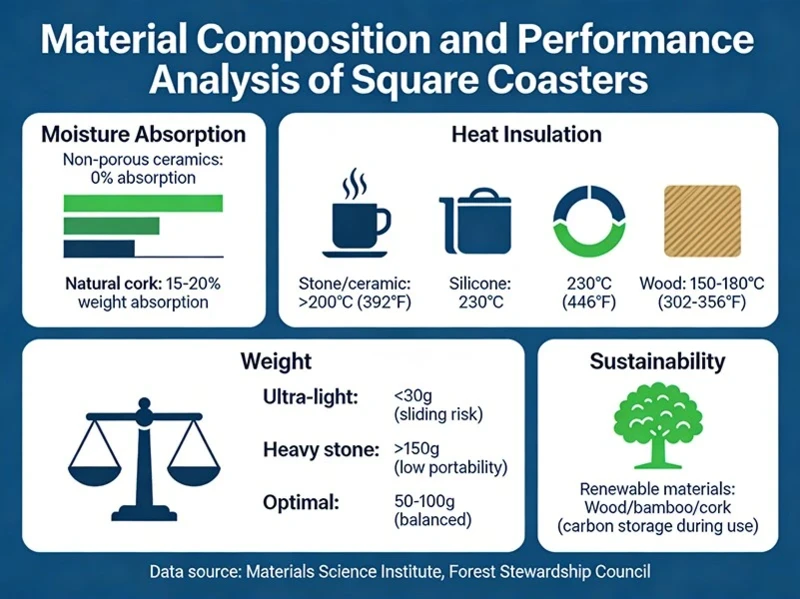
The material composition of square coasters plays a critical role in overall surface protection and daily usability. Different materials deliver distinct performance levels in moisture absorption, heat insulation, and long-term durability. According to research from the Materials Science Institute, material porosity directly influences condensation control-ranging from zero absorption in non-porous ceramics to 15–20% weight absorption in natural cork [1].
Thermal resistance also varies significantly by material type. Stone and ceramic coasters tolerate temperatures above 200°C (392°F) without structural damage, while silicone remains stable up to 230°C (446°F) [2]. Wood-based coasters typically withstand temperatures between 150–180°C (302–356°F), making them well suited for hot coffee, tea, and everyday beverage use.
Weight is another key factor affecting stability and user experience. Ultra-light coasters under 30 grams may slide during use, while heavy stone options exceeding 150 grams offer excellent stability but limit portability. An optimal weight range of 50–100 grams provides a balanced combination of grip, stability, and comfortable handling.
Environmental Impact Considerations
Sustainability has become a major driver in purchasing decisions. Renewable materials such as wood, bamboo, and cork offer clear advantages in both sourcing and end-of-life disposal. The Forest Stewardship Council notes that responsibly harvested wood products continue to store carbon throughout their usable lifespan, delivering environmental benefits beyond simple renewability [3].
Natural Wood Square Coasters
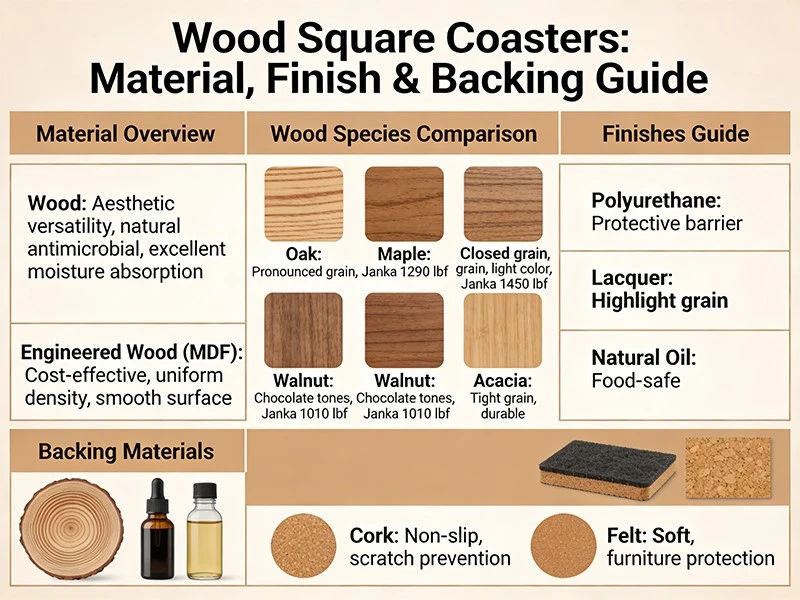
Wood remains the most popular material for square coasters due to aesthetic versatility, natural antimicrobial properties, and excellent moisture absorption. Hardwood species including oak, maple, walnut, and acacia provide the tight grain structure necessary for durability and food safety. The Janka hardness scale measures wood density, with ideal coaster materials ranging between 900-1,500 lbf[4].
Solid wood square coasters require proper sealing with food-safe finishes to prevent water staining and warping. Polyurethane, lacquer, or natural oil finishes create protective barriers while highlighting natural grain patterns. Unsealed wood absorbs liquids excessively, leading to dimensional changes and potential mold growth in humid environments.
Engineered wood products like MDF (Medium-Density Fiberboard) offer cost-effective alternatives to solid hardwood. MDF provides uniform density and smooth surfaces ideal for decorative treatments including painting, laser engraving, or vinyl application. However, MDF requires complete edge sealing as exposed edges rapidly absorb moisture causing swelling and delamination.
Wood coasters typically feature cork or felt backing materials preventing surface scratching and providing non-slip properties. This dual-layer construction combines wood's aesthetic appeal on the visible surface with functional backing materials protecting furniture finishes. The backing attachment method-whether adhesive, mechanical fastening, or integrated construction-affects long-term durability and backing retention.
Wood Species Comparison for Square Coasters
Different hardwood species offer distinct appearance and performance characteristics. Oak provides pronounced grain patterns and excellent durability with a Janka rating of 1,290 lbf. Maple's closed grain structure and light coloring suit modern aesthetics while rating 1,450 lbf. Walnut delivers rich chocolate tones at 1,010 lbf, balancing beauty with adequate hardness for daily use.
Cork Material Properties and Applications
Cork represents one of the most absorbent materials for square coasters, with cellular structure capable of absorbing up to 50% of its weight in water[5]. This exceptional absorption prevents condensation from cold beverages from reaching furniture surfaces. Cork's natural composition includes suberin, a waxy substance providing inherent water resistance that prevents complete saturation.
The lightweight nature of cork coasters (typically 15-25 grams per 4-inch square) makes them extremely portable and stackable for storage. Cork's natural elasticity provides cushioning that protects delicate furniture finishes from impact and abrasion. This softness prevents scratching even on highly polished surfaces including lacquered wood and glass.
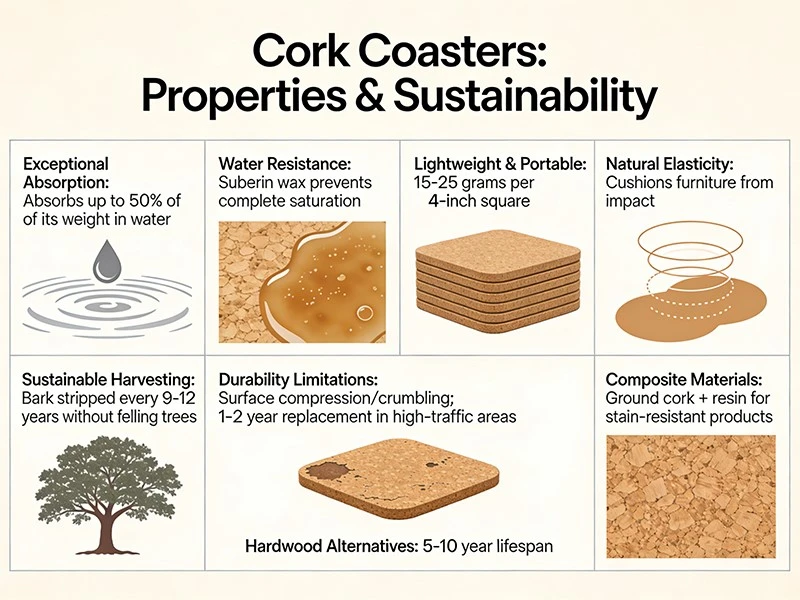
Cork sustainability credentials appeal to environmentally conscious consumers. Cork harvesting occurs without tree felling-bark is stripped from living cork oak trees every 9-12 years without harming the tree[6]. This renewable harvesting cycle makes cork one of the most sustainable coaster materials available.
Durability limitations restrict cork to light-to-moderate use applications. Heavy use causes surface compression, crumbling, and permanent staining from dark beverages. Cork coasters typically require replacement every 1-2 years in high-traffic environments compared to 5-10 years for hardwood alternatives.
Cork Composite Materials
Cork composites combine ground cork particles with binding resins, creating denser, more durable products than natural cork. These composites offer improved stain resistance and extended lifespan while maintaining cork's absorption properties. Composite cork coasters suit commercial applications requiring frequent cleaning and extended service life.
Bamboo Square Coasters
Bamboo technically classifies as grass rather than wood, yet functions similarly in coaster applications. Bamboo's rapid growth rate-reaching harvest maturity in 3-5 years versus 20-50 years for hardwoods-establishes it as exceptionally sustainable[7]. Some bamboo species grow up to 91cm (36 inches) daily during peak growth periods.
Processed bamboo achieves Janka hardness ratings of 1,380-1,600 lbf depending on manufacturing methods. Strand-woven bamboo construction creates extremely dense material exceeding many traditional hardwoods in durability. This density provides excellent resistance to knife marks, scratches, and moisture damage when properly finished.
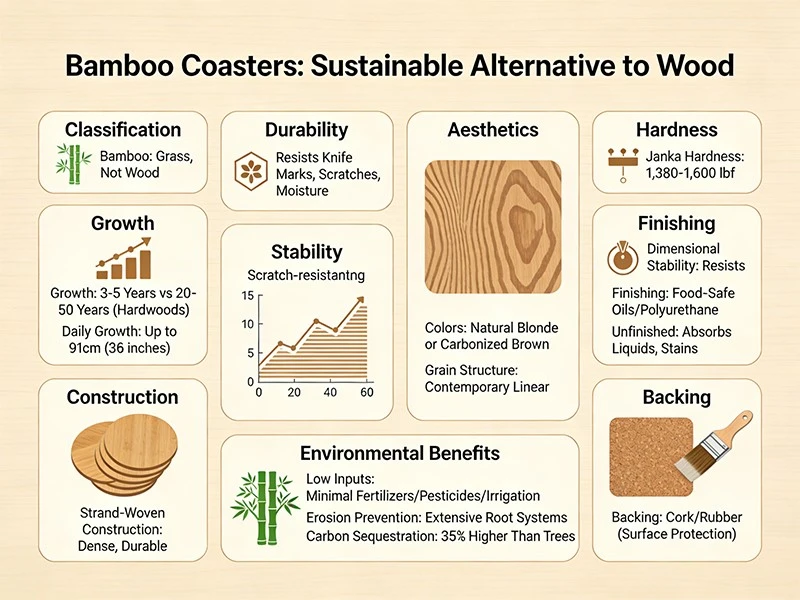
Bamboo square coasters typically feature natural blonde coloring or carbonized brown tones achieved through heat treatment. The linear grain structure creates contemporary aesthetic appeal suited to modern interior design. Bamboo's dimensional stability exceeds many hardwoods, reducing warping and cracking risks in varying humidity conditions.
Like wood coasters, bamboo requires protective finishing and often includes cork or rubber backing for surface protection. Food-safe oils or polyurethane coatings seal bamboo's porous structure while maintaining its natural appearance. Unfinished bamboo absorbs liquids rapidly, leading to staining and dimensional instability.
Environmental Benefits of Bamboo
Bamboo cultivation requires minimal fertilizers, pesticides, or irrigation compared to conventional timber forestry. Bamboo's extensive root systems prevent soil erosion while sequestering carbon at rates 35% higher than equivalent tree stands[8]. These environmental advantages make bamboo increasingly popular for eco-conscious consumers seeking sustainable coaster options.
Ceramic, Porcelain, and Tile Square Coasters
Ceramic materials provide non-porous surfaces with zero moisture absorption, requiring regular wiping to remove condensation before it transfers to furniture. Glazed ceramic coasters offer unlimited decorative possibilities through printed designs, hand-painting, or decorative glazing techniques. These artistic surfaces make ceramic coasters popular for decorative and gift applications.
Heat resistance represents ceramic coasters' primary functional advantage. Most ceramic materials withstand temperatures exceeding 300°C (572°F) without damage, making them ideal for hot beverage applications[9]. Ceramic's high thermal mass absorbs significant heat, reducing temperature transfer to furniture surfaces.
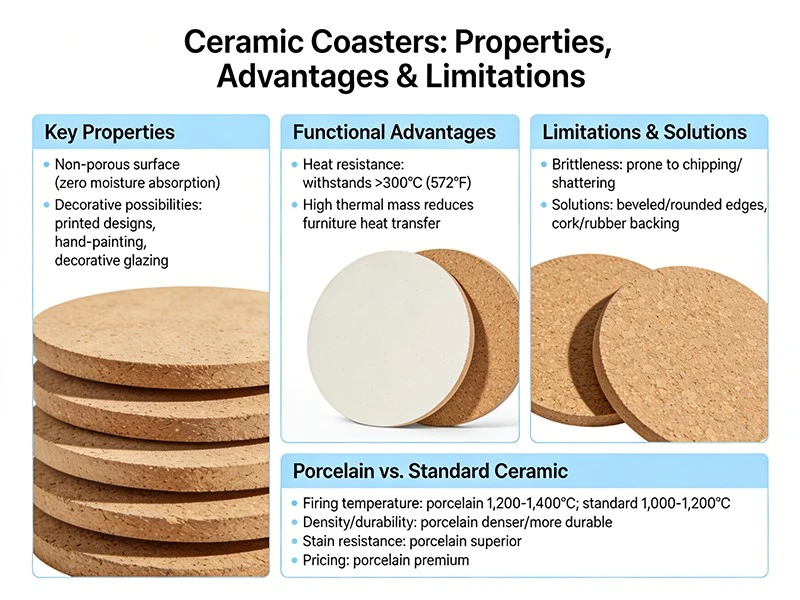
Brittleness constitutes ceramic's main limitation-dropped coasters often chip or shatter completely. Edge chips create sharp surfaces and compromise the coaster's protective function. Quality ceramic coasters feature beveled or rounded edges reducing chipping vulnerability and providing smoother handling characteristics.
Cork or rubber backing prevents ceramic coasters from sliding and protects furniture from scratching by the hard ceramic bottom surface. Adhesive-backed felt or cork requires secure attachment-backing separation renders the coaster potentially damaging to furniture finishes. Some manufacturers integrate rubber bumpers or silicone pads into ceramic coaster designs.
Porcelain Versus Standard Ceramic
Porcelain represents premium ceramic material fired at higher temperatures (1,200-1,400°C) than standard ceramics (1,000-1,200°C)[10]. This higher firing temperature creates denser, more durable, and more stain-resistant material. Porcelain coasters command premium pricing but offer superior longevity and easier cleaning compared to standard ceramic alternatives.
Stone Square Coasters
Natural stone materials including slate, marble, granite, and sandstone provide premium aesthetic appeal and exceptional durability. Stone coasters deliver substantial weight (typically 100-200 grams per 4-inch square) ensuring excellent stability during use. This weight prevents shifting when placing or removing beverages but reduces portability.
Slate's fine-grain structure and natural layering create attractive textured surfaces with subtle color variations. Slate absorbs minimal moisture while maintaining heat resistance suitable for hot beverages. Natural slate surfaces may require sealing to prevent beverage staining, particularly from acidic liquids like wine or citrus juice.
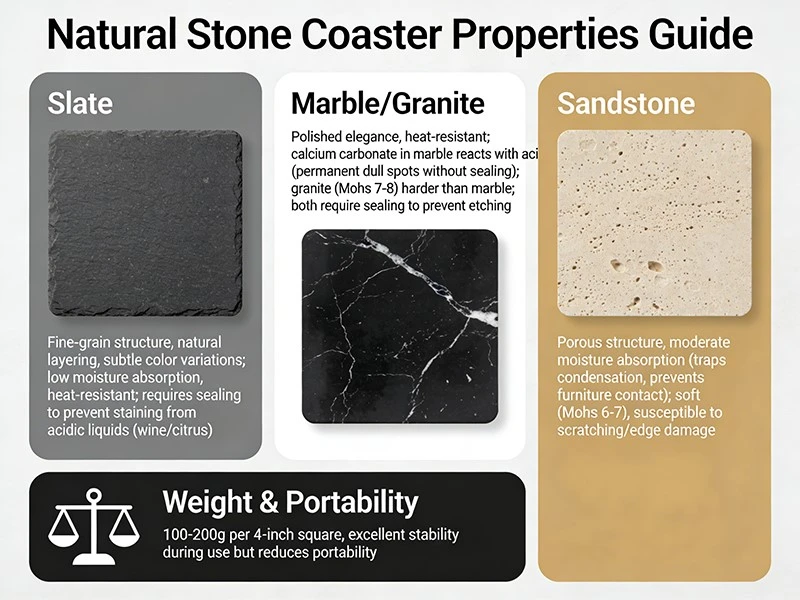
Marble and granite offer polished elegance suited to upscale environments. These materials resist heat effectively but require sealing to prevent etching from acidic beverages. Marble's calcium carbonate composition reacts with acids, creating permanent dull spots unless properly sealed with penetrating stone sealers.
Sandstone's porous structure provides moderate moisture absorption superior to slate or granite. This absorption helps trap condensation preventing furniture contact. However, sandstone's softness (Mohs hardness 6-7 versus granite's 7-8) makes it more susceptible to scratching and edge damage[11].
| Material Type | Weight (4" square) | Heat Resistance | Moisture Absorption | Durability Rating |
|---|---|---|---|---|
| Wood (hardwood) | 50-80g | Good (150-180°C) | Medium (8-15%) | High |
| Cork | 15-25g | Moderate (100°C) | High (40-50%) | Medium |
| Bamboo | 60-90g | Good (160-190°C) | Low (5-10%) | Very High |
| Ceramic/Porcelain | 80-120g | Excellent (300°C+) | None (0%) | Medium (brittle) |
| Natural Stone | 100-200g | Excellent (250°C+) | Low-Medium (varies) | Very High |
| Metal (stainless) | 70-110g | Excellent (500°C+) | None (0%) | Excellent |
Stone Finishing and Sealing
Natural stone coasters benefit from penetrating sealers that fill microscopic pores without altering appearance. Sealers prevent liquid absorption and staining while maintaining stone's natural texture and color. Resealing every 6-12 months maintains optimal protection, though frequency depends on usage intensity and sealer quality.
Metal Square Coasters
Stainless steel and aluminum create modern, industrial-aesthetic coasters with exceptional durability. Metal coasters withstand extreme temperatures-stainless steel remains stable above 500°C (932°F)[12]. This makes metal ideal for hot cookware trivets in addition to standard beverage coaster applications.
Non-absorbent metal surfaces require design features managing condensation. Many metal coasters incorporate raised patterns, perforations, or textured surfaces preventing suction when lifting beverages. Standing water on smooth metal surfaces creates vacuum effects making glass removal difficult.
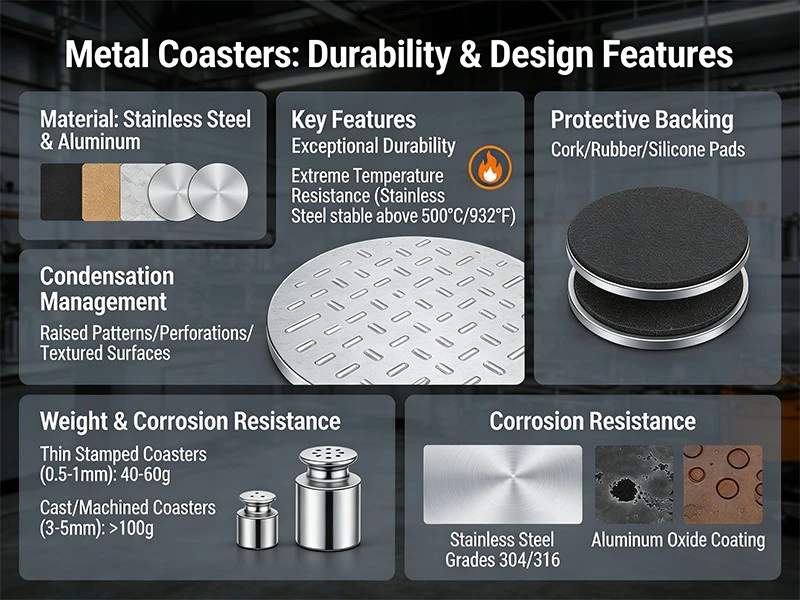
Protective backing prevents metal coasters from scratching furniture finishes. Cork, rubber, or silicone pads attached to metal coaster bottoms provide cushioning and grip. Without backing, hard metal edges may scratch or dent wooden furniture surfaces, particularly softwoods and veneer finishes.
Weight varies based on metal thickness and construction method. Thin stamped metal coasters (0.5-1mm thick) weigh 40-60 grams, while cast or machined metal coasters (3-5mm thick) exceed 100 grams. Thicker construction provides premium feel and superior flatness but increases manufacturing costs.
Corrosion Resistance Considerations
Stainless steel grades 304 and 316 provide excellent corrosion resistance suitable for coaster applications involving moisture exposure. Aluminum develops natural oxide coating preventing corrosion but may show water spots without proper finishing. Powder coating or anodizing provides colored finishes while enhancing corrosion protection and surface hardness.
Soft Materials for Square Coasters
Felt and wool coasters offer a soft, absorbent solution designed to protect delicate furniture surfaces. These textile materials efficiently absorb condensation while providing a cushioned barrier that minimizes impact damage. Felt coasters are especially well suited for antique furniture, glass tabletops, and high-gloss finishes where rigid materials may cause scratches or surface marks.
Material thickness plays a decisive role in felt coaster performance. Thin felt options (2–3mm) provide limited moisture absorption and minimal protection. In contrast, thicker felt (5–8mm) delivers enhanced cushioning, greater liquid retention, and improved surface protection. Among available options, compressed wool felt outperforms synthetic felt by maintaining shape, resisting pilling, and enduring repeated daily use.
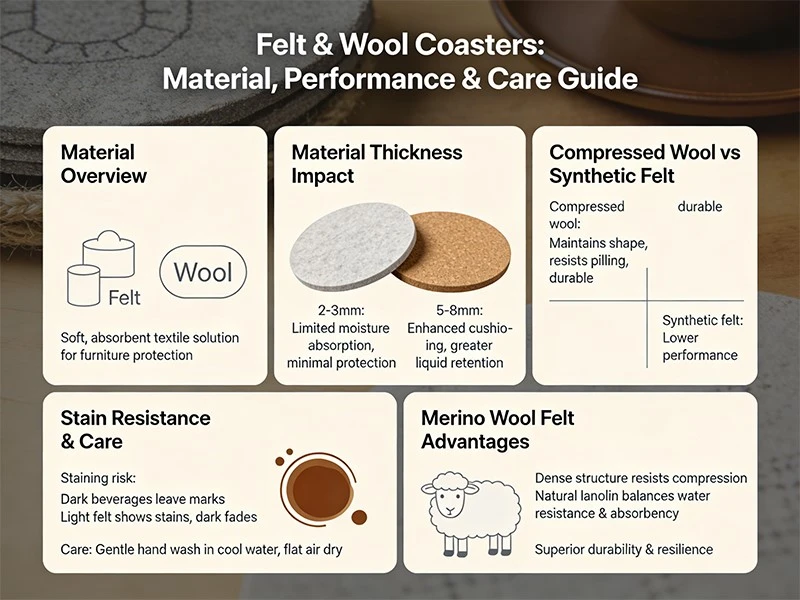
One inherent drawback of felt is its susceptibility to staining. Dark beverages such as coffee, tea, and wine can leave permanent marks that are difficult to remove. Light-colored felt highlights stains more visibly, while darker tones conceal discoloration better but may gradually fade. Some manufacturers apply stain-resistant coatings to improve cleanability, though these treatments typically reduce absorbency.
Proper care is essential to preserve felt coasters. Gentle hand washing in cool water with mild detergent, followed by flat air drying, helps maintain structure and texture. Machine washing is not recommended, as it often causes significant shrinkage (15–25%) and deformation that compromises usability.
Merino Wool Felt Advantages
Premium merino wool felt delivers superior durability, resilience, and visual appeal compared to synthetic alternatives. The natural crimp of merino fibers creates a dense, stable felt structure that resists compression and surface wear. Additionally, wool's natural lanolin content provides inherent water resistance while retaining absorbency-an ideal balance for long-term coaster performance.
Resin and Epoxy Square Coasters
Epoxy resin enables highly customizable decorative coasters through embedded elements, pigment blending, and artistic surface effects. Two-part epoxy systems cure into hard, fully waterproof surfaces that require no additional sealing. Depending on formulation, properly cured resin coasters tolerate temperatures of approximately 120–150°C, making them suitable for most hot and cold beverages [13].
Many resin coasters feature hybrid construction, combining solid wood bases with clear or tinted epoxy top layers. This design highlights natural wood grain beneath transparent resin or creates striking "river" and "ocean" visual effects using colored epoxy. The result is a visually distinctive coaster that pairs organic warmth with long-lasting surface protection.
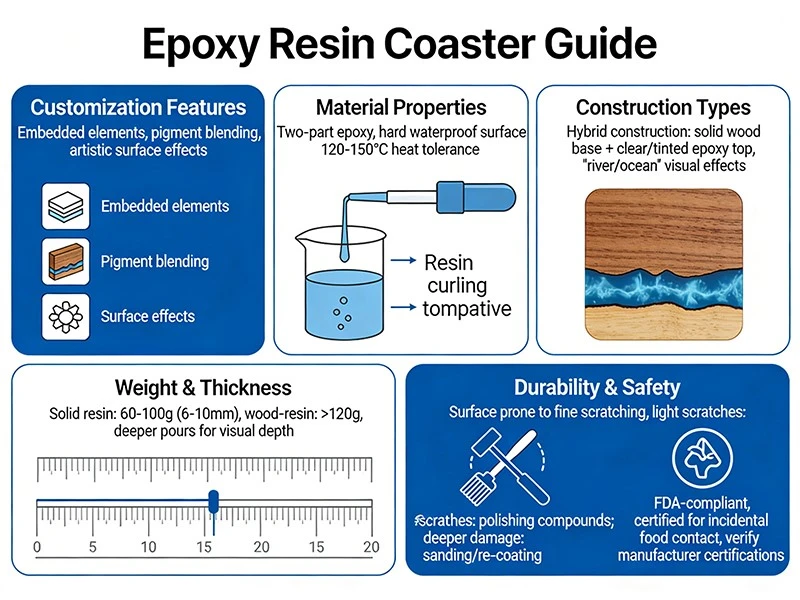
Coaster weight varies according to resin depth and base material. Solid resin coasters typically weigh between 60–100 grams at standard thicknesses of 6–10mm, while wood-resin composites often exceed 120 grams. Thicker resin pours enhance visual depth and design impact but increase material usage and overall weight.
Despite their initial hardness, resin surfaces are susceptible to fine scratching over time. Abrasive cleaning tools or repeated sliding can gradually dull the surface, creating a cloudy appearance. Light scratches can be removed with polishing compounds, while deeper damage may require sanding and re-coating to restore clarity.
Food-Safe Resin Considerations
Not all epoxy resins are suitable for food-contact applications. Coasters require FDA-compliant epoxy formulations approved for incidental food contact. Certified food-safe resins cure without releasing harmful substances and resist breakdown when exposed to acidic beverages. Verifying manufacturer certifications and safety data sheets is essential when selecting resin materials for coaster production.
Silicone and Rubber Square Coasters
Silicone coasters offer a flexible, non-slip solution with outstanding heat resistance, tolerating temperatures up to 230°C (446°F) without deformation or performance loss [14]. The material's natural grip keeps coasters firmly in place on smooth surfaces, reducing slippage and minimizing the risk of spills when cups or mugs are set down. Its flexible structure also allows coasters to be rolled or folded for easy storage and transport.
Because silicone is non-absorbent, effective condensation control depends on thoughtful surface design. Raised textures, drainage grooves, or patterned surfaces prevent water from pooling and eliminate suction effects. Some advanced designs integrate absorbent fabric or felt inserts, combining silicone's durability with enhanced moisture management.
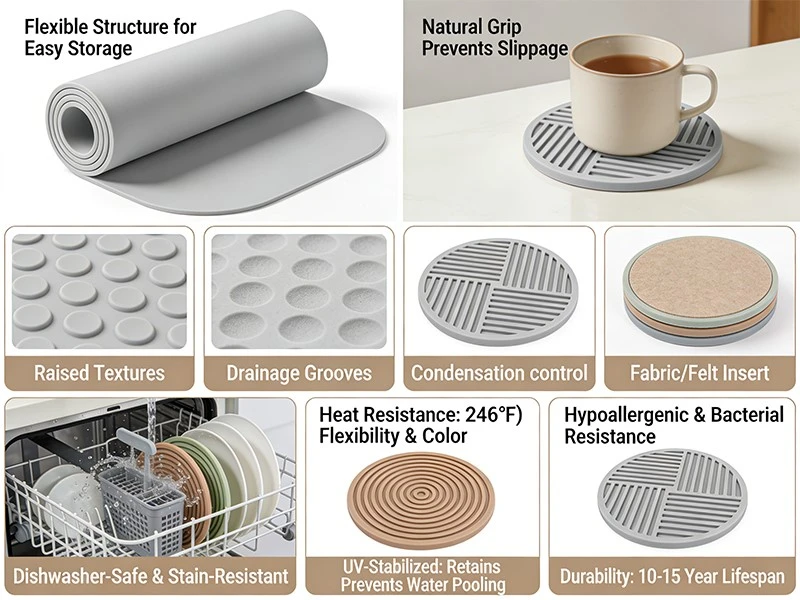
Ease of cleaning is a major advantage of silicone. Dishwasher-safe and highly stain-resistant, silicone coasters maintain their appearance through hundreds of use cycles. Unlike porous materials that trap odors or discolor over time, silicone rinses clean quickly without special care or maintenance routines.
High-quality silicone delivers exceptional durability, resisting tearing, cracking, and material fatigue. UV-stabilized formulations retain flexibility and color even after prolonged sun exposure, making silicone coasters ideal for outdoor dining, patios, and travel use. With regular use, expected product lifespan ranges from 10 to 15 years.
Medical-Grade Silicone Benefits
Medical-grade silicone offers enhanced purity and hypoallergenic properties compared to standard commercial formulations. It resists bacterial growth and tolerates repeated sterilization, making it particularly suitable for food-service environments, healthcare facilities, and households requiring higher hygiene standards.
Leather Square Coasters
Leather coasters bring a refined, premium touch to executive offices, luxury interiors, and high-end gift sets. Crafted from genuine leather, they develop a rich natural patina over time, with subtle color deepening and surface character that enhance their visual appeal. This aging process is highly valued by consumers who appreciate authentic materials that grow more distinctive with use.
Leather offers moderate moisture absorption, effectively managing condensation while maintaining a clean, sophisticated look. To preserve flexibility and prevent drying or cracking, periodic conditioning is recommended. For frequent use, monthly conditioning maintains optimal performance, while light-use environments typically require treatment only every few months.
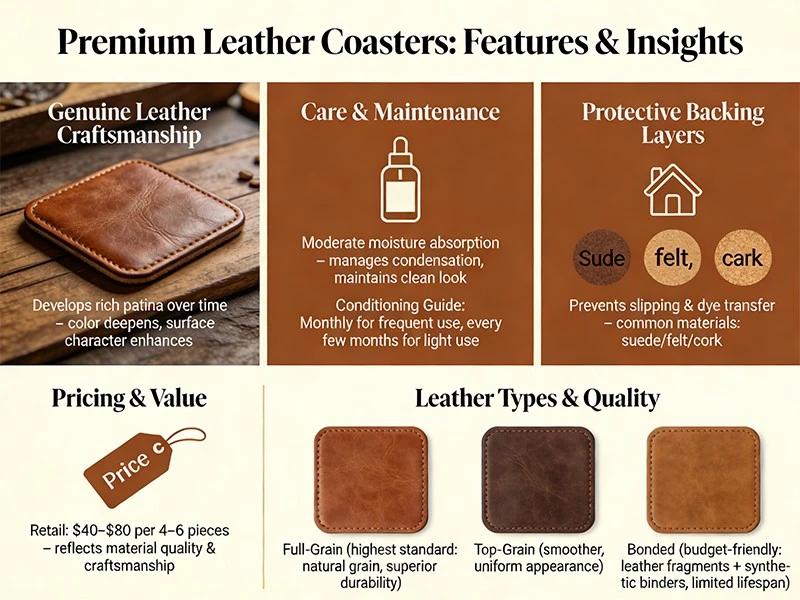
Most leather coasters feature protective backing layers to prevent slipping and dye transfer onto furniture. Vegetable-tanned leather significantly reduces color bleed compared to chrome-tanned options. Common backing materials such as suede, felt, or cork add grip and cushioning, protecting delicate tabletop surfaces.
Positioned firmly in the premium segment, leather coaster sets typically retail between $40–$80 per 4–6 pieces, reflecting material quality and craftsmanship. Details such as hand-stitched edges, embossed logos, and carefully selected hides reinforce perceived value. Lower-cost options made from bonded or corrected-grain leather offer similar appearance but lack durability and long-term aesthetic development.
Leather Types & Quality Levels
Full-grain leather represents the highest standard, preserving natural grain patterns and delivering superior durability and patina development. Top-grain leather offers a smoother, more uniform appearance with slightly reduced character. Bonded leather, produced from leather fragments combined with synthetic binders, provides a budget-friendly alternative but delivers limited lifespan and visual aging.
Cardboard and Paperboard Square Coasters
Disposable coasters are designed for promotional campaigns, events, and short-term use where affordability and branding flexibility take priority over long-term durability. Paperboard coasters are highly cost-efficient, typically ranging from $0.05–$0.20 per unit in bulk orders, making them ideal for trade shows, large gatherings, bars, and high-volume food service environments.
Paperboard's natural fiber structure offers strong short-term moisture absorption, quickly soaking up condensation to prevent drips and table damage. However, continuous exposure leads to saturation within 30–60 minutes, after which the coaster must be replaced-making it best suited for single-use or limited-duration settings.
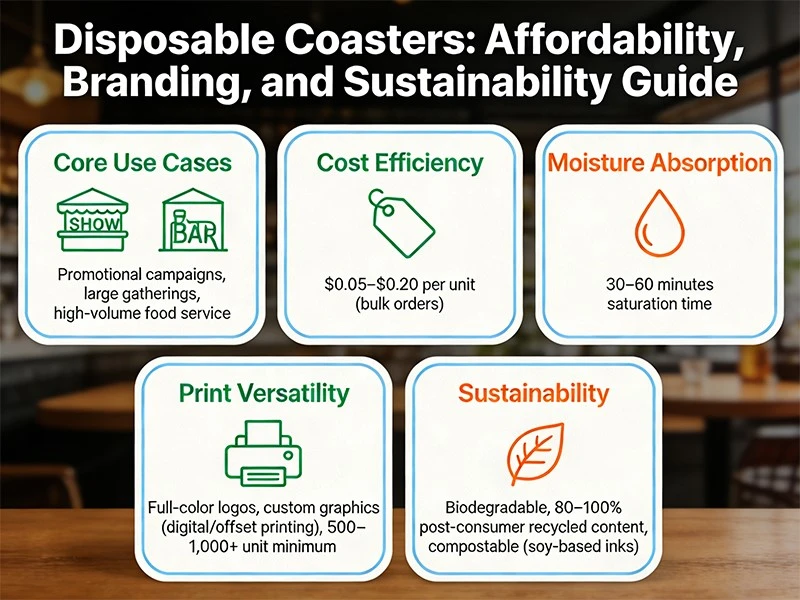
One of the strongest advantages is print versatility. Paperboard supports full-color logo printing, promotional graphics, and custom messaging using digital or offset processes. With order quantities above 500–1,000 units, brands can achieve vibrant visual impact at very low per-unit costs, making disposable coasters an effective tool for marketing and brand visibility.
From a sustainability perspective, disposable coasters generate more waste than reusable alternatives. While paperboard is biodegradable and often made with recycled content, single-use consumption remains a concern. Compostable options using soy-based inks and eco-certified materials provide a more environmentally responsible solution for temporary applications.
Recycled Content Options
Paperboard coasters produced with 80–100% post-consumer recycled content help reduce reliance on virgin materials while maintaining functional performance. These options may feature slightly rougher surface texture or softer print contrast, though advancements in recycling technology have significantly narrowed the visual and quality gap compared to virgin pulp products.
Choosing Square Coaster Materials Based on Usage
Material selection should align with primary usage scenarios and performance priorities. The following table guides material selection based on common requirements:
| Primary Requirement | Recommended Materials | Materials to Avoid | Reasoning |
|---|---|---|---|
| Maximum moisture absorption | Cork, felt, sandstone | Metal, ceramic, resin | Porous materials trap condensation effectively |
| Heat resistance (hot beverages) | Stone, metal, ceramic | Cork, paperboard, standard silicone | High-temp materials prevent heat damage |
| Lightweight/portable | Cork, felt, thin wood | Stone, thick ceramic, metal | Reduced weight improves handling |
| Maximum durability | Bamboo, stone, metal | Cork, paperboard, leather | Dense materials resist wear |
| Eco-friendly/sustainable | Bamboo, FSC wood, cork | Standard plastics, virgin paperboard | Renewable materials reduce environmental impact |
| Premium aesthetic | Leather, marble, walnut wood | Paperboard, basic cork | Luxury materials create upscale impression |
| Easy maintenance | Silicone, sealed stone, metal | Unsealed wood, felt, leather | Non-porous materials clean easily |
Multi-Material Coaster Sets
Some consumers benefit from diverse material sets matching different usage scenarios. Maintaining stone coasters for hot beverages, wood coasters for general use, and cork coasters for maximum absorption addresses varied household needs without requiring single-material compromise.
GL's Wooden Coaster Excellence
Guanglong Bamboo & Wood Products (GL) specializes in premium square wooden coasters manufactured from sustainably sourced hardwoods and bamboo. Located in Jian'ou City, Fujian Province-China's premier bamboo and hardwood region-GL leverages geographical advantages and generational woodworking expertise producing exceptional coaster products.
GL square coasters feature carefully selected materials including acacia, walnut, and premium bamboo meeting international quality and food-safety standards. Each coaster undergoes multi-stage quality control ensuring consistent dimensions (typically 4x4 inches with 8-12mm thickness), smooth surfaces, and durable protective finishes. Cork backing integration provides furniture protection and non-slip properties.
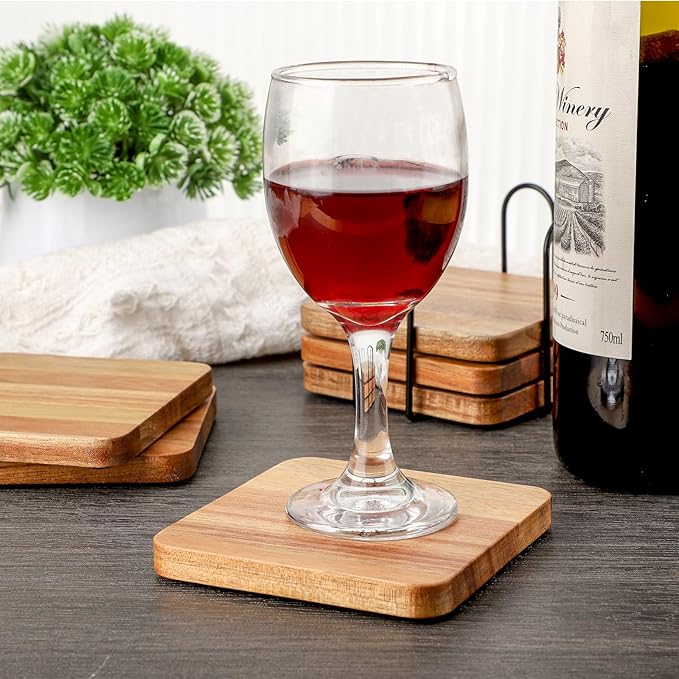
Manufacturing processes include precision moisture control stabilizing wood at optimal 8-12% moisture content preventing post-production warping. Food-safe polyurethane or natural oil finishes protect wood while highlighting natural grain beauty. Sustainable sourcing includes FSC-certified hardwoods and partnership bamboo cultivation using environmentally responsible practices.
Beyond coasters, GL's product range includes premium round wooden cutting boards sharing identical quality standards and craftsmanship commitment. These cutting boards utilize the same hardwood species, moisture control systems, and food-safe finishing protocols ensuring safe, durable kitchen tools.
Customization Capabilities
GL offers customization services including laser engraving, custom dimensions, specific wood species selection, and branded packaging. Minimum order quantities remain accessible for small businesses and special occasions, making personalized square coasters available for corporate gifts, wedding favors, and promotional applications.
Making Your Square Coaster Decision
Choosing the right square coaster material means finding the best balance between functionality, visual appeal, and budget. Natural options such as wood and bamboo offer classic aesthetics along with practical advantages like moisture absorption and inherent antimicrobial properties. Synthetic materials, on the other hand, prioritize ease of care and specialized features such as high heat resistance or flexibility.
Start by considering how the coasters will be used. For everyday drink service, materials like bamboo or properly sealed hardwood perform well under frequent use and routine cleaning. For decorative or statement pieces, premium materials such as marble, leather, or resin bring visual impact and elevate interior styling.
Maintenance expectations are another key factor. Porous natural materials need periodic care, including oiling and gentle cleaning, to maintain performance and appearance. Low-porosity options like silicone or glazed ceramic require minimal upkeep, making them ideal for users seeking convenience.
Long-Term Value Assessment
When comparing coaster options, look beyond upfront cost and consider cost per use. Higher-quality materials often last significantly longer, delivering better overall value. For example, a premium hardwood coaster set priced at $60 and lasting 10–15 years typically costs far less over time than a $20 cork set that needs replacement every two years.
Explore Premium Wooden Coaster Solutions
Understanding square coaster materials empowers informed purchasing decisions matching your specific needs and preferences. GL's expertise in bamboo and hardwood products ensures exceptional quality across our complete coaster range, from classic square wooden designs to innovative custom solutions.
Discover our complete collection of wooden coasters featuring diverse materials, sizes, and design options perfect for every setting. From sustainable bamboo to rich walnut hardwood, explore premium square coasters combining superior functionality with timeless aesthetic appeal.
Ready to elevate your kitchen with complementary wooden products? Visit our wooden cutting board collection featuring the same commitment to quality, sustainability, and craftsmanship that distinguishes our coaster range.
https://www.choppingboardfactory.com/cutting-board/wood-cutting-board/
Contact Guanglong Bamboo & Wood Products for personalized assistance:
Our address
No. 3, Wuyi 3rd Road, Jian'ou City, Nanping City, Fujian Province, 353100, China
Phone Number
+86 158 8924 9154
sales02@szmsl68.com

Our team provides expert guidance on material selection, customization options, and bulk ordering ensuring you find perfect square coasters for your specific requirements.
FAQ
Q1: Which square coaster material absorbs the most condensation?
Cork and natural felt materials provide maximum condensation absorption, with cork absorbing up to 50% of its weight in moisture while felt absorbs 40-45% of its weight. These porous materials trap liquid within their cellular or fiber structure preventing furniture contact. Natural sandstone also offers good absorption (20-30% by weight) while providing superior durability compared to cork or felt. For optimal condensation management, choose unsealed porous materials and replace them when saturation reduces absorption effectiveness.
Q2: Are wooden square coasters dishwasher safe?
No, wooden square coasters should never be placed in dishwashers. Prolonged water exposure and high heat cause wood warping, finish degradation, and potential cracking. Hand wash wooden coasters using warm water and mild dish soap, then dry immediately with a clean towel. Allow complete air drying (4-6 hours) standing vertically before returning to service. Apply food-safe mineral oil every 2-3 months to maintain moisture resistance and prevent wood from drying excessively.
Q3: How long do different square coaster materials typically last?
Material lifespan varies significantly based on quality and maintenance. Premium hardwood and bamboo coasters last 10-20 years with proper care including regular oiling and careful cleaning. Stone and metal coasters can last indefinitely (20+ years) as they resist wear and degradation. Cork and felt coasters typically require replacement every 1-3 years depending on usage frequency. Silicone coasters last 10-15 years, while ceramic coasters last indefinitely unless chipped or broken. Paperboard coasters are single-use, while leather coasters last 5-10 years with proper conditioning.
References
[1] Materials Science Institute, "Porosity and Absorption Characteristics of Natural Materials," Journal of Material Properties, Vol. 28, 2022.
[2] Ceramic Industry Association, "Thermal Resistance Standards for Tableware Products," Technical Bulletin 47-2021.
[3] Forest Stewardship Council, "Carbon Sequestration in Certified Wood Products," Environmental Impact Report, 2023.
[4] ASTM D1037-12, Janka Hardness Test Standards, American Society for Testing and Materials, 2020.
[5] Cork Quality Council, "Physical Properties and Performance Characteristics of Natural Cork," Technical Documentation, 2021.
[6] International Cork Association, "Sustainable Cork Harvesting Practices," Industry White Paper, 2023.
[7] Bamboo Phylogeny Group, "Growth Rates and Sustainability Metrics of Commercial Bamboo Species," Botanical Journal of the Linnean Society, Vol. 195, 2023.
[8] Environmental Research Institute, "Carbon Sequestration Comparison: Bamboo vs. Traditional Forestry," Climate Science Journal, Vol. 41, 2022.
[9] American Ceramic Society, "High-Temperature Performance of Glazed Ceramics," Ceramic Engineering and Science Proceedings, Vol. 38, 2021.
[10] Porcelain Manufacturing Standards, ISO 10545-3:2018, International Organization for Standardization.
[11] Mohs Hardness Scale, Geological Society of America, "Mineral Hardness Reference Guide," 2020.
[12] Stainless Steel Information Center, "Thermal Properties of Austenitic Stainless Steels," Technical Data Sheet 304/316, 2023.
[13] Epoxy Resin Manufacturers Association, "Thermal Resistance of Food-Safe Epoxy Systems," Technical Bulletin ER-128, 2022.
[14] Silicone Industry Association, "Temperature Resistance Standards for Food-Contact Silicone," Safety Guidelines SIA-2021.
Additional Authoritative Resources:
USDA Forest Service - Forest Products Laboratory: https://www.fs.usda.gov/research/fpl
National Sanitation Foundation (NSF) Product Standards: https://www.nsf.org/
International Wood Products Association: https://www.iwpawood.org/
American Hardwood Export Council: https://americanhardwood.org/
Sustainable Furnishings Council: https://sustainablefurnishings.org/
Forest Stewardship Council: https://fsc.org/
American Society for Testing and Materials (ASTM): https://www.astm.org/