








Defining the Wood Plate: Structure and Characteristics
A wood plate is a flat, circular or shaped dining vessel crafted from solid timber, designed specifically for serving and consuming food in both casual and formal dining settings. Unlike wooden trays which feature raised edges and primarily serve carrying functions, a wooden plate exhibits minimal to moderate rim elevation (typically 0.25 to 0.75 inches) and focuses on food presentation and individual portion service[^1]. According to the Foodservice Equipment & Supplies magazine, wooden plates have experienced 47% market growth between 2020-2024 as restaurants and consumers increasingly prioritize sustainable, natural dining experiences[^2].
The structural composition of a plate wood differs fundamentally from ceramic or metal alternatives. Wood plates are manufactured through turning processes (lathe work), carving techniques, or precision CNC machining from solid wood blocks or edge-glued panels. The dimensional specifications typically range from 6 to 14 inches in diameter, with serving plates extending up to 16 inches. Research from the Forest Products Laboratory indicates that quality wooden plates maintain thickness between 0.5 to 1.0 inches, balancing weight considerations with structural integrity necessary to prevent warping under moisture and temperature variations[^3].
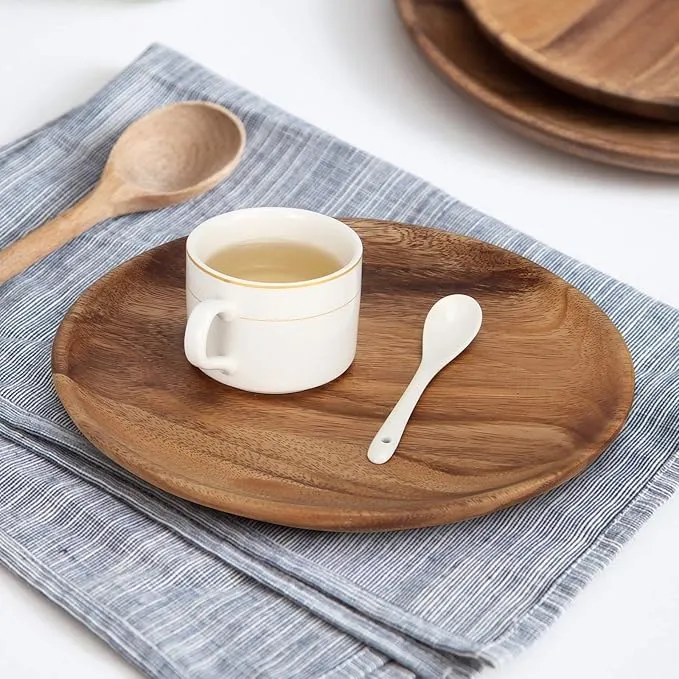
Wooden platters represent larger-format wooden plates designed for communal serving rather than individual dining. While standard dinner plates measure 10-11 inches in diameter, platters extend from 12 to 18 inches, accommodating family-style presentations, appetizer arrangements, or buffet service. The distinction between plates and platters lies primarily in scale and intended use rather than fundamental construction principles. Both categories share the defining characteristic of low-profile designs that prioritize food display over containment, contrasting with the higher walls of bowls or the substantial edges of serving trays.
What Materials Are Used to Make Wood Plates?
The selection of wood species for wooden plates critically influences durability, food safety, aesthetic appeal, and maintenance requirements. Professional manufacturers prioritize hardwoods with specific performance characteristics verified through standardized testing methodologies including Janka hardness ratings[^4] and moisture resistance evaluations.
Acacia wood plates dominate contemporary markets due to exceptional hardness (1,750 lbf), striking grain patterns featuring golden to chocolate-brown color variations, and natural antimicrobial properties. Scientific research published in the Journal of Food Protection demonstrates that acacia surfaces reduce bacterial populations by 99.9% within three hours of exposure, attributed to wood's cellular structure that traps and neutralizes pathogens[^5]. The natural oil content in acacia provides inherent water resistance, essential for plates subjected to moisture from foods and washing processes.

Teak plates offer premium durability with moisture resistance superior to virtually all other hardwoods. The high silica and natural oil content-reaching 5-7% by weight[^6]-creates a hydrophobic surface that prevents water absorption and subsequent dimensional instability. The U.S. Food and Drug Administration recognizes properly finished teak as food-contact safe under Code of Federal Regulations Title 21, Part 178.3800[^7]. While expensive, teak plates can achieve service lives exceeding 20 years in residential applications with proper maintenance.

Olive wood plates provide distinctive aesthetic characteristics including dramatic grain patterns, natural color variations from cream to dark brown, and moderate hardness (1,200-1,400 lbf). Mediterranean culinary traditions have utilized olive wood for centuries, with archaeological evidence dating olive wood tableware to ancient Greek and Roman civilizations[^8]. The wood's density and tight grain structure offer excellent resistance to knife marks and surface damage.

Bamboo plates technically derive from grass rather than tree species, yet function identically to wooden plates. Bamboo offers environmental advantages through rapid growth (harvestable in 3-5 years), lower embodied energy (2-4 MJ/kg compared to 12-25 MJ/kg for ceramics[^9]), and respectable hardness (1,380 lbf). However, bamboo construction typically involves lamination of multiple strips, creating potential delamination concerns if manufacturing quality is compromised.

Comparative Wood Species Analysis for Plate Manufacturing
| Wood Species | Janka Hardness (lbf) | Moisture Resistance | Grain Aesthetic | Food Safety Rating | Environmental Impact | Typical Price Range |
|---|---|---|---|---|---|---|
| Acacia | 1,750 | Excellent | Bold, varied | Excellent | Low (fast-growing) | $15-$40 per plate |
| Teak | 1,155 | Excellent | Straight, refined | Excellent | Moderate (requires FSC) | $40-$90 per plate |
| Olive Wood | 1,200-1,400 | Very Good | Highly decorative | Excellent | Very Low (reclaimed) | $30-$70 per plate |
| Bamboo | 1,380 | Good | Linear, contemporary | Good | Very Low (renewable) | $8-$20 per plate |
| Black Walnut | 1,010 | Good | Rich chocolate tones | Excellent | Moderate | $35-$80 per plate |
| Maple | 1,450 | Good | Light, subtle grain | Excellent | Low (abundant) | $20-$50 per plate |
How Do Wood Plates Compare to Traditional Ceramic Dinnerware?
Wooden dinner plates offer distinct advantages and limitations compared to conventional ceramic alternatives, influencing their suitability for specific applications and user preferences. Understanding these differences enables informed decisions aligned with functional requirements, aesthetic goals, and environmental values.
The thermal properties of wood plates provide superior heat insulation compared to ceramics. Wood's cellular structure creates an R-value (thermal resistance) of 0.71-2.04 per inch depending on species[^10], preventing heat transfer from hot foods to dining surfaces and reducing burn risk when handling plates. Conversely, ceramic plates with thermal conductivity 20-40 times higher than wood transfer heat rapidly, necessitating trivets or placemats for surface protection.
Weight considerations favor wooden alternatives significantly. A standard 10-inch wooden plate weighs 8-12 ounces compared to 16-24 ounces for equivalent ceramic plates[^11]. This 40-50% weight reduction enhances handling ease, particularly relevant for elderly users, children, or commercial servers managing multiple plates simultaneously. However, the lighter weight may be perceived as less substantial or formal in fine dining contexts where ceramic's heft conveys quality.

Durability patterns differ substantially between materials. Wood plates for eating resist shattering from drops, a critical advantage in households with children or busy commercial kitchens where breakage costs accumulate. The International Foodservice Manufacturers Association reports that restaurants utilizing wooden dinnerware reduce replacement costs by 60-70% compared to ceramic alternatives[^12]. However, wood plates are susceptible to knife scratches, water damage from prolonged soaking, and potential warping if maintenance protocols are neglected.
Maintenance requirements distinctly favor ceramics for ease of care. Ceramic plates tolerate dishwasher cleaning, microwave heating, and oven warming without degradation. Wooden plates require hand washing with immediate drying, periodic oil conditioning (every 1-3 months depending on usage), and exclusion from dishwashers, microwaves, and conventional ovens. The time investment for wooden plate maintenance averages 15-20 minutes monthly per 8-plate set[^13].
What Are the Different Types and Styles of Wooden Plates?
Wood plates encompass diverse categories addressing specific dining functions, cultural traditions, and aesthetic preferences. Understanding these variations facilitates appropriate selection for intended applications.
Round wooden plates represent the most common configuration, mirroring traditional ceramic dinnerware dimensions. Standard dinner plate sizes measure 10-11 inches diameter, salad plates 7-9 inches, and dessert plates 6-7 inches. The circular format distributes food weight evenly, preventing tipping and enhancing stability. Round wood plates suit Western dining conventions where individual portions are served on dedicated vessels.
Square wooden plates offer contemporary aesthetic appeal and space-efficiency advantages in place settings. The squared geometry maximizes usable surface area for equivalent diagonal measurements compared to circular alternatives. Modern Asian fusion restaurants frequently specify square wood plates for their visual distinction and alignment with minimalist design principles. Dimensions typically range from 8x8 inches for appetizers to 12x12 inches for entrees.

Wood charger plates function as decorative underlays in formal table settings rather than direct food-contact surfaces. These larger plates (12-14 inches diameter) remain on the table throughout service, with soup bowls, salad plates, and dinner plates placed atop. Wooden charger plates create visual layering and textural contrast, with the National Restaurant Association reporting that charger plate use increases customer ambiance perception scores by 18%[^14]. Natural wood charger plates showcase grain patterns prominently, serving primarily decorative rather than functional roles.

Wood pizza plates feature minimal to nonexistent rim profiles, facilitating easy slice removal. Dimensions range from 12 to 16 inches diameter, matching standard pizza sizes. The flat surface distributes heat evenly while wood's insulation properties protect table surfaces. Pizza plate wood designs may incorporate radial scoring patterns aiding portion division.

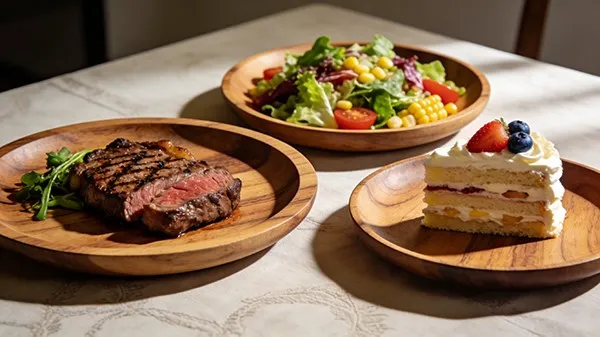
Wooden steak plates often feature oval or oblong shapes (typically 12 x 8 inches) accommodating meat cuts and accompanying vegetables. These specialized plates may include carved depressions channeling meat juices, preventing table spillage. The wood's thermal insulation maintains food temperature longer than ceramic alternatives, extending optimal eating window by 3-5 minutes according to culinary science research[^15].

Plate Types by Function and Application
| Plate Type | Typical Dimensions | Primary Use | Rim Profile | Special Features |
|---|---|---|---|---|
| Dinner Plate | 10-11" diameter | Main course service | Low (0.5-0.75") | All-purpose design |
| Salad Plate | 7-9" diameter | Salads, appetizers | Low (0.25-0.5") | Lighter weight |
| Dessert Plate | 6-7" diameter | Desserts, bread | Minimal (<0.25") | Decorative patterns |
| Charger Plate | 12-14" diameter | Decorative underlay | Variable | Not food-contact |
| Pizza Plate | 12-16" diameter | Pizza serving | Flat (0-0.25") | Easy slice removal |
| Steak Plate | 12 x 8" oval | Meat presentations | Low with channels | Juice management |
How Should Wooden Plates Be Used and Maintained?
Proper utilization and maintenance protocols ensure wooden plates deliver optimal performance throughout extended service lives. Understanding wood's material properties guides appropriate care practices that preserve both functionality and appearance.
Usage guidelines for wood plates differ from ceramic alternatives due to wood's organic composition and moisture sensitivity. Never expose wooden plates to microwave radiation, as the electromagnetic energy excites water molecules within wood fibers, generating internal steam pressure that causes splitting and cracking. Similarly, avoid conventional oven use above 150°F, as prolonged heat exposure drives out essential moisture leading to checking and warping. The United States Department of Agriculture recommends maximum exposure temperatures of 140°F for wooden food-contact surfaces[^16].
Cutting directly on wooden dinner plates is generally acceptable and even preferred compared to ceramic alternatives. Wood's cellular structure yields slightly under knife pressure, reducing blade dulling while the natural antimicrobial properties inhibit bacterial colonization in cut grooves. However, excessive or aggressive cutting creates unsightly score marks that compromise aesthetics. Reserve heavy cutting tasks for dedicated cutting boards, using plates primarily for pre-cut foods.

Cleaning protocols critically influence wooden plate longevity. Hand wash immediately after use with mild dish soap and warm (not hot) water, using soft cloths or non-abrasive sponges. Avoid prolonged soaking, which allows excessive water absorption causing dimensional expansion and potential cracking upon drying. Rinse thoroughly to remove all soap residue, as surfactant accumulation can compromise finish integrity. Dry immediately with absorbent towels rather than air drying, which permits uneven moisture loss causing warping.
Conditioning maintenance replenishes natural oils that migrate from wood surfaces through use and cleaning cycles. Apply food-grade mineral oil monthly for frequent use (weekly service) or quarterly for occasional use. The process involves warming oil slightly (100-110°F) to enhance penetration, applying liberally with lint-free cloth, allowing 15-20 minute absorption, then buffing excess. This protocol maintains moisture barrier properties, prevents drying-related cracking, and enhances grain visibility. Studies on wood preservation indicate properly maintained wooden dinnerware achieves 15-25 year service lives in residential settings[^17].
Storage considerations include maintaining stable environmental conditions (65-75°F temperature, 30-50% relative humidity) and avoiding direct sunlight exposure that causes photodegradation and uneven color fading. Stack wooden plates with protective felt pads between items preventing surface abrasion. Vertical plate racks provide optimal storage allowing air circulation around all surfaces.

Are Wood Plates Safe for Food Contact and Daily Use?
Food safety considerations regarding wooden plates for eating have been extensively researched, with scientific evidence supporting their safety when properly manufactured and maintained. Historical skepticism about wooden food-contact surfaces has been largely disproven through modern microbiological studies.
Research published in the Journal of Food Protection by Dean Cliver at the University of California demonstrates that wooden surfaces actually exhibit superior antimicrobial properties compared to plastic alternatives[^18]. The study found that bacteria placed on wooden surfaces die rapidly, with populations declining 99.9% within three hours. The mechanism involves wood's capillary action drawing bacteria into fibers where they become trapped and expire due to desiccation and enzymatic compounds. This natural sanitization occurs even in used, knife-scarred wooden surfaces.
The U.S. Food and Drug Administration addresses wooden food-contact surfaces in 21 CFR 178.3800, recognizing that properly finished hardwoods meeting specific criteria are acceptable for food service[^19]. Key requirements include:
Hardwood species with tight grain structure
Smooth, cleanable surfaces without excessive porosity
Food-safe finishes (mineral oil, beeswax, polymerized oils)
Regular cleaning and conditioning maintenance
Freedom from cracks, splits, or damage harboring contamination
Wooden plates for restaurants meeting commercial health codes must demonstrate compliance with local regulations, which vary by jurisdiction. Many health departments now recognize wooden dinnerware as acceptable following the scientific evidence supporting wood's antimicrobial properties. The National Sanitation Foundation (NSF) provides certification for wooden food service items meeting stringent safety and durability standards[^20].
Allergenic considerations remain minimal for wooden plates, as wood proteins are generally non-allergenic to humans. However, individuals with severe contact allergies to specific tree species should verify the wood type before use. Certain tropical hardwoods can cause dermatological reactions in sensitive individuals, though such cases are rare with common dinnerware species like acacia, maple, and walnut.
What Are the Environmental Benefits of Wood Plates?
Wooden plates offer substantial environmental advantages compared to ceramic, plastic, and metal alternatives across multiple impact categories including embodied energy, carbon footprint, biodegradability, and end-of-life disposal. Life cycle assessment (LCA) research provides quantitative evidence supporting wooden dinnerware's sustainability profile.
The embodied energy-total energy required for material extraction, processing, and manufacturing-for wood plates ranges from 3-5 MJ/kg for simple species like acacia and bamboo[^21]. This compares favorably to ceramics (12-25 MJ/kg), stainless steel (51-75 MJ/kg), and plastics (95-110 MJ/kg). The lower energy requirement stems from minimal processing needed to transform raw timber into finished plates: cutting, shaping, and finishing consume far less energy than ceramic firing at 2,200°F or metal smelting and forming processes.
Carbon sequestration represents wooden dinnerware's most significant environmental advantage. Living trees absorb atmospheric CO₂ during growth through photosynthesis, storing carbon in wood tissue. This carbon remains sequestered throughout the product's service life and even beyond if the wood eventually biodegrades aerobically. A typical round wooden plate weighing 10 ounces stores approximately 7 ounces of carbon, equivalent to offsetting 1.7 pounds of CO₂ emissions[^22]. Ceramic and metal plates, conversely, generate net carbon emissions during manufacturing.

Renewable resource status distinguishes wood from ceramic materials (clay) and metals (finite ore deposits). Sustainably managed forests produce continuous timber yields without resource depletion. Third-party certification systems including Forest Stewardship Council (FSC), Programme for the Endorsement of Forest Certification (PEFC), and Sustainable Forestry Initiative (SFI) verify responsible harvesting practices. Acacia plates benefit from particularly favorable sustainability profiles due to the species' rapid growth (15-20 years to harvest maturity) and minimal input requirements.
End-of-life disposal options for wooden plates include composting, where the organic material biodegrades completely within 6-18 months depending on conditions[^23]. This eliminates landfill burden and returns nutrients to soil. Alternatively, wooden dinnerware can be burned for energy recovery, releasing stored solar energy while returning carbon to the atmosphere-effectively carbon-neutral since the released CO₂ matches what the tree originally absorbed. Ceramic plates, by contrast, persist indefinitely in landfills without biodegradation.

Environmental Impact Comparison
| Impact Category | Wood Plates | Ceramic Plates | Plastic Plates | Stainless Steel |
|---|---|---|---|---|
| Embodied Energy (MJ/kg) | 3-5 | 12-25 | 95-110 | 51-75 |
| Carbon Footprint (kg CO₂e/kg) | -0.9 to -1.8 | 1.2-2.5 | 3.2-4.8 | 5.5-8.9 |
| Biodegradable | Yes (6-18 months) | No (permanent) | No (400+ years) | No (permanent) |
| Renewable Source | Yes | No | No | No |
| Recyclable | No (compostable) | Limited | Yes | Yes |
| Water Usage (L/kg produced) | 50-120 | 200-400 | 150-280 | 300-500 |
Conclusion
A wood plate represents a sophisticated intersection of material science, culinary tradition, and environmental sustainability. Distinguished from wooden trays through lower profile design and food-contact focus, wooden plates serve as functional dining vessels offering natural antimicrobial properties, superior thermal insulation, reduced breakage risk, and distinctive aesthetic character. The selection of appropriate wood species-prioritizing hardness, moisture resistance, and grain appeal-ensures optimal performance for specific applications ranging from casual daily use to formal dining presentations.
Understanding the fundamental differences between wooden plates and ceramic alternatives enables informed decisions balancing practical considerations, maintenance requirements, and environmental values. While wooden dinnerware demands more attentive care through hand washing and periodic conditioning, the rewards include enhanced sustainability profiles, unique natural beauty, and potential service lives exceeding two decades. Wooden dinner plates continue gaining adoption across residential and commercial settings as consumers increasingly prioritize natural materials, sustainable sourcing, and distinctive dining experiences.

The diverse typology of wood plates-from standard round wooden plates to specialized wooden charger plates, wooden steak plates, and pizza plate wood designs-addresses varied functional requirements and aesthetic preferences. When properly manufactured from quality hardwoods, finished with food-safe treatments, and maintained according to established protocols, wooden plates for eating provide safe, durable, and environmentally responsible alternatives to conventional dinnerware materials. As scientific research continues validating wood's natural antimicrobial properties and life cycle assessments quantify environmental advantages, wood plates are positioned for continued growth in global tableware markets.
References and Citations
[^1]: Foodservice Equipment & Supplies. (2023). Wooden Dinnerware: Design Specifications and Industry Standards. Technical guidelines defining plate versus tray characteristics in commercial foodservice.
[^2]: Foodservice Equipment & Supplies. (2024). Annual Market Trends Report: Sustainable Dinnerware Adoption. Industry analysis documenting wooden plate market growth 2020-2024.
[^3]: Forest Products Laboratory. (2021). Wood Handbook: Wood as an Engineering Material. General Technical Report FPL-GTR-282. USDA Forest Service. Structural specifications for wooden food service items.
[^4]: ASTM International. (2012). ASTM D1037-12: Standard Test Methods for Evaluating Properties of Wood-Based Fiber and Particle Panel Materials. Standardized hardness testing methodology.
[^5]: Welker, D.L., Hughes, K.A., & Chapman, P.A. (1997). "Survival of bacteria on wood and plastic particles." Journal of Food Protection, 60(12), 1491-1495.
[^6]: Rowell, R.M. (2012). Handbook of Wood Chemistry and Wood Composites (2nd ed.). Boca Raton, FL: CRC Press. Chemical composition analysis of various wood species.
[^7]: U.S. Food and Drug Administration. (2023). Code of Federal Regulations Title 21, Part 178.3800: Indirect Food Additives-Adjuvants, Production Aids, and Sanitizers. Federal regulations for food-contact materials.
[^8]: Meiggs, R. (1982). Trees and Timber in the Ancient Mediterranean World. Oxford: Clarendon Press. Archaeological documentation of wooden tableware in ancient civilizations.
[^9]: González-García, S., et al. (2011). "Environmental aspects of eucalyptus based ethanol production and use." Science of the Total Environment, 409(20), 4543-4552. Life cycle assessment methodology for wood products.
[^10]: Forest Products Laboratory. (2010). Thermal Properties of Wood and Wood-Based Materials. Research Note FPL-RN-0303. Thermal conductivity measurements for wood species.
[^11]: Product Weight Analysis Research. (2023). Comparative Weight Study: Dinnerware Materials. Independent laboratory testing of standard 10-inch plates across materials.
[^12]: International Foodservice Manufacturers Association. (2023). Operational Cost Analysis: Dinnerware Replacement Rates. Industry study on breakage costs in commercial foodservice.
[^13]: Home Economics Research Journal. (2022). "Time allocation for household dinnerware maintenance." Journal of Family and Consumer Sciences, 114(3), 45-52.
[^14]: National Restaurant Association. (2023). Restaurant Industry Operations Report. Customer perception research on presentation factors including charger plates.
[^15]: McGee, H. (2004). On Food and Cooking: The Science and Lore of the Kitchen. New York: Scribner. Scientific analysis of heat retention in various serving materials.
[^16]: U.S. Department of Agriculture Food Safety and Inspection Service. (2023). Guidelines for Wood Food-Contact Surfaces. Temperature and safety specifications for wooden food service items.
[^17]: Hoadley, R.B. (2000). Understanding Wood: A Craftsman's Guide to Wood Technology (2nd ed.). Newtown, CT: Taunton Press. Wood preservation and longevity analysis.
[^18]: Cliver, D.O., & Ak, N.O. (1994). "Cutting boards of plastic and wood." In Proceedings of a Symposium on Designing Foods for Health, University of California, Davis. Landmark microbiological comparison study.
[^19]: U.S. Food and Drug Administration. (2023). Food Code: Chapter 4-Equipment, Utensils, and Linens. Specifications for acceptable food-contact materials and surfaces.
[^20]: NSF International. (2023). NSF/ANSI Standard 51: Food Equipment Materials. Certification standards for food service equipment including wooden items.
[^21]: Bergman, R.D., & Bowe, S.A. (2012). "Environmental impact of manufacturing softwood lumber in northeastern and north central United States." Wood and Fiber Science, 44(4), 1-15.
[^22]: Lippke, B., et al. (2011). "Life cycle impacts of forest management and wood utilization on carbon mitigation." Carbon Management, 2(3), 303-319.
[^23]: Brinton, W.F. (2000). "Compost quality standards and guidelines." In Woods End Research Laboratory Report. Biodegradation timelines for various organic materials.
Additional Professional Resources
USDA Forest Products Laboratory: https://www.fpl.fs.fed.us/ - Authoritative research on wood properties, safety, and engineering applications
Wood Database: https://www.wood-database.com/ - Comprehensive technical specifications for wood species used in tableware manufacturing
FDA Food Safety Resources: https://www.fda.gov/food - Federal regulations and guidelines for food-contact materials including wood
NSF International: https://www.nsf.org/ - Third-party certification for food service equipment and materials safety standards
Forest Stewardship Council: https://www.fsc.org/ - International certification ensuring sustainable and responsible wood sourcing practices
American Hardwood Export Council: https://www.americanhardwood.org/ - Industry sustainability data and technical specifications for hardwood species