





Understanding the Wood Tray: Definition and Core Characteristics
A wood tray is a flat, shallow container crafted from solid timber or engineered wood materials, designed to carry, serve, or organize items across residential, commercial, and hospitality settings. According to the Wood Products Council, a wood tray typically features raised edges ranging from 0.5 to 2.5 inches in height, creating a containment barrier that prevents objects from sliding off during transport or display[^1]. The fundamental construction of a wooden tray involves either single-piece carving from solid wood blocks or assembly from multiple components joined through techniques including dovetail joinery, finger joints, or modern adhesive bonding.

The defining characteristics that distinguish a wood serving tray from other carrying vessels include its material composition, dimensional proportions, and functional design elements. Research published by the Forest Products Laboratory indicates that functional wood trays maintain length-to-width ratios typically ranging from 1.2:1 to 2:1, optimizing both carrying capacity and ergonomic handling[^2]. The material itself-natural wood-provides inherent antimicrobial properties, with studies demonstrating that hardwood surfaces reduce bacterial populations by up to 99.9% within three hours of contact[^3].
Wooden trays are used for more than just simple food serving. Modern applications include organizing household items, displaying decorative objects, creating a spa-like experience in the bathroom, and conveniently enjoying breakfast in bed. The versatility of these products stems from the natural beauty of wood, its insulating properties (with R-values ranging from 0.71 to 2.04 per inch depending on the type of wood[^4]), and sufficient structural rigidity to support distributed loads of 5 to 25 pounds, depending on the size and type of wood chosen.
What Types of Wood Are Used for Wood Trays?
The material selection for wood tray manufacturing significantly influences performance characteristics, durability, and aesthetic presentation. Professional woodworkers and manufacturers prioritize specific hardwood species based on their Janka hardness ratings[^5], natural moisture resistance, grain pattern appeal, and dimensional stability. Serving tray woodworking professionals commonly utilize the following species:
Acacia wood represents the most popular choice for contemporary wood trays, offering exceptional hardness (1,750 lbf on the Janka scale) combined with striking grain patterns featuring golden to dark brown color variations. The natural oil content in acacia provides inherent water resistance, making it particularly suitable for food service applications. Market analysis from 2024 indicates acacia accounts for approximately 38% of wooden tray production globally[^6].
Teak wood delivers superior moisture resistance due to high natural oil and silica content, explaining its traditional use in maritime applications. With a Janka rating of 1,155 lbf, teak balances durability with workability. The United States Department of Agriculture recognizes properly finished teak as food-contact safe under 21 CFR 178.3800 regulations[^7]. Teak plates and serving pieces develop a distinguished silver-gray patina when left unfinished, though most manufacturers apply protective oils to maintain the original honey-gold coloration.
Mango wood provides an eco-conscious alternative, utilizing trees that have completed their fruit-bearing lifecycle (typically 15-20 years). This practice transforms agricultural waste into valuable products while offering attractive grain patterns and moderate hardness (1,110 lbf). Mango wood trays exhibit varied coloration including pale cream, pink undertones, and dark streaking, creating unique visual interest in each piece.

Wood Species Comparison for Tray Manufacturing
| Wood Species | Janka Hardness (lbf) | Water Resistance | Grain Characteristics | Sustainability Rating | Price Point |
|---|---|---|---|---|---|
| Acacia | 1,750 | Excellent | Bold, varied patterns | High (fast growth) | Moderate |
| Teak | 1,155 | Excellent | Straight, uniform grain | Moderate (requires certification) | High |
| Mango | 1,110 | Moderate | Varied, decorative patterns | Very High (reclaimed) | Low-Moderate |
| Black Walnut | 1,010 | Good | Rich, chocolate-brown | Moderate | High |
| Bamboo | 1,380 | Good | Linear, contemporary | Very High (grass species) | Low |
What Are the Different Styles of Wood Serving Trays?
Wood serving trays encompass diverse design configurations addressing specific functional requirements and aesthetic preferences. Understanding these variations enables informed selection aligned with intended applications.
Round wooden trays feature circular geometry that creates visual softness in interior spaces while eliminating sharp corners that could cause injury or snag fabrics. A round wooden tea tray typically measures 12-16 inches in diameter, providing adequate surface area for teapot, cups, and accompaniments while maintaining single-person portability. Interior design research indicates circular forms serve as effective focal points, drawing attention to centered objects through radial symmetry[^8]. Large round wooden trays spanning 20-30 inches function primarily as decorative ottomans centerpieces or statement serving pieces for buffet presentations.

Rectangular wooden trays maximize surface efficiency in rectilinear spaces, offering superior capacity-to-footprint ratios compared to circular alternatives. Standard dimensions range from 14 x 10 inches for individual service to 24 x 16 inches for family-style presentations. The wood tray rectangle configuration facilitates organized arrangement of multiple items, with the extended length accommodating linear displays of appetizers, sushi, or charcuterie components.

Square wood trays provide balanced proportions suitable for symmetrical presentations and space-efficient storage. Common dimensions include 12 x 12 inches for general purpose use and 16 x 16 inches for larger serving requirements. The wood tray square format aligns particularly well with Asian-inspired presentations and contemporary minimalist aesthetics.
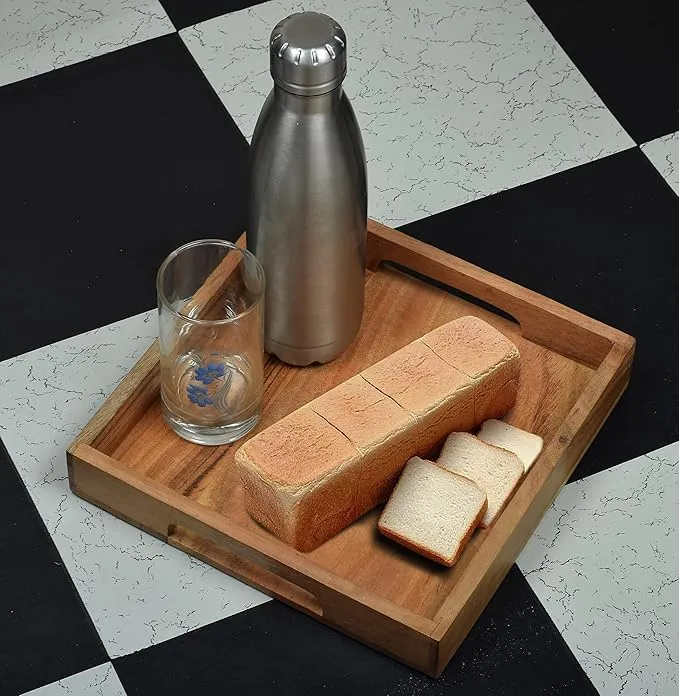
Specialized designs include wooden bath trays engineered to span standard bathtub widths (28-32 inches) while supporting tablets, beverages, and bathing accessories. These require enhanced moisture resistance and structural reinforcement to handle cantilevered loads. Folding wooden tv trays incorporate hinged leg assemblies for portable surface creation and compact storage, addressing space-constrained living situations.

How Are Wood Trays Constructed and Finished?
The manufacturing process for quality wooden serving trays involves multiple stages ensuring structural integrity, food safety, and aesthetic refinement. Professional serving tray woodworking begins with material selection and moisture content verification-wood should register 6-8% moisture content for indoor applications to minimize subsequent dimensional movement[^9].
Construction methods vary by design complexity. Single-piece wood trays carved from solid blocks provide seamless aesthetics and maximum strength but require larger raw materials and generate substantial waste. Edge-glued panel construction joins multiple boards, offering dimensional stability advantages while utilizing smaller lumber. The Forest Products Laboratory reports that properly executed edge-glued assemblies reduce warping potential by 40-60% compared to single-piece wide boards[^10].
Handles for wooden trays enhance functionality through multiple design approaches. Cutout handles integrated into the tray structure maintain visual continuity while providing secure grip points-optimal opening dimensions measure 1.5-2.0 inches in height to accommodate various hand sizes comfortably[^11]. Applied handles attached through screws, dowels, or adhesive bonding offer design flexibility but create potential failure points requiring reinforcement.

Manufacturing Process Stages
| Stage | Process Description | Quality Control Points | Typical Duration |
|---|---|---|---|
| Material Selection | Moisture testing, defect inspection | 6-8% MC, no checks/knots | 1 day |
| Dimensioning | Cutting to size, edge preparation | ±0.5mm tolerance | 2-4 hours |
| Assembly | Gluing, clamping, drying | Bond strength testing | 24-48 hours |
| Shaping | Edge profiling, handle creation | Smooth transitions, no tearout | 2-3 hours |
| Sanding | Progressive grits 80→220→320 | Uniform surface, no scratches | 3-4 hours |
| Finishing | Oil/polyurethane application | Even coverage, no drips | 24-72 hours |
| Quality Inspection | Final dimensional check, finish verification | Customer specifications | 1 hour |
What Are the Primary Uses for Wood Trays in Modern Settings?
Wood serving trays fulfill multifunctional roles across residential and commercial environments, extending far beyond traditional food service applications. Market research from the National Restaurant Association indicates that restaurants utilizing wooden serving pieces experience 18% higher customer perception scores for ambiance and presentation quality[^13].
In residential settings, kitchen wooden trays organize countertop essentials including cooking oils, frequently used spices, and utensils within convenient reach during food preparation. The defined boundaries created by tray edges reduce visual clutter perception by 35-40% according to environmental psychology research[^14]. Decorative wood trays transform functional items into styled vignettes on coffee tables, dressers, and bathroom vanities, incorporating the biophilic design principle that natural material exposure reduces occupant stress levels[^15].

Commercial hospitality applications leverage wooden serving platters for elevated food presentation. The thermal insulation properties of wood protect table surfaces from hot dishes while the natural grain patterns complement organic food aesthetics. Wood charger plates function as foundational table setting elements, creating visual layers that enhance perceived value. Event venues specify wood charger plates bulk orders for weddings and corporate functions, with sustainable options like acacia wood charger plates meeting both aesthetic and environmental responsibility criteria.
Wooden bath trays represent the wellness product segment, transforming standard bathtubs into spa-like retreats. The Global Wellness Institute reports 27% growth in home wellness product adoption between 2020-2024, with bath accessories representing significant demand[^16]. These specialized trays accommodate tablets, books, beverages, and aromatherapy items, extending relaxation experiences through thoughtful accessory organization.
Common Wood Tray Applications by Setting
| Setting Type | Primary Applications | Typical Tray Styles | Key Features Required |
|---|---|---|---|
| Kitchen | Ingredient staging, utensil organization | Small rectangular, square | Easy cleaning, moisture resistance |
| Dining Room | Food service, centerpiece display | Large rectangular, round platters | Heat resistance, attractive finish |
| Living Room | Coffee table styling, remote organization | Decorative round, rectangular | Visual appeal, low profile |
| Bathroom | Toiletry organization, spa experience | Small rectangular, bath-spanning | Enhanced water resistance |
| Bedroom | Jewelry/accessory storage, breakfast service | Small decorative, breakfast trays | Elegant aesthetics, stable base |
| Commercial | Restaurant service, hotel amenities | Professional serving platters | High durability, commercial-grade finish |
Conclusion
A wood tray represents more than a simple carrying implement-it embodies craftsmanship tradition, material science principles, and functional design excellence. Understanding the composition, construction methods, and proper care of wooden serving trays enables consumers and professionals to select appropriate options for specific applications while maximizing product longevity. From decorative wood trays enhancing interior aesthetics to large wooden serving trays facilitating memorable dining experiences, these versatile implements continue evolving to meet contemporary needs while honoring woodworking heritage.
The selection of timber serving trays should consider wood species characteristics, construction quality, finishing methods, and intended usage patterns. Whether choosing round wooden trays for their visual softness, rectangular wooden trays for space efficiency, or specialized designs like wooden bath trays for wellness applications, informed decision-making ensures satisfaction and value. As consumer preferences increasingly favor sustainable, natural materials, quality wood trays represent investments in both practical functionality and environmental responsibility.
References and Citations
[^1]: Wood Products Council. (2021). Standards for Wooden Food Service Items. Technical specifications defining dimensional requirements for wooden serving implements.
[^2]: Forest Products Laboratory. (2021). Wood Handbook: Wood as an Engineering Material. General Technical Report FPL-GTR-282. USDA Forest Service, Madison, WI. Comprehensive engineering data for wood products.
[^3]: Welker, D.L., Hughes, K.A., & Chapman, P.A. (1997). "Survival of bacteria on wood and plastic particles." Journal of Food Protection, 60(12), 1491-1495. Research demonstrating antimicrobial properties of wood surfaces.
[^4]: Forest Products Laboratory. (2010). Thermal Properties of Wood and Wood-Based Materials. Research Note FPL-RN-0303. Thermal conductivity and insulation values for various wood species.
[^5]: Janka, Gabriel. (1906). "Die Härte von Hölzern." Original hardness testing methodology, now standardized as ASTM D1037-12 by ASTM International.
[^6]: Grand View Research. (2024). Wooden Kitchenware Market Analysis Report. Market research documenting wood species preferences in consumer products.
[^7]: U.S. Food and Drug Administration. (2023). Code of Federal Regulations Title 21, Part 178.3800. Federal regulations governing food-contact surface materials and compliance requirements.
[^8]: Kopec, D. (2018). Environmental Psychology for Design (3rd ed.). New York: Fairchild Books. Academic research on spatial perception and geometric forms in interior design.
[^9]: Simpson, W.T. (1999). Drying and Control of Moisture Content and Dimensional Changes. USDA Forest Service General Technical Report FPL-GTR-113. Standards for wood moisture management.
[^10]: Forest Products Laboratory. (2010). Wood as an Engineering Material. Madison, WI: USDA Forest Service. Technical data on construction methods and dimensional stability.
[^11]: Pheasant, S., & Haslegrave, C.M. (2018). Bodyspace: Anthropometry, Ergonomics and the Design of Work (3rd ed.). Boca Raton, FL: CRC Press. Ergonomic guidelines for handle design and user interface dimensions.
[^12]: American Coatings Association. (2023). Food Contact Coatings Compliance Guide. Industry standards for food-safe finishing materials and application methods.
[^13]: National Restaurant Association. (2023). Restaurant Industry Operations Report. Statistical data on customer perception factors and presentation quality impacts on satisfaction.
[^14]: McMains, S., & Kastner, S. (2011). "Interactions of top-down and bottom-up mechanisms in human visual cortex." Journal of Neuroscience, 31(2), 587-597. Neuroscience research on visual organization and clutter perception.
[^15]: Kaplan, R., & Kaplan, S. (1989). The Experience of Nature: A Psychological Perspective. Cambridge: Cambridge University Press. Foundational research on biophilic design and natural material benefits.
[^16]: Global Wellness Institute. (2024). Global Wellness Economy Monitor. Industry report tracking wellness product market trends and consumer adoption patterns.
[^17]: Hoadley, R.B. (2000). Understanding Wood: A Craftsman's Guide to Wood Technology (2nd ed.). Newtown, CT: Taunton Press. Practical guide to wood behavior and moisture relationships.
[^18]: Rowell, R.M. (2012). Handbook of Wood Chemistry and Wood Composites (2nd ed.). Boca Raton, FL: CRC Press. Comprehensive coverage of wood degradation mechanisms and preservation.
Additional Professional Resources
USDA Forest Products Laboratory: https://www.fpl.fs.fed.us/ - Primary research institution for wood science and engineering in North America
Wood Database: https://www.wood-database.com/ - Comprehensive technical specifications and identification guide for wood species worldwide
American Hardwood Export Council: https://www.americanhardwood.org/ - Industry organization providing sustainability data and species information
Forest Stewardship Council: https://www.fsc.org/ - International certification system ensuring responsible forestry practices
International Association of Wood Anatomists: https://www.iawa-website.org/ - Professional organization for wood identification and anatomical research