




Bamboo vs. wood kitchen utensils is not quite a straightforward comparison because bamboo is technically a grass, not a tree. That fundamental difference influences how quickly the raw material regenerates, how the finished product performs, and how it is positioned in terms of sustainability and cost.
For kitchen utensils, however, the material itself is only part of the story. Bamboo species, maturity, processing method, adhesive, and finish can all affect the final product's durability and safety.
This guide compares bamboo and wood kitchen utensils across the factors that matter most in real-world use - growth speed, environmental impact, hardness, cost, durability, and food safety - so shoppers can make a more informed choice and retailers can select the right material for their product range.
Bamboo and Wood Aren't the Same Material at All
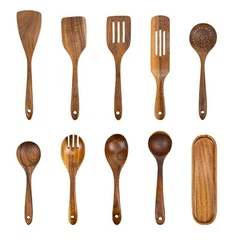
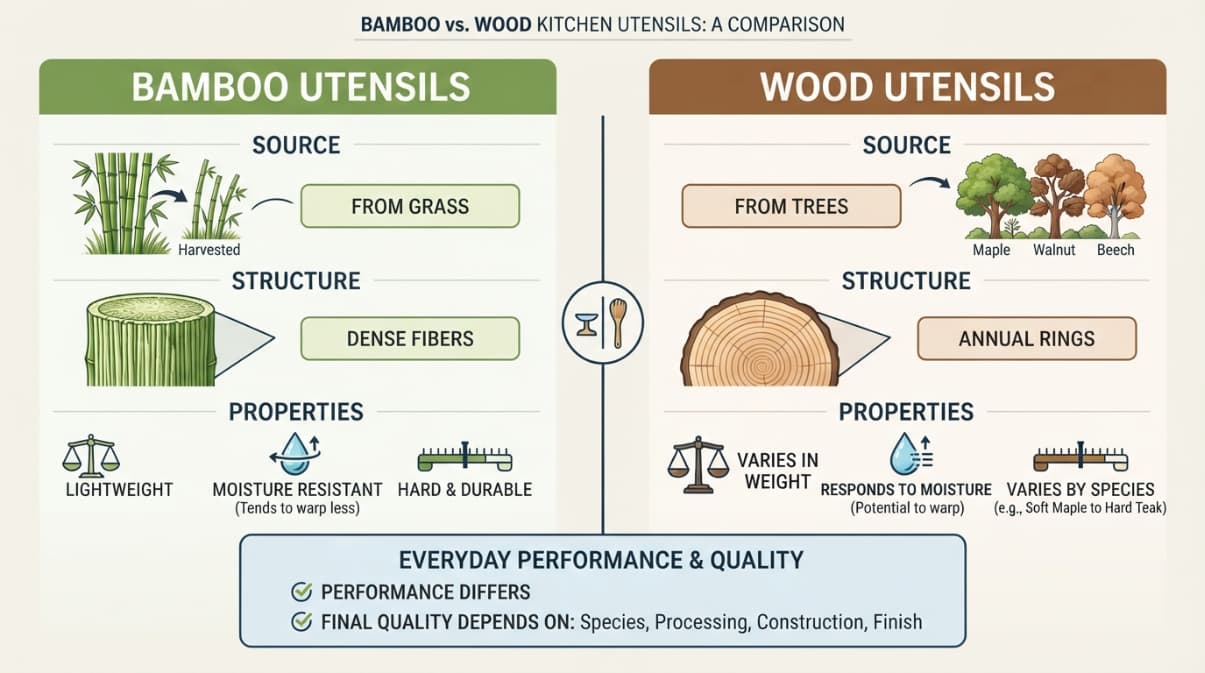
Wooden kitchen utensils are made from tree species such as maple, walnut, beech, and teak, while bamboo utensils are produced from the stalks of a fast-growing grass.
Their internal structures are different. Bamboo consists of long, densely packed fibers, while tree wood develops through annual growth rings as the trunk gradually increases in diameter. These structural differences influence important properties such as hardness, weight, moisture response, and dimensional stability.
As a result, the performance of bamboo kitchen utensils and traditional wood utensils can differ in everyday use. However, the final quality also depends heavily on the bamboo species, processing method, construction, and surface finish used by the manufacturer.
Which Grows Faster: Bamboo or Trees Used for Wood Utensils?
Bamboo Grows Faster Than Most Wood Species
The growth-rate difference is one of bamboo's clearest advantages as a renewable material. Moso bamboo (Phyllostachys edulis) typically reaches suitable harvesting maturity in around five years, while hardwoods commonly used for kitchen utensils take much longer - roughly 40–60 years for maple and 60–100 years for oak.
How Much CO₂ Does Bamboo Absorb Compared With Trees?
Bamboo's rapid growth gives it strong potential for carbon sequestration, but the comparison with trees is more nuanced than many marketing claims suggest.
Some industry research estimates that bamboo can absorb substantially more CO₂ per hectare per year than mature forests under certain growing conditions. However, carbon performance varies with bamboo species, climate, soil conditions, management practices, harvesting methods, and how long the harvested material remains in use.
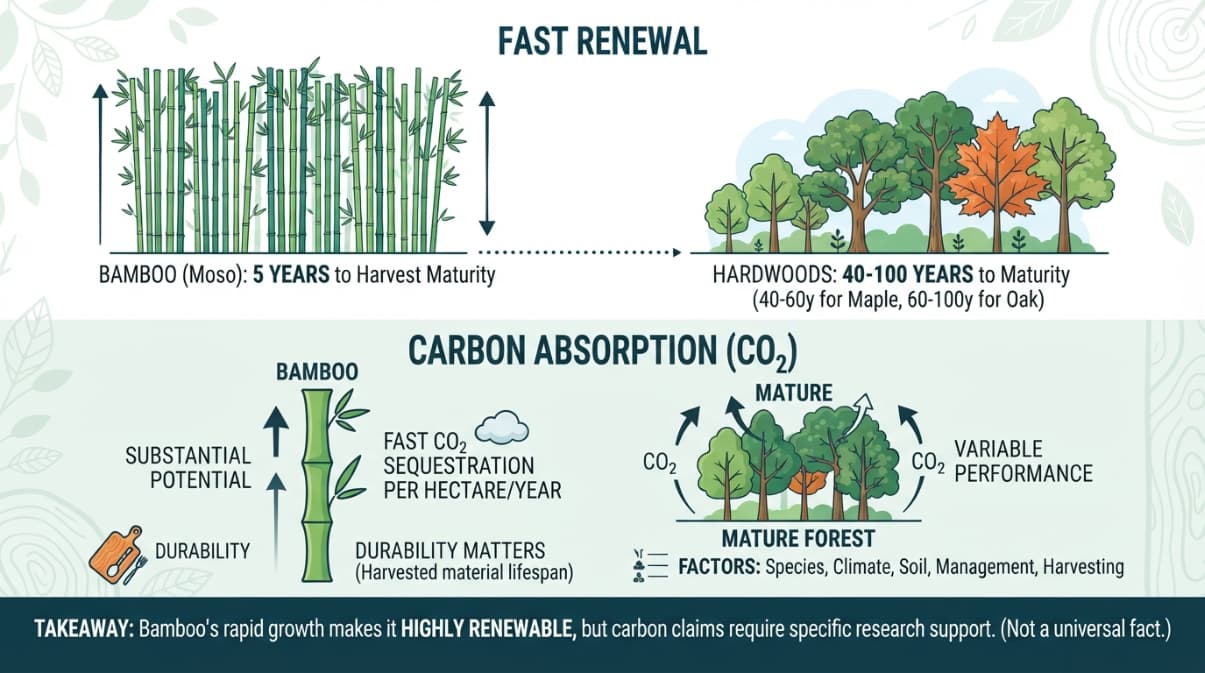
The practical takeaway is simple: bamboo's rapid growth and ability to regenerate after harvesting make it a highly renewable material, but claims that bamboo universally absorbs more carbon than trees should be supported by specific research rather than treated as a universal fact.
| Metric | Bamboo | Hardwood Trees (Oak/Maple) |
|---|---|---|
| Time to harvestable maturity | ~5 years | 40–100 years |
| Regrowth after harvest | Yes, from root system | No, requires replanting |
| Estimated CO2 absorption/hectare/year | ~17 tonnes (bamboo) | ~6.4 tonnes (mature trees) |
| Land reuse cycle | Annual to every few years | Once per multi-decade rotation |
Bamboo vs Wood Kitchen Utensils: Hardness and Wear Resistance
Growth speed means little if a utensil cannot withstand everyday cooking. Bamboo is naturally hard and durable, with Janka hardness values around 1,300–1,400 lbf for some bamboo species, putting it in a similar range to hard maple and above many common wood species.
Does Wood Type Affect Utensil Lifespan?
Yes. The type of wood has a direct impact on durability. Softer woods such as pine and basswood tend to dent, wear, and split more easily, while denser hardwoods such as maple and walnut offer better resistance to everyday wear.
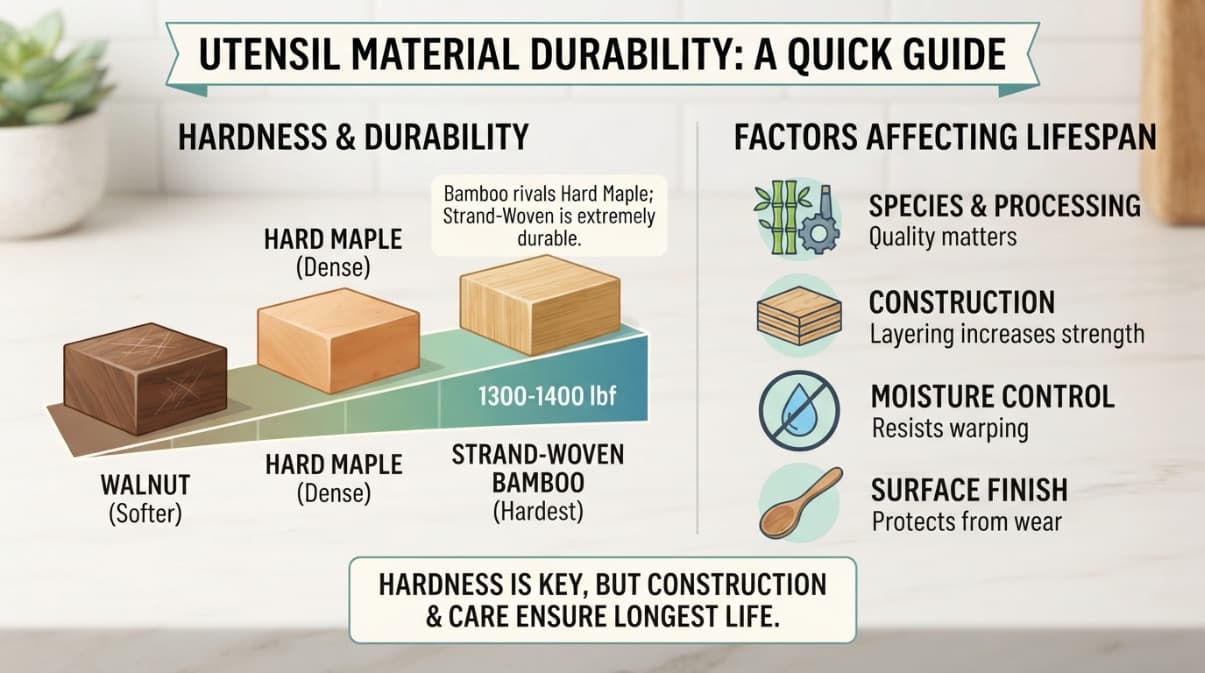
Among bamboo, maple, and walnut, strand-woven bamboo can rank among the hardest options and may exceed hard maple in hardness, while walnut is comparatively softer and more susceptible to surface scratches.
For everyday kitchen use, however, hardness is only one part of the equation. Bamboo species, processing method, construction quality, moisture control, and surface finish all play an important role in determining how long a utensil will actually last.
| Material | Janka Hardness | Typical Wear Pattern |
|---|---|---|
| Strand-Woven Bamboo | 3,000–5,000 lbf | Very slow wear, resists denting |
| Hard Maple | 1,450 lbf | Slow wear, classic cutting-board choice |
| Natural Bamboo | 1,300–1,400 lbf | Slow wear, lightweight |
| Walnut | ~1,010 lbf | Softer, more prone to surface scratches |
Which Costs Less: Bamboo or Wood Kitchen Utensils?
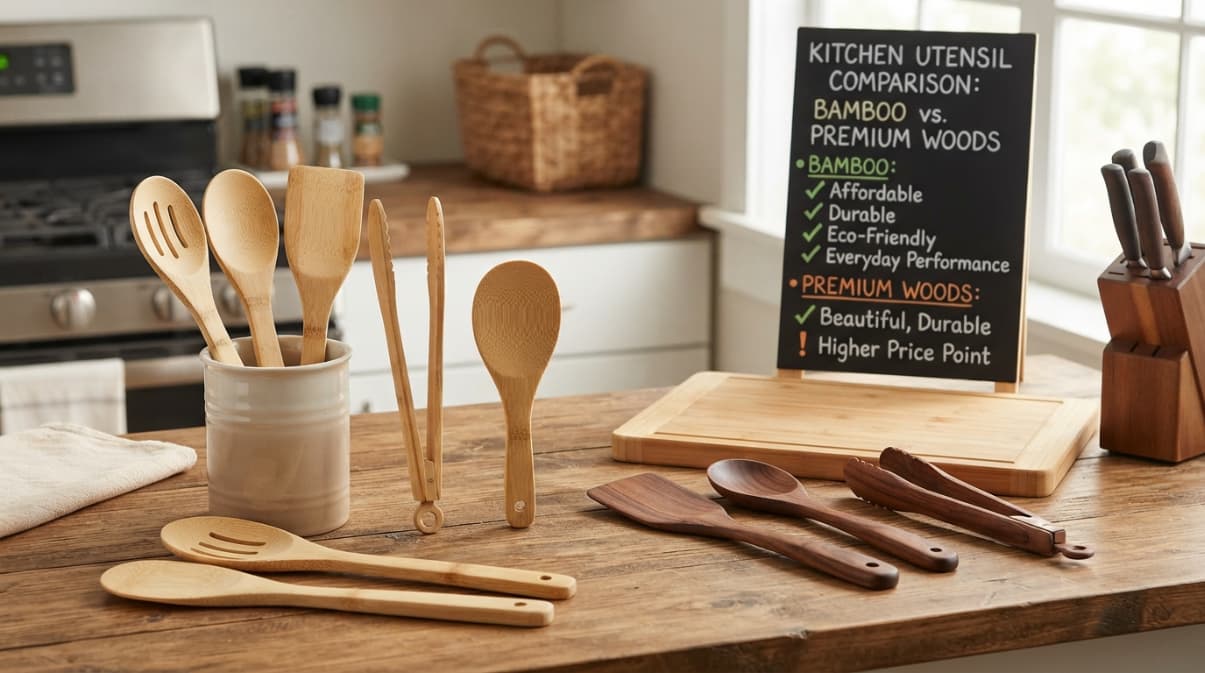
Bamboo's relatively short growth cycle and renewable supply can help keep raw material costs lower than many traditional hardwoods. As a result, bamboo kitchen utensils are often more affordable than comparable utensils made from premium woods such as walnut or teak.
For buyers comparing bamboo vs. wood kitchen utensils on price, bamboo offers an attractive balance of affordability, durability, and everyday performance. For most cooking tasks, choosing bamboo does not require a significant compromise in functionality.
Is Bamboo or Wood Safer for Nonstick Cookware?
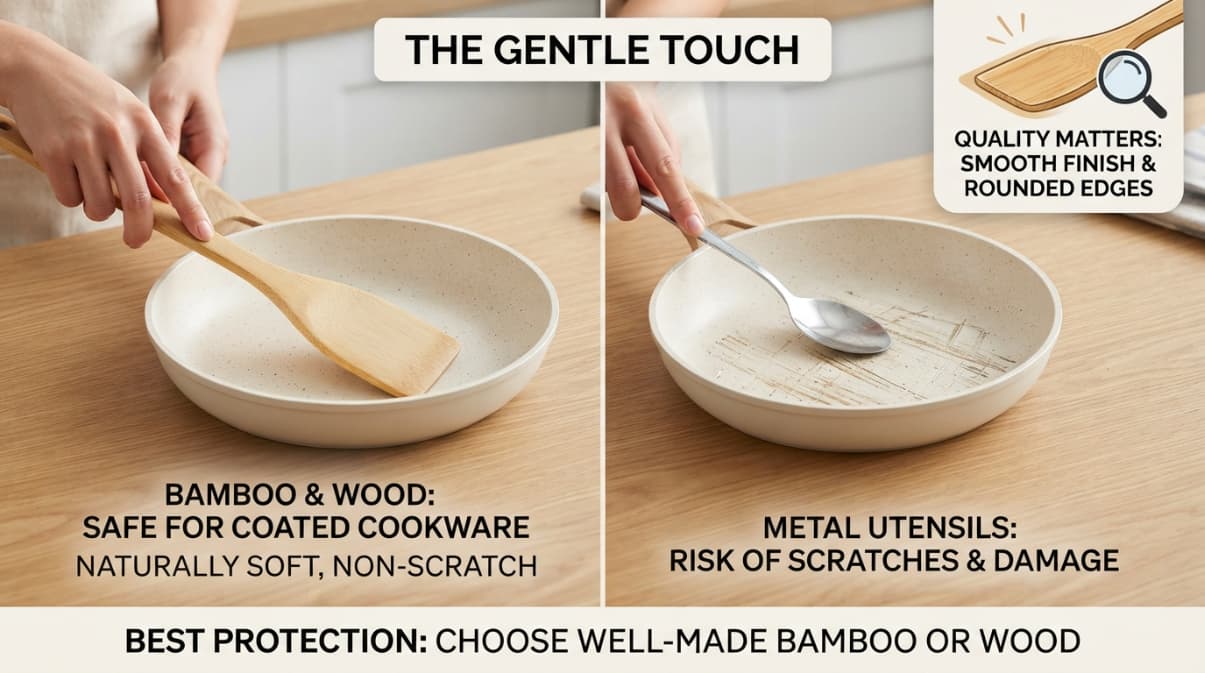
Both bamboo and wood kitchen utensils are suitable for use with nonstick, ceramic, and enameled cookware when properly finished and maintained. Compared with metal utensils, bamboo and wood are naturally softer, making them far less likely to scratch or damage delicate coated surfaces during everyday cooking.
In terms of cookware protection, bamboo and wood perform similarly. The key factors are not only the material itself, but also the utensil's overall quality - including smooth surface finishing, proper manufacturing, rounded edges, and food-safe coatings or treatments.
For both materials, choosing a well-made utensil and avoiding rough, damaged surfaces will provide the best protection for your cookware.
Bamboo vs Wood: Which Wins for Cutting Boards vs Cooking Tools?
The right answer often depends on the specific tool, not the category as a whole. Use the table below as a quick reference for matching material to task.
| Kitchen Task | Better Choice | Why |
|---|---|---|
| Heavy chopping / cutting boards | Hard maple or strand-woven bamboo | Highest hardness, best knife durability |
| Everyday stirring, sautéing | Bamboo | Lighter, cooler handles, lower cost |
| Serving utensils (tongs, ladles) | Either | Both perform equally well |
| Budget-conscious full utensil sets | Bamboo | Lower raw material cost |
| High-end gift or display sets | Walnut or teak wood | Premium appearance, richer grain |
What About Antibacterial Claims Between the Two?
Marketing for both bamboo and wood kitchenware often emphasizes their "naturally antibacterial" properties, but the reality is more complex. Bamboo contains natural compounds such as bamboo kun, which may contribute to antimicrobial activity in raw bamboo. However, commercial processing methods - including heating, carbonization, laminating, and finishing - can reduce or remove some of these natural properties.
Wood utensils face similar considerations. Although certain wood species contain natural compounds that may help resist microbial growth, their porous structure can absorb moisture and food residues if they are not cleaned and dried properly.
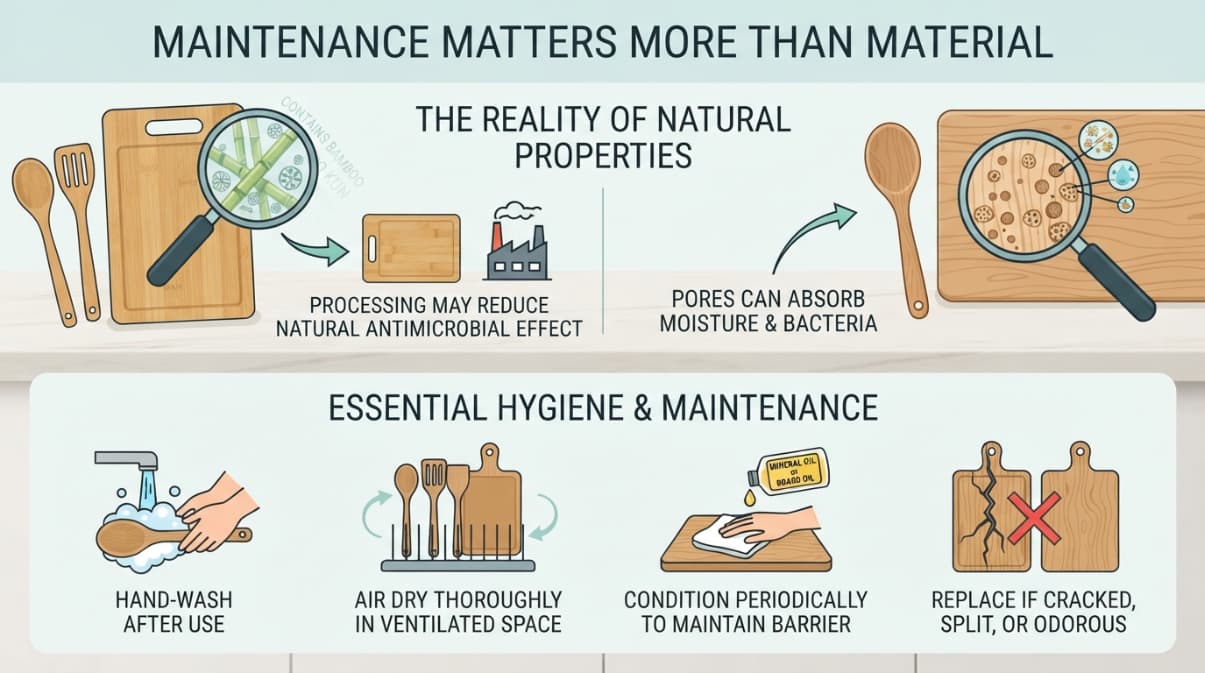
For everyday kitchen hygiene, maintenance matters more than the material itself. Both bamboo and wood utensils should be:
●Hand-washed after use
●Dried thoroughly in an open, ventilated position
●Conditioned periodically to maintain the surface barrier
●Replaced when deep grooves, cracks, splitting, or persistent odors appear
A well-made and properly maintained bamboo or wood utensil can provide safe, reliable performance for years.
Bamboo or Wood: Which Should You Choose?
For most everyday cooking tasks, bamboo kitchen utensils offer an excellent combination of affordability, lightweight strength, durability, and cookware safety. They work particularly well for spatulas, spoons, tongs, and everyday utensil sets.
Wood kitchen utensils, especially those made from durable hardwoods such as maple, remain an excellent choice when a heavier, traditional feel or specific wood appearance is preferred.

Ultimately, the better choice depends on material quality, construction, finish, intended use, and maintenance rather than the material name alone.
For retailers and distributors, offering both materials can also address different customer preferences and price points. If you're looking to develop your own bamboo kitchen utensil set or wood kitchen utensil collection, our team can support custom designs, finishes, branding, and bulk OEM/ODM production.
FAQ
Q: Is bamboo cheaper than wood for kitchen utensils?
A: Generally, yes. Bamboo's rapid growth and renewable supply often make it more affordable than premium hardwoods such as walnut or teak, while still offering good durability for everyday cooking.
Q: Which is better for a cutting board, bamboo or wood?
A: Both can be excellent choices. Hard maple is a popular hardwood option, while high-density or strand-woven bamboo can offer comparable hardness and durability. The best choice also depends on construction, thickness, and intended use.
Q: Do bamboo or wood utensils last longer?
A: With proper care, both can last for several years. Hand-washing, thorough drying, and regular conditioning help prevent cracking and extend service life. For heavy-use cutting boards, dense hardwoods may offer an advantage depending on the board's construction and maintenance.
Notes and Definitions
Janka hardness scale - a standardized test measuring the force needed to embed a steel ball halfway into a wood or bamboo sample; higher values mean greater dent resistance.
Carbon sequestration - the process by which plants absorb and store atmospheric CO2 in their biomass and root systems.
Strand-woven bamboo - bamboo fiber compressed under intense heat and pressure into an unusually dense, hard material.
Bamboo kun - a compound historically credited with antibacterial properties in raw bamboo; evidence for its effect after processing is inconsistent.
ISO 22196 - an international standard test method for measuring antibacterial activity on plastic and non-porous surfaces.
References
The Incredible Bamboo Plant: Fastest Growing Plant in the World - Ambient
Bamboo vs. Maple vs. Walnut: Hardness, Pros & Comparison Guide - Bamboo Wood Art
African Bamboo and CO2 Sequestration - Advanced Biomaterials
Bamboo and Carbon Sequestration: Saved by Net Zero - Bambu Batu
Are Bamboo Utensils Truly Antimicrobial? - LifeTips