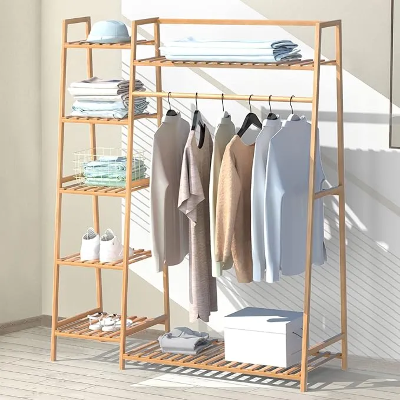



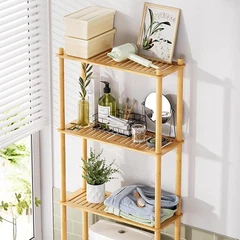
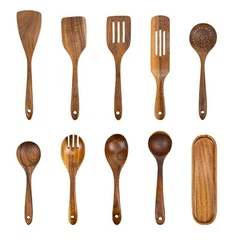
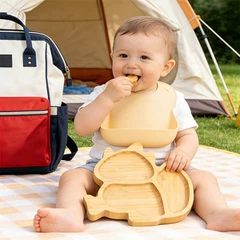


Bamboo storage racks have earned a reputation for durability-and that reputation is supported by more than just marketing claims. Thanks to bamboo's exceptional strength-to-weight ratio and advanced manufacturing processes, a well-made bamboo storage rack can deliver reliable performance for 5–10 years or more under normal household use.
Far from being a fragile natural material, engineered bamboo combines impressive structural strength with excellent resistance to everyday wear and tear. In many cases, a quality bamboo storage rack can even outlast consumer-grade metal wire alternatives that are prone to rust, coating failure, or joint corrosion over time.
But what makes bamboo so durable, and what factors determine how long a bamboo storage rack will actually last? In this article, we'll explore the material science, manufacturing processes, real-world performance data, and maintenance practices that contribute to the long-term durability of bamboo storage racks-all backed by verifiable research and industry evidence.
What Does the Material Science Say About Bamboo's Strength?
The Science Behind Bamboo's Durability
The durability of a bamboo storage rack begins with the material itself-and bamboo's mechanical properties are surprisingly impressive.
According to The Wood Database, a widely recognized reference for wood and plant-based material performance, bamboo achieves a Janka hardness[¹] of 1,410–1,610 lbf (6,270–7,170 N), a modulus of rupture[²] (MOR) of 76.0–168.6 MPa, and a crushing strength[³] of 62.0–93.0 MPa. These figures place bamboo among the strongest natural materials commonly used in furniture and household products.
For perspective, red oak-one of the most respected hardwoods in furniture manufacturing-has a Janka hardness of approximately 1,290 lbf. In many cases, bamboo exceeds this benchmark, demonstrating its ability to resist dents, wear, and everyday mechanical stress.
What makes bamboo even more remarkable is its exceptional strength-to-weight ratio[⁴]. The Wood Database describes bamboo as possessing "some of the best stiffness-to-strength characteristics of any woody material on the planet." In practical terms, this means a bamboo storage rack can support substantial loads while remaining lightweight, easy to handle, and visually streamlined compared with many metal or solid hardwood alternatives.

Another key factor is bamboo's fiber structure. Research published through NCBI/PMC reports tensile strength values ranging from 432–600 MPa, depending on bamboo species and fiber location within the culm. These values place bamboo fibers within a performance range comparable to fiberglass used in certain engineering and composite applications.
This combination of hardness, strength, and low weight explains why bamboo has become a preferred material not only for storage racks and kitchen organizers but also for flooring, furniture, construction materials, and other products where long-term durability is essential.
In short, the durability of bamboo storage racks is not a marketing claim-it is rooted in measurable material science. The strength characteristics of engineered bamboo provide a solid foundation for products designed to withstand years of everyday household use.
How Does Bamboo Storage Rack Durability Compare to Other Common Materials?
Understanding bamboo's durability requires honest comparison across materials commonly used in consumer storage racks.
| Material | Janka Hardness / Tensile Strength | Typical Rack Lifespan | Primary Failure Mode | Recyclability |
|---|---|---|---|---|
| Laminated bamboo | 1,410–1,610 lbf Janka | 5–10 years | Surface wear, joint degradation without maintenance | Fully biodegradable |
| Grade 304 stainless steel | ~500–800 MPa tensile | 8–15 years | Crevice corrosion at welds | Metal recyclable |
| Powder-coated iron | ~350–500 MPa tensile | 1–4 years | Rust at welds and chips | Partially recyclable |
| MDF / particleboard | ~300–500 lbf Janka | 2–5 years | Edge swelling, delamination in humidity | Low |
| Solid pine | ~870 lbf Janka | 4–8 years | Surface denting, moisture movement | Biodegradable |
| Solid oak | ~1,290 lbf Janka | 10–20 years | Checking if humidity varies widely | Biodegradable |
The practical conclusion is clear: a well-manufactured bamboo storage rack outperforms powder-coated iron and MDF-based racks significantly in durability, matches mid-range steel in functional lifespan for household applications, and falls short only of high-grade stainless steel in absolute structural terms - a material that costs considerably more at equivalent specification.
Why Manufacturing Quality Matters More Than the Bamboo Itself
While bamboo's natural strength provides the foundation for durability, the single most important factor in determining how long a bamboo storage rack will last is the manufacturing process behind it.
In fact, two bamboo storage racks made from similar raw materials can have dramatically different lifespans depending on how they are processed, assembled, and finished. This is why buyers should evaluate not only the material but also the production standards used by the manufacturer.
Kiln Drying: The Foundation of Long-Term Stability
One of the most critical stages in bamboo processing is kiln drying[⁵].
Freshly harvested bamboo contains a high moisture content, often ranging from 70% to 120%. If this moisture is not properly removed before manufacturing, the finished product becomes far more susceptible to warping, cracking, shrinkage, and biological deterioration over time.
Through controlled kiln drying, moisture content is typically reduced to approximately 6–10% for products intended for temperate markets. This stabilization process significantly improves dimensional consistency and helps ensure that the bamboo can withstand years of changing humidity conditions without structural problems.
Simply put, proper kiln drying is one of the strongest predictors of long-term product durability.

Surface Treatment: Protection Against Everyday Moisture
Surface finishing is another key factor that directly affects the lifespan of a bamboo storage rack.
Common treatments include carbonization[⁶], natural oil finishing, and protective lacquer coatings. Each method helps improve resistance to moisture, but they work in different ways.
Carbonization uses heat treatment to alter the bamboo's surface structure, reducing hygroscopic[⁷] activity and improving dimensional stability. Oil finishes penetrate the surface and help maintain the material's natural moisture balance, while lacquer coatings create a protective barrier that limits water penetration and everyday wear.
When applied correctly, these treatments significantly increase resistance to humidity fluctuations, surface deterioration, and moisture-related damage compared with unfinished bamboo.

Adhesive Quality: The Hidden Factor in Structural Durability
For laminated bamboo storage racks and panel-based designs, adhesive performance plays a crucial role in long-term structural integrity.
Modern high-quality bamboo products typically use E0 or E1-grade low-emission adhesives[⁸], which are designed to maintain strong bonding performance even when exposed to changing humidity levels. These adhesives help prevent delamination-the separation of bonded bamboo layers-which is one of the most common failure modes found in lower-quality laminated products.
A strong adhesive system ensures that panels remain stable, joints remain secure, and the rack retains its structural strength throughout years of everyday use.

The Bottom Line
The durability of a bamboo storage rack is not determined by bamboo alone. Proper kiln drying, effective surface treatment, and high-quality adhesive systems work together to transform a naturally strong material into a product capable of delivering reliable performance for many years.
When evaluating bamboo storage racks, manufacturing quality is often a better predictor of lifespan than appearance alone. A well-processed bamboo rack will consistently outperform a poorly manufactured alternative, even if both look nearly identical when new.
How Much Weight Can a Bamboo Storage Rack Hold?
When choosing a storage rack, one of the first questions buyers often ask is: Can it actually support the weight I need?
It's a reasonable concern. After all, a storage rack is only as useful as its ability to safely hold everyday items without sagging, bending, or becoming unstable over time.
The good news is that bamboo has an impressive reputation as a structural material. Thanks to its exceptional strength-to-weight ratio, it has been used for centuries in construction, furniture, and household storage products.
Why Is Bamboo So Strong?
The answer lies in bamboo's remarkable mechanical properties.
According to published material studies, laminated bamboo panels can withstand significant bending forces before reaching structural failure. Depending on the bamboo species, density, and manufacturing process, bamboo typically exhibits a modulus of rupture (MOR) ranging from approximately 76–169 MPa, making it one of the strongest natural materials commonly used in furniture and storage applications.
However, the load capacity of a bamboo rack is not determined by material strength alone.
Factors such as shelf dimensions, support spacing, panel thickness, hardware quality, and overall frame construction all play important roles in determining how much weight a rack can safely carry. That's why reputable manufacturers design their products with specific load ratings rather than relying solely on the strength of the bamboo itself.
Typical Load Capacity of Bamboo Storage Racks
As a general guideline, most household bamboo storage racks can support between 8 and 25 kg (18–55 lbs) per shelf, depending on the shelf span and support configuration.
This capacity is more than sufficient for a wide range of everyday storage needs.
Perfect for organizing seasoning jars, oils, sauces, and other kitchen essentials.
Typical load: 2–5 kg (4–11 lbs)

Designed to store everyday footwear while keeping entryways neat and organized.
Typical load: 5–15 kg (11–33 lbs) per shelf

Ideal for holding pantry supplies, food containers, microwave ovens, coffee machines, and other small kitchen appliances.
Typical load: 10–25 kg (22–55 lbs) per shelf

Commonly used for towels, toiletries, skincare products, and personal care items.

Widely used in kitchens, pantries, laundry rooms, living rooms, and entryways for general household organization.
For these applications, a well-manufactured bamboo rack typically operates comfortably within its design limits while maintaining excellent structural stability and safety.

What Causes Overloading Problems?
Interestingly, most load-related issues are not caused by bamboo itself.
Instead, problems usually arise from improper loading practices.
For example:
Placing excessive weight in the center of a long shelf span
Loading heavy objects unevenly on one side
Exceeding the manufacturer's recommended weight limits
Subjecting shelves to continuous overloading for extended periods
These conditions increase bending stress and can eventually lead to shelf sagging, deformation, or excessive strain on joints and fasteners.
It's also worth noting that this is not a bamboo-specific issue. Any shelving material-including steel, engineered wood, particleboard, or solid hardwood-can experience structural fatigue when used beyond its intended capacity.
How Does Bamboo Rack Durability Hold Up in Specific Room Environments?
Room environment significantly affects how a bamboo storage rack ages - and the news is largely positive for the environments where bamboo racks are most commonly deployed.
| Environment | Humidity Level | Temperature Range | Bamboo Rack Performance | Key Risk |
|---|---|---|---|---|
| Kitchen (indoor) | 50–70% RH | 18–28°C | Excellent with treated finish | Standing water pooling |
| Bathroom | 60–85% RH | 18–26°C | Good with sealed finish | Prolonged steam exposure |
| Living room | 40–55% RH | 18–24°C | Excellent | None in normal use |
| Bedroom | 40–55% RH | 18–22°C | Excellent | None in normal use |
| Garage | 30–70% RH (variable) | Wide seasonal range | Moderate | UV and temperature cycling |
| Outdoor (covered) | Variable | Wide range | Poor without specialist treatment | UV degradation, rain |
Where Do Bamboo Storage Racks Perform Best?
The kitchen and bathroom are the environments where bamboo storage racks are most frequently used-and they also happen to be among the most challenging indoor settings due to constant exposure to humidity, temperature fluctuations, and occasional water contact. Fortunately, properly manufactured bamboo performs exceptionally well in both environments when paired with routine maintenance and sensible use.
In kitchens, bamboo storage racks regularly encounter splashes, steam, and changing moisture levels from cooking and cleaning activities. In bathrooms, they are exposed to elevated humidity, condensation, and limited airflow. High-quality bamboo racks are specifically engineered to handle these conditions through kiln drying, moisture-resistant adhesives, protective surface finishes, and thoughtful drainage design.
However, not every environment is equally suitable for bamboo. Garages, outdoor patios, uncovered balconies, and other spaces exposed to direct sunlight, rain, or prolonged moisture present challenges that exceed the normal design parameters of most indoor bamboo furniture. Continuous UV exposure can gradually degrade protective finishes, while repeated wet-dry cycles may accelerate material aging. In these applications, galvanized metal, stainless steel, or specially treated hardwood products are often more appropriate choices unless the bamboo has been manufactured with dedicated exterior-grade treatments.

Choosing a Bamboo Rack for Bathroom Use
When selecting a bamboo storage rack for bathrooms or other high-humidity environments, finish quality becomes especially important.
A durable bamboo bathroom shelf should feature a fully sealed protective coating-whether oil-based or lacquer-based-applied to every exposed surface. This includes not only the visible faces of shelves and side panels but also the undersides, edges, corners, and cut ends of laminated components. These less-visible areas are often the first points where moisture penetration occurs in lower-quality products.
Comprehensive sealing helps create a consistent moisture barrier across the entire structure, reducing the likelihood of edge swelling, discoloration, or finish deterioration over time. Combined with periodic re-oiling or maintenance as recommended by the manufacturer, a properly finished bamboo bathroom rack can provide years of reliable performance while maintaining its natural appearance.
For buyers seeking long-term durability, one of the simplest quality checks is to inspect whether all surfaces-including hidden edges and undersides-have received the same level of finishing treatment as the visible exterior. In many cases, this detail separates a premium bamboo storage rack from a lower-specification alternative.

What Makes a Bamboo Storage Rack Worth Buying Over Cheaper Alternatives?
When evaluating storage racks, many buyers focus primarily on the purchase price. However, the true value of a storage product is better measured by its total cost of ownership (TCO)[¹¹] over its entire service life.
At first glance, a low-cost metal rack may seem like the more economical option. Yet long-term performance often tells a different story.
For example, powder-coated steel or iron racks can gradually develop rust around welded joints, chipped coating areas, or exposed edges-especially in humid environments such as kitchens, bathrooms, laundry rooms, or pantries. If replacement becomes necessary after only a few years, the actual cost of ownership may be significantly higher than expected.
A well-manufactured bamboo storage rack, by comparison, typically requires very little maintenance while maintaining its appearance and functionality for years of everyday use. When assessed over its full lifespan rather than its initial purchase price alone, bamboo frequently proves to be a highly cost-effective investment.

Sustainability Adds Even More Value
The benefits of bamboo extend beyond durability and practicality.
As consumers and businesses place greater emphasis on sustainability, material selection has become an increasingly important purchasing consideration. Bamboo stands out as one of the most environmentally responsible materials available for household storage products.
Unlike many metal-plastic composites or synthetic storage materials, bamboo is a rapidly renewable resource that can be harvested without permanently damaging the plant. At the end of its service life, bamboo is also naturally biodegradable under appropriate conditions.
According to material profiles published by the International Bamboo and Rattan Organization (INBAR), bamboo generally has a lower environmental footprint than many conventional storage materials, making it an attractive choice for companies pursuing sustainability objectives and ESG initiatives.
For retailers, wholesalers, and private-label brands, this environmental advantage can also resonate strongly with today's eco-conscious consumers.

Practical, Attractive, and Built to Last
Whether you're organizing a pantry, decluttering an entryway, or maximizing kitchen storage space, bamboo offers a unique combination of performance and visual appeal.
A quality bamboo storage rack can serve multiple purposes throughout the home, including:
Organizing spices, oils, and seasonings in the kitchen
Storing shoes and accessories in entryways
Supporting pantry supplies and small appliances
Creating additional storage in bathrooms and laundry rooms
Displaying household items in living spaces
Unlike purely functional storage products, bamboo brings a warm, natural aesthetic that complements a wide variety of interior styles, from modern and minimalist to farmhouse and Scandinavian-inspired spaces.
The result is a storage solution that is not only practical but also visually appealing enough to remain on display.
Built for Everyday Use, Designed for Long-Term Reliability
Our bamboo storage racks are manufactured in Jian'ou City, Fujian Province-the center of China's bamboo industry-using carefully selected bamboo materials and rigorous quality-control standards throughout production.
Every product is designed to balance durability, functionality, aesthetics, and sustainability, making it suitable for a broad range of home organization and kitchen storage applications.
Our product range includes:
Bamboo baker's racks
Custom bamboo storage organizers
These products are supplied to retailers, distributors, wholesalers, importers, and private-label brands across global markets.

Looking for a Reliable Bamboo Rack Manufacturer?
If you're sourcing bamboo storage racks, kitchen organizers, or custom bamboo shelving solutions, we're here to help.
We provide OEM and ODM manufacturing services, private labeling, customized product development, and wholesale production for customers worldwide.
Fujian Guanglong Bamboo & Wood Co., Ltd.
Address: No. 3, Wuyi 3rd Road, Jian'ou City, Nanping City, Fujian Province 353100, China
Phone: +86 158 8924 9154
Email: sales02@szmsl68.com
Contact us today to discuss your project requirements, request samples, or explore custom manufacturing solutions for your market.
FAQ
Q: My old bamboo shelf started splitting after two years. Does that mean bamboo racks don't last?
A: It means that one rack wasn't made well - not that bamboo can't last. Splitting usually traces back to poor kiln drying before manufacturing, or leaving the rack in a very dry environment without any maintenance oiling. A properly processed bamboo storage rack with a sealed finish and occasional mineral oil treatment doesn't split under normal indoor use.
Q: I'm comparing a bamboo storage rack and a stainless steel rack at similar prices. Which actually lasts longer?
A: In a home kitchen - realistically, they're comparable. A good bamboo rack lasts 5–10 years. A good steel rack lasts longer in theory, but most consumer-grade steel racks aren't high-grade stainless - they're chrome-coated iron, and they rust at the welds within 2–3 years. The bamboo rack usually wins in practice.
Q: How do I know if a bamboo storage rack I'm buying is actually durable, before I've owned it for five years?
A: Check three things: the finish (lacquer or oil coating on all surfaces including edges), the joints (no visible gaps or adhesive squeeze-out, tight and flush), and the weight (heavier usually means denser bamboo - aim for racks that feel solid, not hollow). If a rack feels light and flimsy in your hands, the bamboo density is too low for long-term durability.
Annotations
[¹] Janka hardness - a standardized measure of the resistance of wood and wood-substitute materials to surface indentation, expressed in pounds-force (lbf) or newtons (N); determined by the force required to embed a 0.444-inch steel ball to half its diameter into the material surface.
[²] Modulus of rupture (MOR) - a measure of a material's resistance to bending failure, expressed in MPa (megapascals) or lbf/in²; the maximum stress a beam or panel can sustain before breaking under bending load. Higher MOR values indicate greater bending strength.
[³] Crushing strength - the maximum compressive load per unit area that a material can sustain before structural failure; expressed in MPa. Relevant for rack legs and vertical supports bearing downward loads.
[⁴] Strength-to-weight ratio - a material property expressing structural strength per unit of mass; high values indicate strong and lightweight materials. Bamboo's ratio compares favorably to steel and most timber species, making it suitable for lightweight rack construction without sacrificing load capacity.
[⁵] Kiln drying - an industrial drying process using heated chambers to reduce bamboo moisture content from its green state (70–120% MC) to a target range of 6–10% for manufactured products; prevents post-manufacture warping, cracking, and biological degradation.
[⁶] Carbonization treatment - a controlled heat process applied to bamboo surfaces that caramelizes surface sugars, produces a warm amber color, partially closes surface pores, and reduces hygroscopic moisture activity; a common finishing method for natural-tone bamboo products.
[⁷] Hygroscopic - the property of a material to absorb and release moisture in response to ambient humidity changes; bamboo's cellulose structure is naturally hygroscopic, a characteristic managed through kiln drying and surface treatment in manufactured products.
[⁸] E0/E1 formaldehyde emission standards - European and Asian classification levels for formaldehyde emissions from adhesives used in composite wood and bamboo panels; E1 ≤ 0.1 ppm and E0 ≤ 0.05 ppm. E0 is the most stringent consumer safety standard and is required for products intended for indoor residential use.
[⁹] Boron treatment - a pest and fungus control method widely used in commercial bamboo processing; boric acid solution is pressure-impregnated into the bamboo culm, providing long-term protection against powder-post beetles, termites, and mold without significant impact on surface aesthetics.
[¹⁰] Food-grade mineral oil - a refined, odorless, and tasteless white mineral oil classified by the U.S. FDA under 21 CFR 172.878 as safe for use on food-contact surfaces; the standard maintenance product recommended for bamboo and hardwood kitchen items.
[¹¹] Total cost of ownership (TCO) - a financial analysis framework that accounts for all costs associated with a product across its complete useful life, including purchase price, maintenance, and disposal; provides a more accurate economic comparison than purchase price alone.
Authoritative References
The Wood Database. Bamboo - Mechanical Properties, Janka Hardness, MOR, and Material Profile. https://www.wood-database.com/bamboo/
The Wood Database. Janka Hardness - What It Is and How It Works. https://www.wood-database.com/wood-articles/janka-hardness/
The Wood Database. Wood Durability - Decay Resistance and Failure Modes. https://www.wood-database.com/wood-articles/wood-durability/
NCBI PMC. Investigation of Bamboo Fibrous Tensile Strength Using Modified Weibull Distribution. (2022) https://pmc.ncbi.nlm.nih.gov/articles/PMC9318551/
NCBI PMC. Size Influence of Laminated Bamboo on Tensile Mechanical Properties. (2025) https://pmc.ncbi.nlm.nih.gov/articles/PMC11766803/
Food and Agriculture Organization of the United Nations (FAO). World Bamboo Resources - Global Forest Resources Assessment. https://www.fao.org/4/a1243e/a1243e00.htm